

Freight Brokerage Agreement
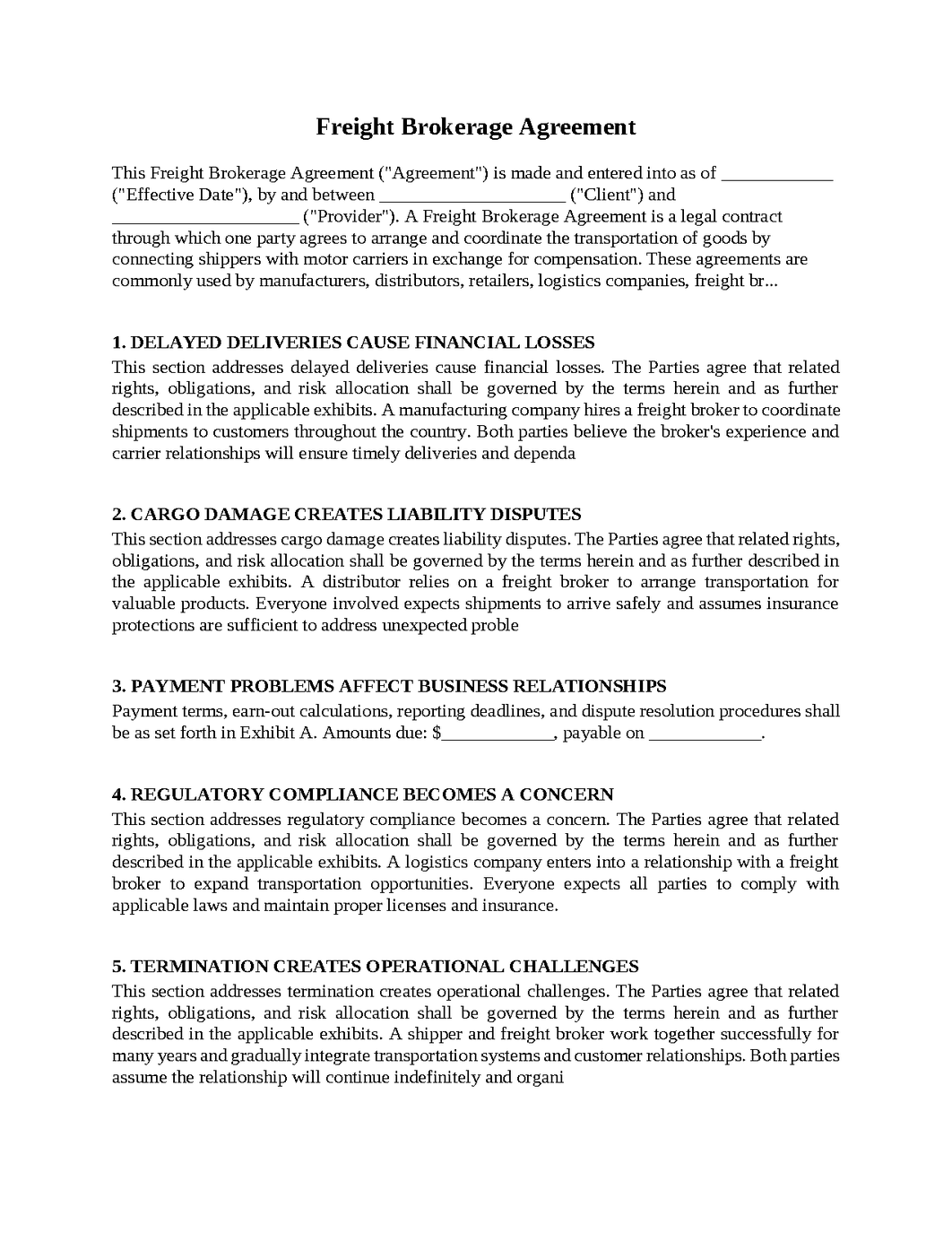
A Freight Brokerage Agreement is a legal contract through which one party agrees to arrange and coordinate the transportation of goods by connecting shippers with motor carriers in exchange for compensation. These agreements are commonly used by manufacturers, distributors, retailers, logistics companies, freight brokers, and carriers involved in domestic and international transportation. A Freight Brokerage Agreement typically addresses transportation services, payment terms, cargo claims, insurance requirements, regulatory compliance, and procedures governing disputes and termination. Because freight transportation depends on timing, communication, and multiple parties, disputes can arise when expectations regarding responsibilities and liabilities are not documented clearly. A carefully drafted Freight Brokerage Agreement helps establish certainty and protect the interests of brokers, shippers, and carriers.
Delayed Deliveries Cause Financial Losses
A manufacturing company hires a freight broker to coordinate shipments to customers throughout the country. Both parties believe the broker's experience and carrier relationships will ensure timely deliveries and dependable service.
For several years, transportation operations proceed smoothly and customers remain satisfied. Eventually, weather events, equipment failures, and scheduling problems begin causing repeated delays.
The manufacturer believes the broker should have secured backup carriers and monitored shipments more closely because reliability was one of the primary reasons for hiring the broker. The broker believes transportation disruptions are sometimes unavoidable and argues that reasonable efforts were made to minimize delays. As customer complaints increase and revenues suffer, tensions emerge regarding responsibility for the losses.
To help avoid this problem, a Freight Brokerage Agreement should clearly establish service expectations and define the procedures used to address delivery delays and disruptions.
Cargo Damage Creates Liability Disputes
A distributor relies on a freight broker to arrange transportation for valuable products. Everyone involved expects shipments to arrive safely and assumes insurance protections are sufficient to address unexpected problems.
During several shipments, cargo is damaged while in transit. Questions arise regarding whether the damage occurred because of improper loading, inadequate equipment, or negligence by the carrier.
The shipper believes the broker should bear responsibility because the carrier was selected through the broker's network. The broker believes the carrier is directly responsible for the condition of the cargo and argues that the broker merely arranged transportation services. As claims become more expensive, disagreements emerge regarding liability and insurance coverage.
To help prevent these issues, a Freight Brokerage Agreement should clearly establish cargo claim procedures and define the responsibilities of brokers, carriers, and shippers.
Payment Problems Affect Business Relationships
A carrier transports freight arranged through a brokerage relationship and expects payment according to agreed schedules. Both parties believe invoices and settlements will occur efficiently.
As shipping volumes increase, delays in payments and questions regarding detention charges and fuel surcharges create uncertainty. Different interpretations of billing practices produce conflicting expectations.
The carrier believes prompt payment is essential because transportation expenses must be covered immediately. The broker believes certain customer collections and disputed charges justify delaying payments. As unpaid balances increase, tensions develop regarding financial obligations.
To help avoid these problems, a Freight Brokerage Agreement should clearly establish payment procedures and define how additional charges and disputed invoices will be handled.
Regulatory Compliance Becomes a Concern
A logistics company enters into a relationship with a freight broker to expand transportation opportunities. Everyone expects all parties to comply with applicable laws and maintain proper licenses and insurance.
Over time, questions arise regarding carrier qualifications, insurance coverage, and regulatory requirements. An accident involving one of the carriers leads to increased scrutiny from regulators and customers.
The logistics company believes the broker should verify that all carriers satisfy legal requirements because carrier selection is central to the broker's role. The broker believes carriers are independently responsible for maintaining compliance and argues that reasonable verification procedures were followed. As legal risks increase, disagreements emerge regarding oversight responsibilities.
To help prevent these issues, a Freight Brokerage Agreement should clearly establish compliance requirements and define the procedures governing carrier qualifications and insurance coverage.
Termination Creates Operational Challenges
A shipper and freight broker work together successfully for many years and gradually integrate transportation systems and customer relationships. Both parties assume the relationship will continue indefinitely and organize operations around that expectation.
Eventually, changing business priorities lead one side to terminate the arrangement. Questions arise regarding pending shipments, unpaid invoices, customer information, and responsibilities relating to unresolved cargo claims.
The shipper believes a smooth transition is necessary to avoid disruptions and preserve customer relationships. The broker believes its obligations should conclude promptly and expects all outstanding balances to be paid before providing additional assistance. As operations shift to new providers, disagreements emerge regarding the obligations that survive termination.
To help avoid this problem, a Freight Brokerage Agreement should clearly establish termination procedures and identify the rights and responsibilities that continue after the relationship ends.
Freight Brokerage Agreements are valuable tools that allow businesses to move goods efficiently while relying upon specialized transportation expertise. However, issues involving delivery delays, cargo damage, payment disputes, regulatory compliance, and post-termination obligations can become significant sources of conflict when expectations are not documented clearly. A carefully drafted Freight Brokerage Agreement provides a structured framework for allocating responsibilities and protecting the interests of brokers, carriers, and shippers. When prepared thoughtfully, it can reduce uncertainty, strengthen commercial relationships, support efficient logistics operations, and provide the foundation necessary for successful transportation services.

Get started with Upsign today!
Easily send, sign and track your documents