

Stock Purchase Agreement
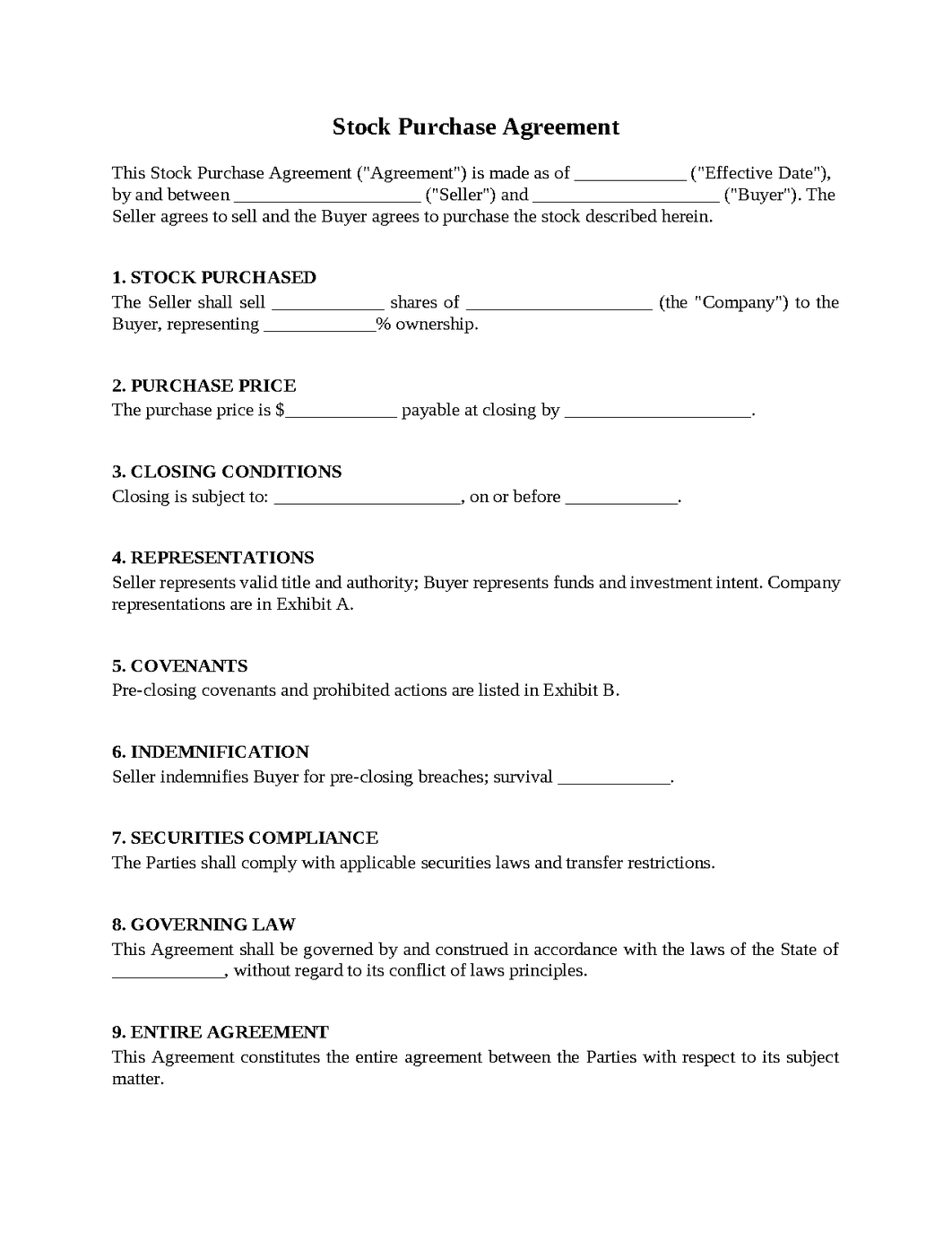
A Stock Purchase Agreement is a legal contract that governs the sale and transfer of stock ownership from one party to another. While often used interchangeably with a Share Purchase Agreement, Stock Purchase Agreements are frequently used in private company transactions, startup investments, founder buyouts, employee equity transactions, venture capital investments, and corporate acquisitions. The agreement typically addresses the number of shares being transferred, purchase price, closing conditions, representations and warranties, ownership rights, and post-closing obligations. Because stock ownership represents a direct interest in a company's assets, liabilities, and future value, disputes can arise when expectations are not documented clearly. A well-drafted Stock Purchase Agreement helps protect both buyers and sellers while reducing transactional risk.
The Buyer Learns the Company Has More Liabilities Than Expected
An investor agrees to purchase stock in a privately held company after reviewing financial statements and discussing future growth opportunities with management.
The company appears healthy and profitable, and the investor believes the purchase represents an attractive opportunity. After the transaction closes, however, previously undisclosed liabilities begin surfacing.
Outstanding tax obligations, pending litigation, customer disputes, or regulatory issues create financial burdens that were not anticipated during negotiations.
The buyer believes these issues should have been disclosed before the sale. The seller argues that all material information was provided and that some business risks were impossible to predict.
The disagreement becomes significant because the value of the stock may be affected substantially.
To help avoid this problem, a Stock Purchase Agreement should include detailed representations and warranties, establish disclosure obligations, and define remedies available if material information proves inaccurate or incomplete.
Restrictions on Stock Transfers Create Surprises
A shareholder purchases stock in a growing private company and expects the investment to provide flexibility in the future.
Several years later, the shareholder decides to sell the shares to a third party. During the process, the shareholder discovers that transfer restrictions apply under corporate documents and shareholder arrangements.
The shareholder believes ownership should include the right to sell freely. The company and other shareholders believe restrictions are necessary to preserve control and stability.
The disagreement centers on expectations regarding liquidity and transfer rights.
What initially seemed like a straightforward investment becomes more complicated because ownership rights were not fully understood.
To reduce these risks, a Stock Purchase Agreement should clearly identify transfer restrictions, approval requirements, rights of first refusal, and any limitations affecting future stock sales.
Earnout Provisions Lead to Future Conflict
A founder sells stock in a company but agrees to receive part of the purchase price through future earnout payments tied to business performance.
The arrangement appears fair because it allows the buyer to reduce risk while providing the seller with additional upside if the company succeeds.
As the earnout period progresses, however, disagreements arise regarding revenue recognition, expense allocation, and management decisions that affect performance metrics.
The seller believes certain business decisions are reducing earnout payments unfairly. The buyer believes operational decisions are being made appropriately and in the best interests of the company.
The disagreement becomes increasingly contentious because future compensation depends on the outcome.
To help prevent these issues, a Stock Purchase Agreement should define earnout calculations carefully, establish objective performance metrics, and create dispute-resolution procedures for earnout-related disagreements.
The Seller Retains Certain Rights After the Sale
A shareholder sells a substantial ownership interest but remains involved with the company as an employee, director, or consultant.
Initially, both parties believe the arrangement provides continuity and stability. Over time, however, questions arise regarding voting rights, access to information, participation in management decisions, and future involvement in company affairs.
The seller believes certain rights should continue because of ongoing contributions and historical involvement. The buyer believes ownership changes should result in corresponding changes to authority.
The disagreement creates governance challenges that neither party anticipated.
To help avoid these problems, a Stock Purchase Agreement should clearly define any ongoing rights, responsibilities, information access provisions, and post-closing roles retained by the seller.
Future Financing Dilutes Ownership Interests
An investor purchases stock in a startup expecting future growth and appreciation.
As the company expands, additional financing rounds become necessary. New investors purchase shares, increasing the total number of outstanding shares and reducing the original investor's ownership percentage.
The investor becomes concerned that dilution is reducing the value and influence associated with the original investment. Company management believes additional financing is necessary to support growth and create long-term value.
The disagreement centers on balancing growth opportunities with ownership protection.
Neither side intended conflict, but expectations regarding future financing were never fully discussed.
To reduce these risks, a Stock Purchase Agreement should address dilution rights, preemptive rights, anti-dilution protections where appropriate, and procedures governing future equity issuances.
Stock Purchase Agreements are essential documents in transactions involving corporate ownership interests because they govern the transfer of stock and allocate risk between buyers and sellers. However, issues involving undisclosed liabilities, transfer restrictions, earnout calculations, retained rights, and future dilution can become significant sources of conflict when expectations are not documented clearly. A carefully drafted Stock Purchase Agreement provides a structured framework for managing these transactions and protecting all parties involved. When prepared thoughtfully, it can help reduce uncertainty, facilitate successful ownership transfers, preserve investment value, and support long-term corporate success.

Get started with Upsign today!
Easily send, sign and track your documents