

Pledge Agreement
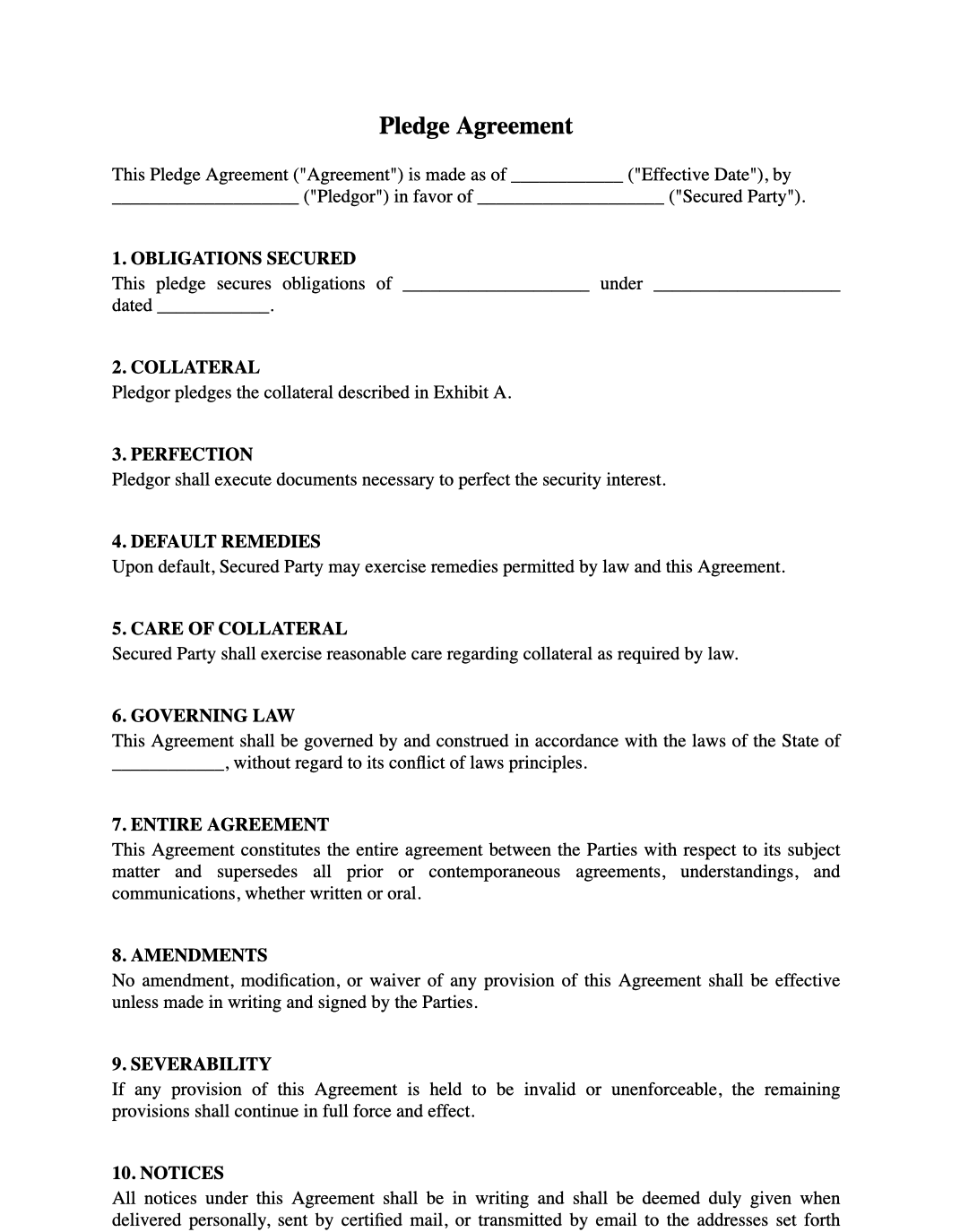
A Pledge Agreement is a legal contract in which a borrower or other party grants a lender, creditor, investor, or beneficiary a security interest in specific assets as collateral for an obligation. Pledge Agreements are commonly used in commercial lending transactions, business acquisitions, investment arrangements, private financing deals, and secured credit facilities. The pledged assets may include stock, partnership interests, membership interests, securities, bank accounts, intellectual property, or other valuable property. Because pledged assets often represent significant value and may be critical to the pledgor's business operations, disputes can arise when rights and responsibilities are not clearly documented. A well-drafted Pledge Agreement helps protect both parties by clearly defining collateral rights and enforcement procedures.
The Parties Disagree About What Assets Were Actually Pledged
A business owner obtains financing to support company expansion and signs a pledge agreement granting the lender collateral rights in certain business assets.
At the time of closing, both parties believe the collateral package is well understood. The lender assumes that all ownership interests in a related entity are included within the pledge. The borrower believes only a specific portion of those interests was intended to serve as collateral.
For several years, the loan performs without issue and the disagreement remains hidden. When the borrower later seeks additional financing, questions arise regarding which assets remain available to secure new obligations.
The lender insists the broader collateral interpretation applies. The borrower argues that the agreement never intended to encumber all ownership interests.
What initially appeared to be a routine financing transaction becomes a significant dispute because the collateral description lacks sufficient clarity.
To help avoid this problem, a Pledge Agreement should precisely identify pledged assets, define ownership interests being pledged, and eliminate ambiguity regarding the scope of collateral. Detailed asset descriptions help ensure that both parties understand exactly what property secures the obligation.
The Borrower Continues Using Collateral in Unexpected Ways
A company pledges membership interests in a subsidiary as collateral for a loan. The lender expects the collateral to remain intact throughout the term of the financing arrangement.
As the business grows, management restructures portions of its operations and transfers assets among affiliated entities. Although these transactions are intended to improve efficiency, the lender becomes concerned that the value of the pledged collateral may be affected.
The company argues that ordinary business decisions should not require lender approval. The lender responds that changes involving pledged assets could impair collateral value and increase risk.
Neither party anticipated that routine business operations would create tension regarding collateral protection.
To reduce these risks, a Pledge Agreement should clearly address restrictions on transfers, reorganizations, encumbrances, and other transactions involving pledged assets. These provisions help balance operational flexibility with collateral preservation.
A Default Occurs and Enforcement Rights Are Unclear
A borrower experiences financial difficulties and misses several required payments under a financing arrangement secured by a pledge agreement.
The lender believes a default has occurred and wants to exercise rights against the pledged collateral. The borrower argues that certain cure periods remain available and that enforcement actions are premature.
As discussions continue, both parties discover that the agreement contains only general language regarding default remedies. Important questions arise regarding notice requirements, valuation procedures, disposition rights, and timing of enforcement actions.
The uncertainty increases legal costs and delays resolution of the dispute.
What should have been a straightforward enforcement process becomes significantly more complicated because the parties never established clear procedures.
To help prevent these issues, a Pledge Agreement should define events of default, establish notice requirements, identify cure opportunities, and clearly describe enforcement rights and remedies available to the secured party.
Voting and Control Rights Become a Source of Conflict
A business owner pledges shares of a closely held company as collateral for a loan.
At the time the agreement is signed, everyone assumes the owner will continue exercising voting rights and participating in company management unless a default occurs. Years later, the company's ownership structure becomes increasingly important due to strategic opportunities and potential acquisition discussions.
The lender becomes concerned that certain corporate actions could affect the value of the pledged shares. The borrower insists that ownership rights remain unchanged unless an actual default occurs.
The disagreement centers on who controls important decisions while the shares remain pledged but no default has occurred.
Both parties have legitimate interests to protect, yet their expectations differ significantly.
To help avoid these disputes, a Pledge Agreement should clearly define voting rights, dividend rights, management authority, and the circumstances under which control rights may shift to the secured party. Detailed governance provisions help prevent misunderstandings.
The Loan Is Repaid but the Collateral Is Not Released Promptly
After years of successful payments, a borrower satisfies all obligations secured by the pledge agreement.
The borrower expects the pledged assets to be released immediately so they can be used in future business transactions. The lender agrees that the obligations have been satisfied but delays preparing release documents due to administrative issues and internal review procedures.
As opportunities arise that require unencumbered ownership of the pledged assets, the borrower becomes increasingly frustrated. The lender has no intention of retaining collateral improperly but has not established a clear process for documenting the release.
The delay creates unnecessary complications despite the fact that the financing relationship has ended successfully.
To help avoid these problems, a Pledge Agreement should establish collateral release procedures, define timelines for delivering release documents, and require prompt cooperation once the secured obligations have been satisfied.
Pledge Agreements are widely used to secure financing transactions and provide lenders with valuable protection against credit risk. However, issues involving collateral descriptions, asset transfers, default remedies, control rights, and collateral releases can become significant sources of conflict when expectations are not documented clearly. A carefully drafted Pledge Agreement provides a structured framework for managing these relationships and protecting all parties involved. When prepared thoughtfully, it can help reduce misunderstandings, preserve collateral value, facilitate enforcement when necessary, and support successful financing transactions.

Get started with Upsign today!
Easily send, sign and track your documents