

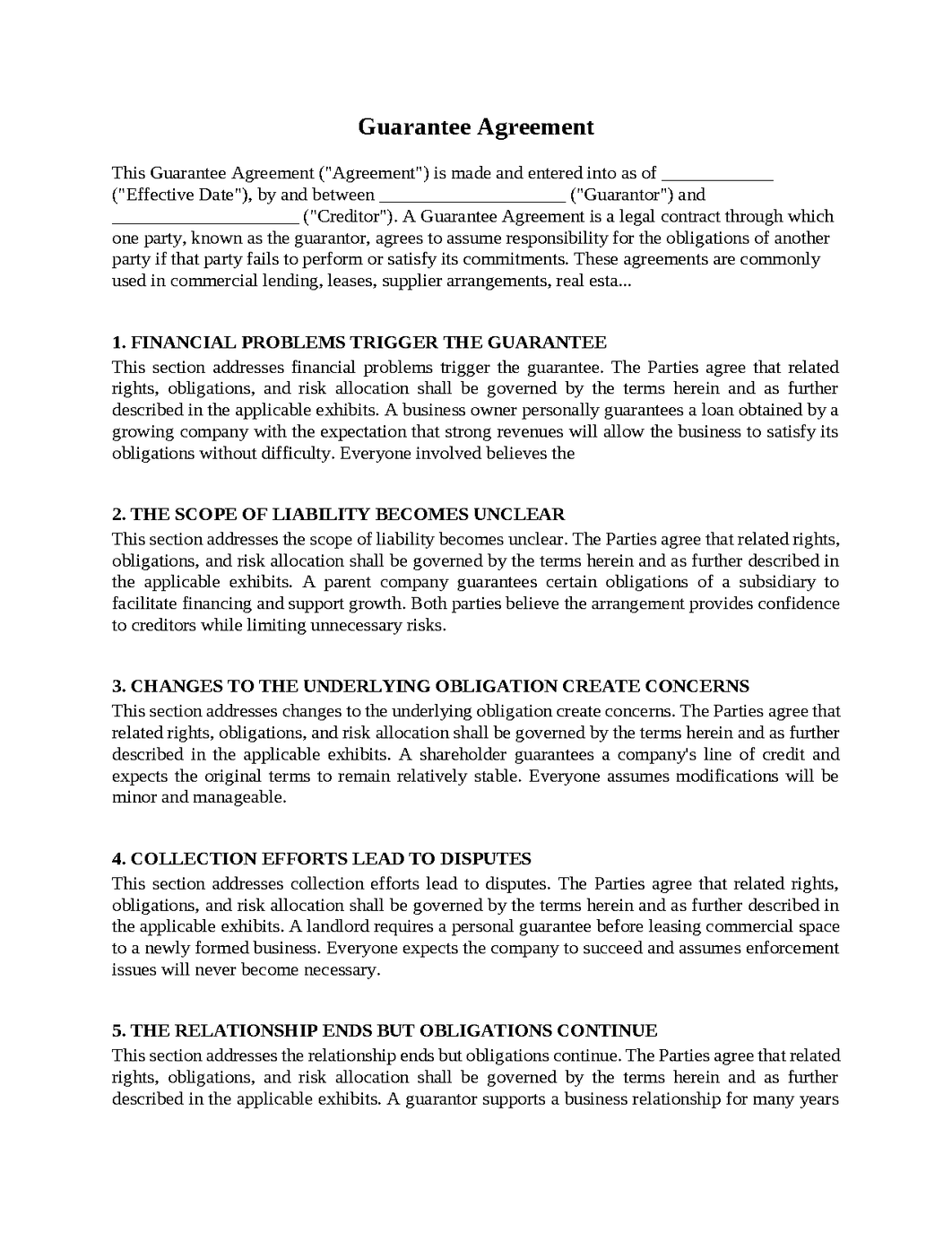
Guarantee Agreement
A Guarantee Agreement is a legal contract through which one party, known as the guarantor, agrees to assume responsibility for the obligations of another party if that party fails to perform or satisfy its commitments. These agreements are commonly used in commercial lending, leases, supplier arrangements, real estate transactions, equipment financing, and business acquisitions. A Guarantee Agreement typically addresses the scope of the guarantee, events of default, continuing obligations, limitations on liability, notice requirements, and procedures governing enforcement and termination. Because guarantees expose the guarantor to significant financial risks, disputes can arise when expectations regarding responsibilities and liabilities are not documented clearly. A carefully drafted Guarantee Agreement helps establish certainty and protect the interests of creditors, borrowers, and guarantors.
Financial Problems Trigger the Guarantee
A business owner personally guarantees a loan obtained by a growing company with the expectation that strong revenues will allow the business to satisfy its obligations without difficulty. Everyone involved believes the guarantee provides additional security while remaining largely precautionary.
For several years, payments are made on time and the company continues expanding. Eventually, economic conditions weaken and revenues decline, causing the business to miss several required payments.
The lender believes the guarantor should immediately satisfy the outstanding obligations because the guarantee was intended to protect against exactly this type of risk. The guarantor believes additional time should be provided because the business remains viable and temporary setbacks should not result in personal liability. As defaults continue, tensions emerge regarding the timing and extent of the guarantor's responsibilities.
To help avoid this problem, a Guarantee Agreement should clearly establish the circumstances that trigger liability and define the procedures governing enforcement.
The Scope of Liability Becomes Unclear
A parent company guarantees certain obligations of a subsidiary to facilitate financing and support growth. Both parties believe the arrangement provides confidence to creditors while limiting unnecessary risks.
Over time, additional loans and amendments are executed and questions arise regarding whether the guarantee extends to obligations that were not originally contemplated. Different interpretations create uncertainty regarding the amount covered by the guarantee.
The creditor believes the guarantee should apply broadly because the underlying relationship was intended to provide ongoing support. The guarantor believes liability should be limited to the original obligations and argues that later transactions require separate approval. As balances increase, disagreements emerge regarding the scope of the guarantor's exposure.
To help prevent these issues, a Guarantee Agreement should clearly establish the obligations being guaranteed and define whether future indebtedness is included.
Changes to the Underlying Obligation Create Concerns
A shareholder guarantees a company's line of credit and expects the original terms to remain relatively stable. Everyone assumes modifications will be minor and manageable.
Several years later, the lender and borrower restructure the debt and extend repayment terms without obtaining the guarantor's direct involvement. Questions arise regarding whether those changes affect the continuing validity of the guarantee.
The lender believes the guarantee remains enforceable because the guarantor agreed to support the credit relationship. The guarantor believes material changes altered the risk profile and argues that additional consent should have been required. As repayment problems intensify, tensions develop regarding the effect of the modifications.
To help avoid these problems, a Guarantee Agreement should clearly establish how amendments and restructurings affect the guarantor's obligations.
Collection Efforts Lead to Disputes
A landlord requires a personal guarantee before leasing commercial space to a newly formed business. Everyone expects the company to succeed and assumes enforcement issues will never become necessary.
When the business encounters financial difficulties and stops paying rent, the landlord begins pursuing the guarantor for the unpaid amounts. Questions arise regarding whether collection efforts should first be directed toward the tenant.
The landlord believes immediate action against the guarantor is appropriate because the guarantee was intended to provide additional security. The guarantor believes the tenant's assets should be exhausted first and argues that personal liability should be a last resort. As collection efforts intensify, disagreements emerge regarding the sequence and scope of enforcement.
To help prevent these issues, a Guarantee Agreement should clearly establish enforcement rights and define the remedies available upon default.
The Relationship Ends but Obligations Continue
A guarantor supports a business relationship for many years and assumes that liability will eventually expire once the underlying obligations are satisfied. Both parties expect the arrangement to conclude naturally over time.
Eventually, the guarantor withdraws from the business and assumes the guarantee has effectively ended. Months later, questions arise regarding obligations associated with existing debts and continuing extensions of credit.
The creditor believes the guarantee remains effective until formal release procedures are completed and all covered obligations are satisfied. The guarantor believes departing from the business should limit future exposure and expects liability to end promptly. As additional obligations arise, disagreements emerge regarding the rights and responsibilities that survive the underlying relationship.
To help avoid this problem, a Guarantee Agreement should clearly establish termination procedures and identify the obligations that continue after the guarantor's involvement with the business has ended.
Guarantee Agreements are valuable tools that provide creditors with additional protection while enabling businesses and individuals to obtain financing and commercial opportunities. However, issues involving defaults, the scope of liability, debt modifications, collection efforts, and continuing obligations can become significant sources of conflict when expectations are not documented clearly. A carefully drafted Guarantee Agreement provides a structured framework for allocating responsibilities and protecting the interests of all parties involved. When prepared thoughtfully, it can reduce uncertainty, strengthen commercial relationships, facilitate access to credit, and provide the foundation necessary for successful financial transactions.

Get started with Upsign today!
Easily send, sign and track your documents