

Bridge Loan Agreement
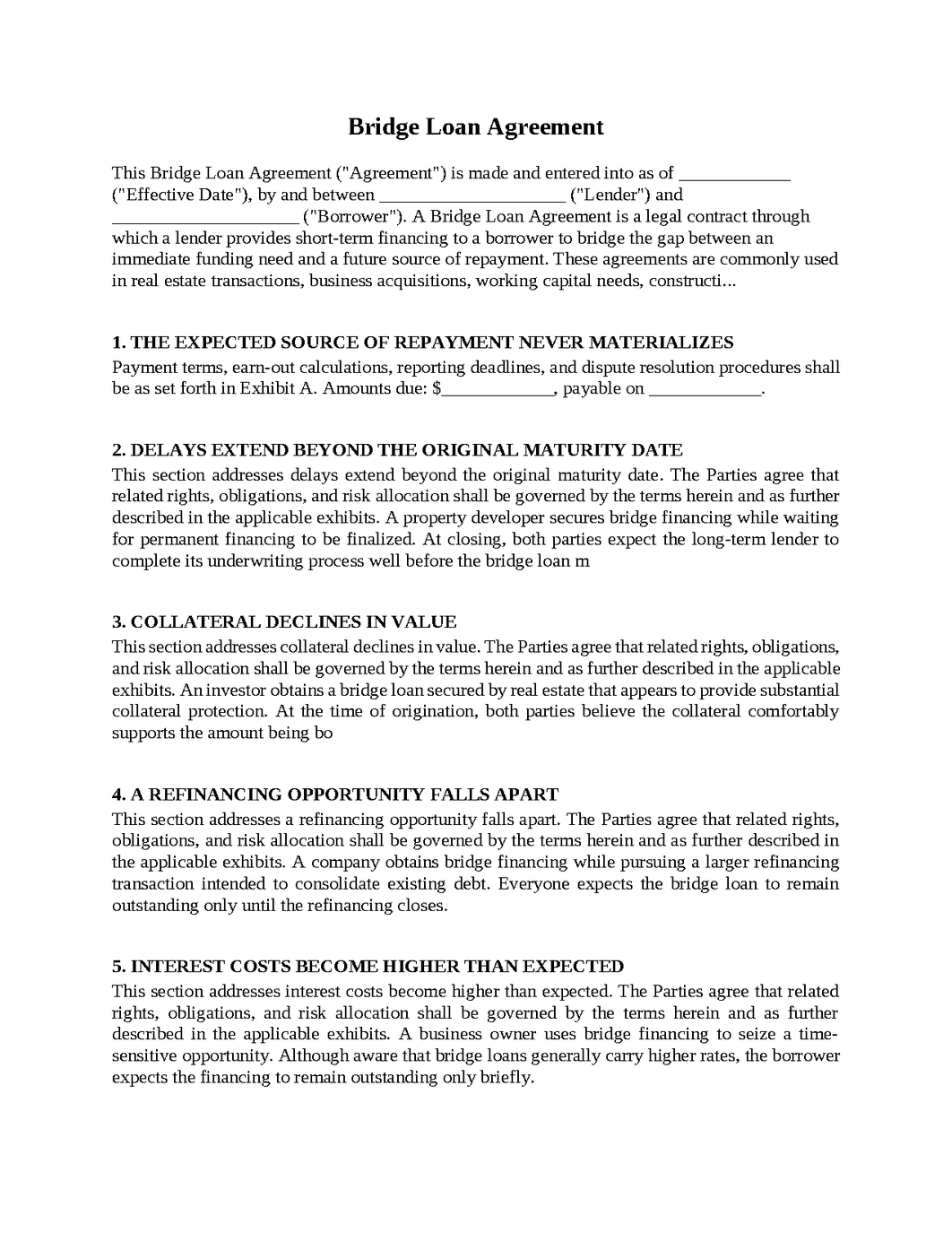
A Bridge Loan Agreement is a legal contract through which a lender provides short-term financing to a borrower to bridge the gap between an immediate funding need and a future source of repayment. These agreements are commonly used in real estate transactions, business acquisitions, working capital needs, construction projects, refinancing situations, and temporary liquidity shortages. A Bridge Loan Agreement typically addresses the loan amount, interest rate, maturity date, collateral, repayment source, extension rights, and events of default. Because bridge financing is intended to be temporary and often depends upon future transactions occurring as expected, disputes can arise when assumptions regarding timing, repayment, or collateral prove inaccurate. A carefully drafted Bridge Loan Agreement helps allocate risk and establish clear expectations for both lender and borrower.
The Expected Source of Repayment Never Materializes
A business owner obtains a bridge loan to provide temporary liquidity while negotiating the sale of a valuable asset. Both the borrower and lender expect the asset sale to close within a few months and provide sufficient proceeds to repay the loan.
Initially, the transaction appears likely to succeed. Buyers conduct due diligence, negotiations progress, and everyone assumes repayment will occur according to schedule.
Unexpected complications eventually cause the asset sale to collapse. The borrower believes alternative opportunities will emerge soon, while the lender becomes concerned that the primary source of repayment no longer exists and that the bridge loan may remain outstanding far longer than anticipated.
To help avoid this problem, a Bridge Loan Agreement should clearly identify anticipated repayment sources and establish procedures for addressing circumstances in which those sources fail to materialize.
Delays Extend Beyond the Original Maturity Date
A property developer secures bridge financing while waiting for permanent financing to be finalized. At closing, both parties expect the long-term lender to complete its underwriting process well before the bridge loan matures.
As the project progresses, regulatory reviews, appraisal issues, and documentation delays begin slowing the permanent financing process. What initially appeared to be a straightforward timeline becomes increasingly uncertain.
The borrower requests additional time and believes the delays are temporary. The lender becomes concerned because the maturity date is approaching and questions whether an extension should be granted and under what conditions.
To help prevent these issues, a Bridge Loan Agreement should clearly address maturity dates, extension rights, and the requirements that must be satisfied before additional time will be granted.
Collateral Declines in Value
An investor obtains a bridge loan secured by real estate that appears to provide substantial collateral protection. At the time of origination, both parties believe the collateral comfortably supports the amount being borrowed.
Over time, market conditions change and property values begin declining. Additional economic pressures create uncertainty regarding whether the collateral remains sufficient to support the outstanding debt.
The borrower believes the decline is temporary and that the property will recover in value. The lender becomes increasingly concerned about protecting its position and considers requesting additional collateral or other protections.
To help avoid these problems, a Bridge Loan Agreement should clearly establish collateral requirements and provide mechanisms for addressing material declines in collateral value.
A Refinancing Opportunity Falls Apart
A company obtains bridge financing while pursuing a larger refinancing transaction intended to consolidate existing debt. Everyone expects the bridge loan to remain outstanding only until the refinancing closes.
As underwriting progresses, the permanent lender discovers issues involving cash flow, financial statements, or collateral that make the proposed refinancing less attractive. Approval is delayed and eventually withdrawn.
The borrower believes another lender can be found with enough time. The bridge lender becomes concerned because the original exit strategy no longer appears reliable and repayment may become uncertain.
The disagreement centers on how long the lender should remain committed to a transaction that was intended to be temporary.
To help prevent these issues, a Bridge Loan Agreement should clearly identify default provisions and establish procedures for responding when anticipated refinancing transactions do not occur.
Interest Costs Become Higher Than Expected
A business owner uses bridge financing to seize a time-sensitive opportunity. Although aware that bridge loans generally carry higher rates, the borrower expects the financing to remain outstanding only briefly.
As delays accumulate, interest expenses continue increasing. The borrower becomes frustrated because the overall cost of the financing is much higher than originally anticipated.
The lender believes the pricing reflects the short-term risk associated with bridge lending and that the terms were understood from the outset. The borrower believes the extended timeline creates an unfair financial burden.
The disagreement shifts from the original business opportunity to the cost of maintaining the bridge financing.
To help avoid these problems, a Bridge Loan Agreement should clearly disclose interest calculations, fees, and the financial consequences associated with extending the loan beyond its anticipated term.
Bridge Loan Agreements are important financing tools that provide borrowers with temporary liquidity while awaiting longer-term solutions. However, issues involving failed repayment sources, maturity extensions, declining collateral values, unsuccessful refinancings, and rising interest costs can become significant sources of conflict when expectations are not documented clearly. A carefully drafted Bridge Loan Agreement provides a structured framework for allocating risk and defining the rights and responsibilities of both parties. When prepared thoughtfully, it can reduce uncertainty, support time-sensitive transactions, protect lender interests, and provide borrowers with the flexibility necessary to bridge important financial transitions successfully.

Get started with Upsign today!
Easily send, sign and track your documents