

Agreement to Arbitrate
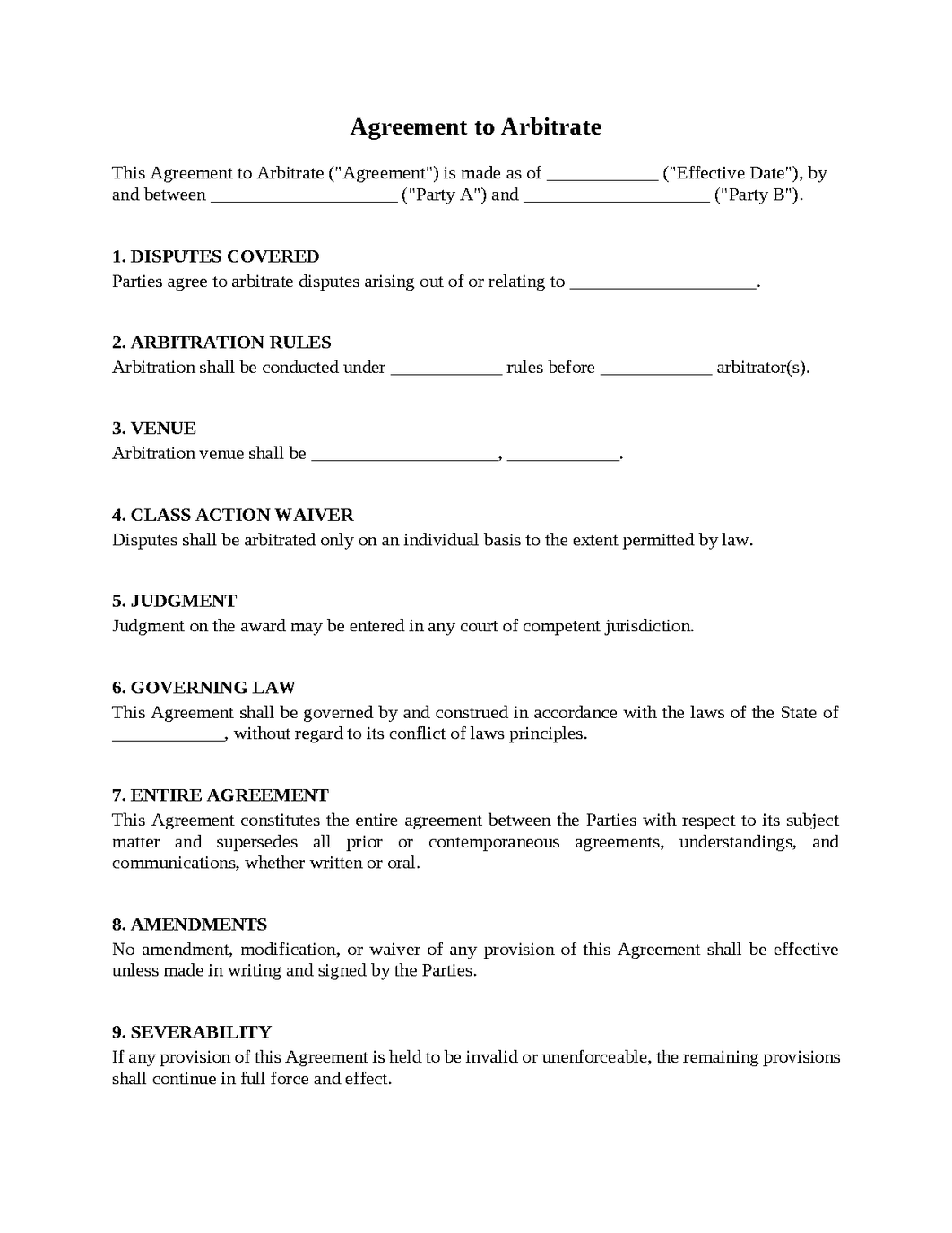
An Agreement to Arbitrate is a contract in which two or more parties agree that certain disputes will be resolved through arbitration rather than through traditional court litigation. Arbitration is a private dispute resolution process in which a neutral third party, known as an arbitrator, reviews evidence, hears arguments, and issues a decision. Businesses, employers, contractors, service providers, consumers, landlords, lenders, and commercial partners frequently use arbitration agreements to establish how future disputes will be handled. Many parties choose arbitration because it can be faster, more private, and less expensive than court proceedings. However, arbitration agreements can also create disagreements regarding enforceability, scope, costs, and procedural rights. When drafted carefully, an Agreement to Arbitrate can provide a predictable framework for resolving disputes. When expectations are unclear, however, conflicts may arise before the actual dispute is even addressed.
One Party Refuses to Arbitrate After a Dispute Arises
A software development company signs a service agreement with a large corporate client. The contract contains a clause requiring all disputes to be resolved through binding arbitration.
Several years later, the client alleges that the software failed to perform as promised and files a lawsuit in state court seeking substantial damages. The software company immediately points to the arbitration provision and requests that the dispute be removed from court and sent to arbitration.
The client resists. They argue that litigation would provide broader discovery rights, allow appeals, and offer procedural advantages that may not exist in arbitration.
Situations like this are common. Parties often agree to arbitration when a contract is signed but become less enthusiastic about the process after a dispute arises. The forum that seemed acceptable during negotiations may appear less attractive once significant money is at stake.
The disagreement can delay resolution of the underlying dispute while courts determine whether arbitration is required. Legal fees increase, timelines expand, and both parties may spend considerable resources arguing about procedure before addressing the actual merits of the case.
An Agreement to Arbitrate helps reduce these conflicts by clearly stating that disputes must be resolved through arbitration and explaining the parties' obligations if a claim arises.
The Parties Disagree About Which Claims Must Be Arbitrated
A marketing agency enters into a long-term agreement with a national retailer. The contract includes an arbitration provision covering disputes "arising under this agreement."
Several years later, the retailer accuses the agency of misusing confidential information and soliciting employees. The agency argues that these claims fall outside the contract and therefore should not be arbitrated. The retailer insists that the arbitration clause applies.
The dispute quickly shifts from the underlying allegations to a procedural question: which claims actually belong in arbitration?
This issue arises frequently because arbitration clauses vary widely. Some provisions cover virtually every dispute between the parties, while others apply only to specific claims.
Even relatively simple language can create uncertainty. Phrases such as "arising under," "related to," or "connected with" a contract may be interpreted differently depending on the circumstances.
The parties may spend months litigating where the dispute should be heard rather than addressing the dispute itself.
An Agreement to Arbitrate helps avoid these problems by clearly defining which disputes are subject to arbitration and which claims may proceed through other channels.
Arbitration Costs Become a Source of Conflict
A small business enters into a contract with a larger corporation. The agreement requires arbitration for all disputes but says very little about how arbitration expenses will be allocated.
Years later, a disagreement arises involving approximately $25,000. The small business learns that filing fees, arbitrator compensation, hearing expenses, and administrative costs could consume a substantial portion of the amount in dispute.
The business argues that the costs make arbitration unfair. The larger company responds that arbitration was agreed upon voluntarily and must be honored.
Cost disputes are common because many parties focus on substantive business terms while paying less attention to dispute resolution provisions.
Unlike courts, where filing fees are often relatively modest, arbitration may involve significant administrative expenses. The cost of the arbitrator alone can be substantial, particularly in complex commercial disputes.
Questions frequently arise regarding who pays filing fees, how arbitrator costs are allocated, and whether prevailing parties can recover expenses.
An Agreement to Arbitrate helps reduce uncertainty by addressing cost allocation directly. Clear provisions regarding fees and expenses can prevent procedural disputes from overshadowing the underlying disagreement.
One Party Claims the Agreement Was Never Valid
An employee signs an onboarding packet that includes an arbitration agreement. Years later, the employee files a claim alleging discrimination and wrongful termination.
The employer points to the arbitration agreement and requests that the matter be submitted to arbitration. The employee responds by arguing that the agreement was never valid because they did not understand what they were signing and were not given an opportunity to negotiate its terms.
Challenges regarding enforceability occur frequently in arbitration disputes. One party may claim that the agreement was unconscionable, improperly presented, obtained through misrepresentation, or otherwise invalid.
Courts are often asked to determine whether the arbitration agreement itself can be enforced before arbitration proceeds.
The outcome can have significant consequences. If the agreement is unenforceable, the dispute may proceed through traditional litigation. If the agreement is upheld, arbitration may become mandatory.
An Agreement to Arbitrate helps reduce these risks by presenting terms clearly, documenting consent, and ensuring that both parties understand the dispute resolution process they are agreeing to follow.
The Losing Party Tries to Challenge the Arbitration Award
A contractor and property developer submit a construction dispute to arbitration as required by their contract. After a lengthy hearing process, the arbitrator issues a decision in favor of the developer.
The contractor is disappointed with the outcome and immediately begins exploring ways to overturn the award. They argue that the arbitrator misunderstood important facts and reached the wrong conclusion.
The developer responds that arbitration was chosen specifically because it provides finality and avoids prolonged appeals.
This situation highlights one of the most significant differences between arbitration and litigation. Arbitration awards are often difficult to challenge successfully. Courts generally provide limited review and rarely reconsider the merits of the dispute.
Parties sometimes fail to appreciate this reality when agreeing to arbitration. They may assume arbitration functions exactly like court proceedings, only to discover later that opportunities for appeal are far more limited.
The resulting frustration can create additional disputes and delay final resolution.
An Agreement to Arbitrate helps establish expectations regarding the binding nature of arbitration and the extent to which decisions will be final and enforceable.
Disputes are an unavoidable part of many business and personal relationships, and the method chosen to resolve those disputes can significantly affect costs, timelines, privacy, and outcomes. Questions regarding enforceability, scope, expenses, validity, and finality frequently arise when arbitration provisions are invoked. An Agreement to Arbitrate provides a practical framework for addressing these issues before conflicts occur and establishes clear expectations regarding how future disputes will be handled. When drafted carefully and understood by all parties, the agreement can help reduce uncertainty, streamline dispute resolution, and provide both sides with greater confidence when disagreements arise.
:::

Get started with Upsign today!
Easily send, sign and track your documents