

Acceptable Use Policy
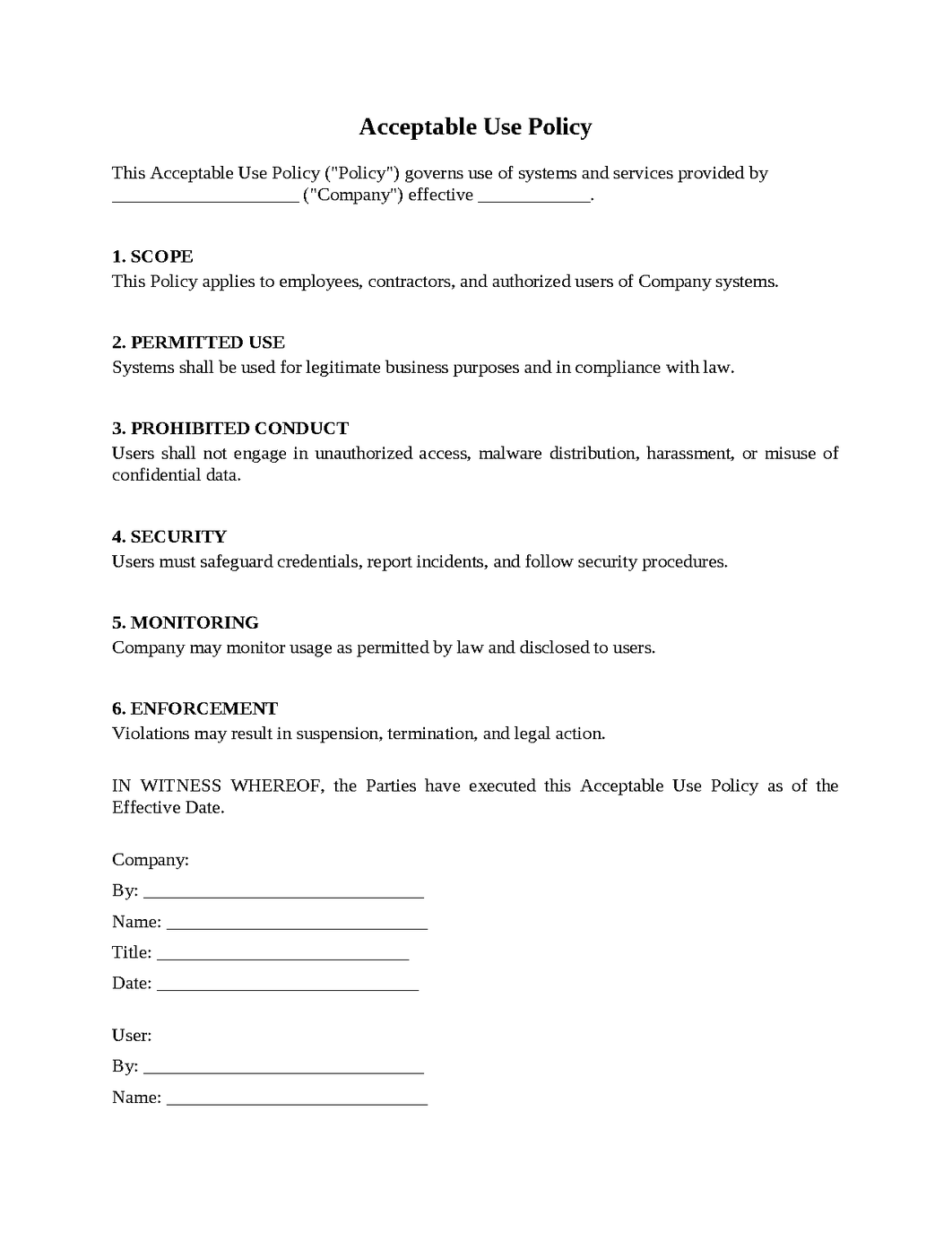
An Acceptable Use Policy (AUP) is a legal document that establishes the rules, standards, and restrictions governing how users may access and use a website, software platform, online service, network, application, or digital system. Acceptable Use Policies are commonly used by SaaS providers, technology companies, online marketplaces, social media platforms, educational institutions, cloud service providers, financial technology companies, and organizations that offer internet-based services. These policies typically address prohibited activities, user responsibilities, security requirements, intellectual property protections, compliance obligations, and enforcement rights. Because online services often serve large and diverse user communities, disputes can arise when expectations regarding permitted and prohibited conduct are not communicated clearly. A well-drafted Acceptable Use Policy helps protect service providers, users, and the broader platform ecosystem.
A User Employs the Platform for Unlawful Activities
A software company launches an online platform designed to help businesses manage customer communications and operational workflows.
The platform grows rapidly, attracting users from a wide range of industries and geographic locations. Most users operate responsibly and utilize the service for legitimate business purposes.
Over time, however, the company discovers that certain users may be employing the platform to facilitate fraudulent transactions, deceptive marketing practices, or activities that violate applicable laws and regulations.
The affected users argue that the platform merely provides technology and that responsibility rests with the individuals conducting the activities. The company believes it has an obligation to prevent misuse that could harm customers, regulators, and other users.
The situation creates legal, reputational, and operational risks for the platform and its broader user community.
To help avoid this problem, an Acceptable Use Policy should clearly prohibit unlawful activities, establish user compliance obligations, and explain the provider's rights to investigate and address violations.
Excessive Usage Disrupts Other Users
A cloud-based service provides customers with access to shared computing resources and infrastructure.
Most users consume resources in a manner consistent with ordinary business operations. One customer, however, begins using automated systems and unusually intensive workloads that consume a disproportionate share of available capacity.
Other customers experience slower performance and reduced service quality as a result. The heavy user believes it is simply maximizing the value of its subscription and operating within technical limits.
The service provider becomes concerned that a single customer's behavior is negatively affecting the experience of the broader user base.
The disagreement centers on balancing individual usage rights against the stability and reliability of the platform as a whole.
To help prevent these issues, an Acceptable Use Policy should establish reasonable usage limitations, prohibit activities that impair system performance, and reserve the provider's right to manage excessive or disruptive resource consumption.
Users Upload Harmful or Infringing Content
An online platform allows users to upload documents, images, videos, and other content as part of the service experience.
The vast majority of users contribute appropriate materials that support legitimate business or personal activities. Eventually, however, complaints arise regarding content that allegedly infringes intellectual property rights, contains harmful material, or violates the rights of third parties.
The users responsible for the content argue that they are exercising legitimate rights and that the platform should remain neutral. The platform operator becomes concerned about legal exposure and the impact on other users.
Questions arise regarding content review, removal procedures, and the responsibility of both the user and the platform provider.
The issue grows more complex as additional complaints and competing interests emerge.
To help avoid these problems, an Acceptable Use Policy should clearly prohibit unauthorized or harmful content, establish content-removal procedures, and explain the consequences of violating content standards.
Security Risks Are Created by User Behavior
A technology provider offers a platform that stores sensitive customer information and supports critical business functions.
To maintain security, the provider implements authentication requirements, access controls, and monitoring systems. Despite these safeguards, certain users begin sharing credentials, bypassing security measures, or attempting to access information beyond their authorized permissions.
The users may view these actions as convenient or harmless. The provider views them as significant threats to the security and integrity of the platform.
Other customers become concerned because one user's behavior could potentially affect the confidentiality and security of shared systems.
The disagreement highlights the importance of establishing clear expectations regarding responsible system use.
To help prevent these issues, an Acceptable Use Policy should define security requirements, prohibit unauthorized access attempts, establish account protection obligations, and explain enforcement measures for security-related violations.
Enforcement Actions Lead to User Complaints
A service provider discovers conduct that appears to violate its platform rules.
After investigating the situation, the provider restricts access to certain features, suspends an account, or terminates a user's access altogether. The affected user disagrees with the decision and believes the enforcement action was unfair or inconsistent.
The provider maintains that the action was necessary to protect the platform and other users. The user argues that expectations were unclear or that the alleged violation did not justify the consequences imposed.
The dispute becomes more significant because access to the platform may be important to the user's business operations.
Both sides focus on whether the provider acted appropriately under the governing rules.
To help avoid these problems, an Acceptable Use Policy should clearly describe prohibited conduct, explain investigation and enforcement procedures, and identify the actions the provider may take in response to policy violations.
Acceptable Use Policies are essential tools for establishing standards of conduct and protecting the integrity of online services and digital platforms. However, issues involving unlawful activities, excessive resource consumption, harmful content, security risks, and enforcement actions can become significant sources of conflict when expectations are not communicated clearly. A carefully drafted Acceptable Use Policy provides a structured framework for governing platform use and protecting all parties involved. When prepared thoughtfully, it can help reduce misunderstandings, improve security, support regulatory compliance, and promote a safe and reliable user experience.

Get started with Upsign today!
Easily send, sign and track your documents