

Security Deposit Agreement
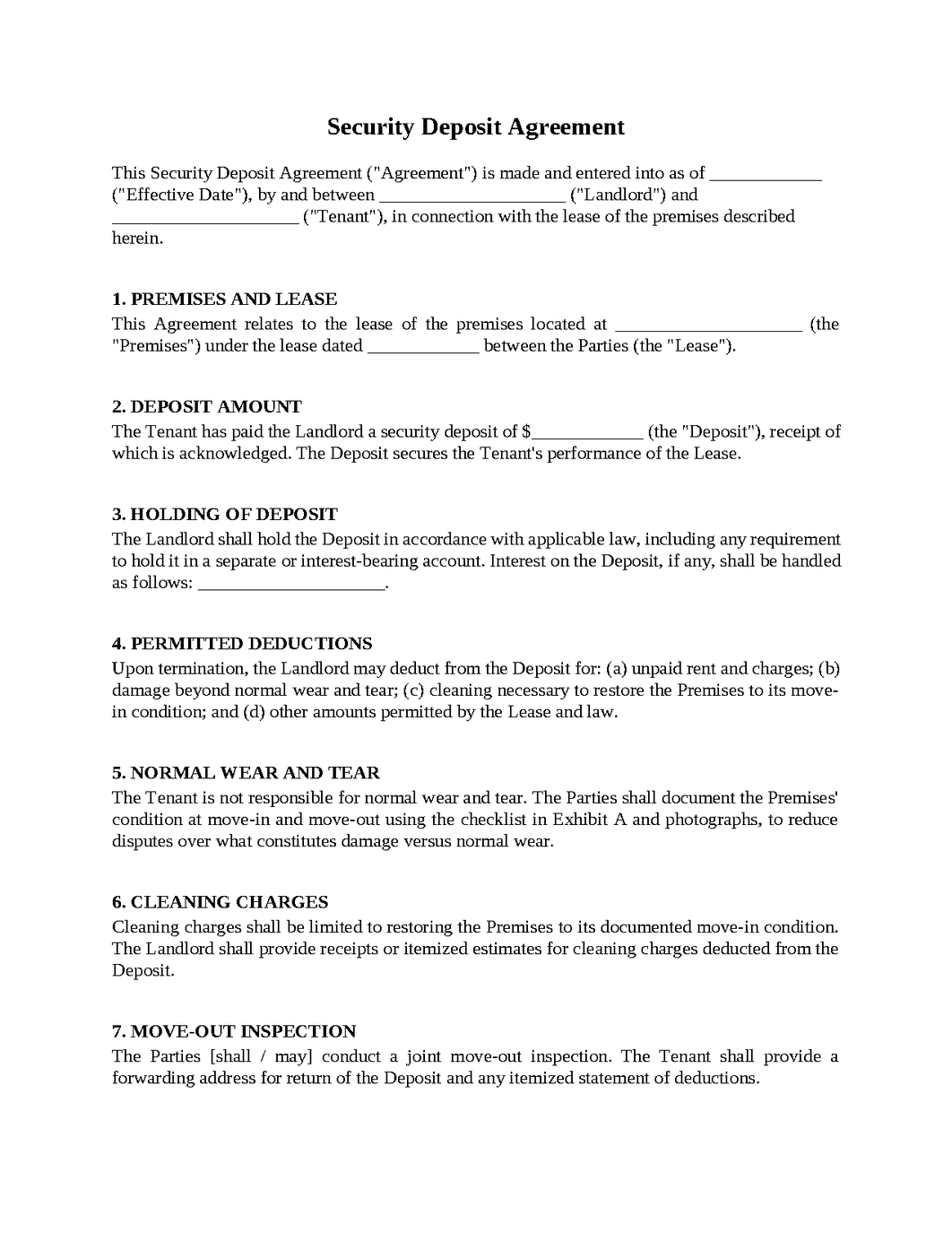
A Security Deposit Agreement is a legal contract that establishes the terms under which a tenant provides a security deposit to a landlord as financial protection against unpaid rent, property damage, lease violations, cleaning costs, or other obligations arising under a rental arrangement. Security Deposit Agreements are commonly used in residential leases, commercial leases, room rentals, vacation rentals, and short-term occupancy arrangements. Because security deposits involve money held for future contingencies and often become one of the final issues addressed when a tenancy ends, disputes frequently arise when expectations regarding deposit use and return are not clearly documented. A well-drafted Security Deposit Agreement helps protect both landlords and tenants while reducing misunderstandings throughout the tenancy.
The Tenant Believes Damage Is Normal Wear and Tear
A tenant occupies a rental property for several years and takes reasonable care of the home throughout the lease term.
When the tenancy ends, the landlord conducts an inspection and identifies carpet wear, wall marks, appliance issues, and various cosmetic concerns. The landlord believes some of the conditions exceed ordinary wear and tear and decides to withhold part of the security deposit to cover repairs.
The tenant disagrees and argues that the property's condition reflects normal use expected after years of occupancy.
Neither party believes they are acting unfairly, but both have different interpretations of what constitutes tenant-caused damage.
What should have been a routine move-out process becomes a dispute over deposit deductions.
To help avoid this problem, a Security Deposit Agreement should clearly distinguish normal wear and tear from tenant damage, establish inspection procedures, and explain the types of expenses that may be deducted from the deposit.
Cleaning Charges Become Controversial
A tenant vacates a rental property and spends considerable time cleaning before returning possession to the landlord.
After inspecting the property, the landlord hires professional cleaners and deducts the cost from the security deposit. The landlord believes the cleaning was necessary to prepare the property for the next occupant.
The tenant is surprised by the deduction and believes the property was left in acceptable condition.
The disagreement arises because expectations regarding move-out cleaning standards were never clearly communicated.
Both parties believe their position is reasonable, yet they reach very different conclusions regarding the property's condition.
To reduce these risks, a Security Deposit Agreement should establish move-out cleaning requirements, define expected standards, and identify circumstances under which cleaning expenses may be charged against the deposit.
Unpaid Rent and Other Charges Reduce the Deposit
A tenant experiences temporary financial difficulties during the final months of a lease.
Although most rent payments are made successfully, a balance remains outstanding when the tenancy ends. Additional charges related to utilities, late fees, and other obligations also remain unresolved.
The landlord applies the security deposit toward the outstanding amounts and returns only a small portion of the remaining funds.
The tenant expected a substantially larger refund and questions whether all deductions were appropriate.
The disagreement centers on how the deposit may be applied and the order in which obligations are satisfied.
To help prevent these issues, a Security Deposit Agreement should clearly identify permissible uses of the deposit, establish priority rules for deductions, and explain how remaining balances will be calculated and refunded.
Multiple Tenants Disagree About Deposit Ownership
Several roommates rent a property together and contribute toward a single security deposit.
At the beginning of the lease, everyone shares expenses equally and expects the arrangement to remain simple. Over time, however, roommates move in and out, contributions change, and personal circumstances evolve.
When the tenancy ends, questions arise regarding who should receive the deposit refund and how deductions should be allocated among the tenants.
Some tenants believe refunds should be based on original contributions. Others believe current occupants should receive the funds because they remained responsible for the property.
The landlord becomes involved in a dispute that exists primarily among the tenants themselves.
To help avoid these problems, a Security Deposit Agreement should identify who is legally entitled to receive refunds, establish procedures for multiple tenants, and clarify that allocation among occupants may be their responsibility.
The Landlord Delays Returning the Deposit
A tenant moves out and expects the security deposit to be returned promptly.
Weeks pass without receiving a refund or explanation regarding deductions. The tenant becomes concerned that the landlord may be withholding funds improperly.
The landlord explains that inspections, repair estimates, vendor invoices, and accounting reviews are still being completed.
Although both parties want the matter resolved, frustration increases because expectations regarding timing were never clearly established.
What should have been an administrative process becomes a source of conflict.
To reduce these risks, a Security Deposit Agreement should clearly establish deadlines for inspections, itemized statements, and deposit refunds. Clear timelines help ensure that both parties understand when funds will be returned and what information will accompany any deductions.
Security Deposit Agreements play an important role in protecting landlords against financial losses while safeguarding tenants' rights to the return of their funds. However, issues involving property damage, cleaning costs, unpaid obligations, multiple tenants, and refund timing can become significant sources of conflict when expectations are not documented clearly. A carefully drafted Security Deposit Agreement provides a structured framework for managing these issues and protecting all parties involved. When prepared thoughtfully, it can help reduce misunderstandings, support fair deposit administration, preserve landlord-tenant relationships, and facilitate smooth tenancy transitions.

Get started with Upsign today!
Easily send, sign and track your documents