

Room Rental Agreement
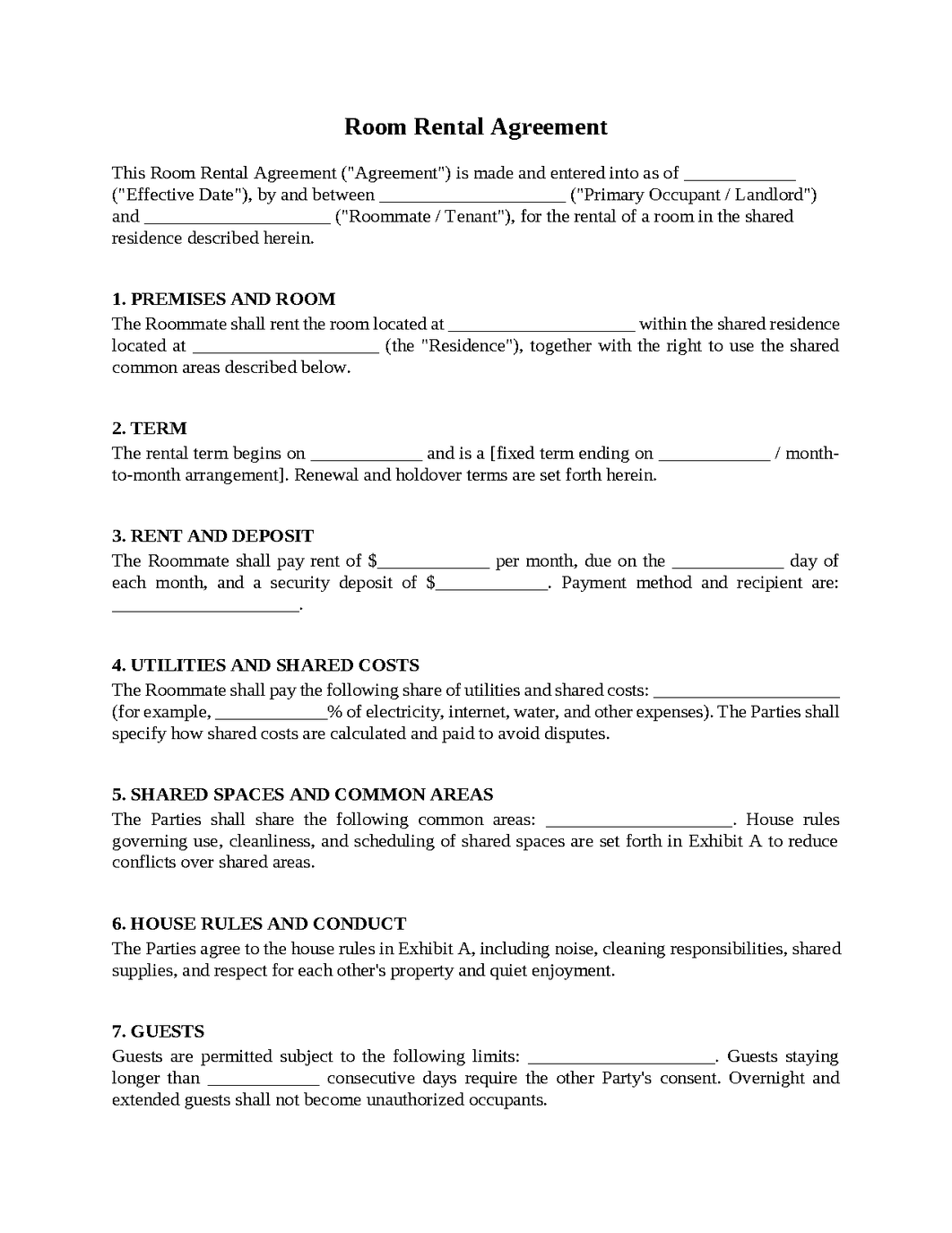
A Room Rental Agreement is a legal contract that establishes the terms under which one person rents a room within a residence from a property owner, tenant, or primary occupant. Unlike a traditional residential lease that often covers an entire property, a Room Rental Agreement focuses on the rights and responsibilities associated with a specific room and shared access to common areas such as kitchens, bathrooms, living rooms, laundry facilities, and parking spaces. These agreements are commonly used among roommates, homeowners, students, traveling professionals, and individuals seeking affordable housing arrangements. Because multiple people share living space while maintaining separate expectations regarding privacy, expenses, and household rules, disputes can arise when terms are not documented clearly. A well-drafted Room Rental Agreement helps establish expectations and reduce conflicts.
Disagreements Develop Over Shared Spaces
A homeowner rents a spare bedroom to a tenant and grants access to the kitchen, living room, and laundry facilities.
Initially, both parties coexist comfortably and make informal arrangements regarding household use. As time passes, however, disagreements begin developing regarding cleanliness, storage space, guest access, and use of common areas.
The tenant believes shared spaces should be available equally to everyone living in the home. The homeowner believes certain areas should remain under greater personal control because the property belongs to them.
Neither party intended conflict, but their assumptions regarding shared living arrangements differ significantly.
What began as a simple housing arrangement becomes a dispute over household expectations.
To help avoid this problem, a Room Rental Agreement should clearly define shared areas, establish usage rules, identify storage rights, and explain expectations regarding maintenance and cleanliness of common spaces.
Utility Costs Become a Source of Frustration
A tenant rents a room in a house under an arrangement that requires contributions toward utilities.
At the beginning of the relationship, utility expenses are relatively predictable and both parties are satisfied. Over time, utility usage increases substantially due to seasonal weather, additional occupants, and changing habits.
The homeowner believes the tenant should contribute a larger share of expenses. The tenant believes the original payment arrangement already accounted for normal utility usage.
As costs continue rising, disagreements emerge regarding fairness and responsibility.
Neither party anticipated the increase, yet both feel their position is reasonable.
To reduce these risks, a Room Rental Agreement should clearly identify which utilities are included in rent, how shared expenses will be calculated, and how future increases will be handled.
Guests Stay Longer Than Expected
A tenant occasionally invites friends and family members to visit.
Initially, the homeowner has no concerns because the visits are brief and infrequent. Over time, however, guests begin staying for extended periods and using household resources regularly.
The homeowner becomes concerned that the arrangement effectively adds additional occupants to the property without approval. The tenant believes occasional extended visits are a normal part of daily life.
The disagreement creates tension because expectations regarding guests were never discussed in detail.
What started as casual hospitality becomes a dispute regarding occupancy rights.
To help prevent these issues, a Room Rental Agreement should establish guest policies, define permitted visitation periods, identify approval requirements for extended stays, and explain the consequences of unauthorized occupancy.
Privacy Expectations Are Not Aligned
A homeowner rents a room to a tenant while continuing to live in the property.
Both parties value privacy but have different assumptions regarding access to rooms, common areas, and personal belongings. The homeowner occasionally enters the rented room for maintenance purposes, while the tenant expects advance notice before any entry occurs.
The tenant becomes uncomfortable and believes personal space is not being respected. The homeowner believes certain access rights are necessary to maintain the property properly.
Neither party intends to violate the other's privacy, but their expectations differ significantly.
The situation becomes increasingly uncomfortable as trust begins to erode.
To help avoid these problems, a Room Rental Agreement should clearly establish privacy rights, entry procedures, notice requirements, and access limitations for both parties.
One Party Wants to End the Arrangement Early
A tenant rents a room under an agreement expected to last for a specific period of time.
Several months later, circumstances change. The tenant receives a job opportunity in another city, or the homeowner decides to sell the property or reclaim the room for personal use.
The party seeking to terminate the arrangement believes the change is unavoidable. The other party expects the agreement to remain in effect for the originally anticipated term.
Questions arise regarding notice requirements, refund obligations, move-out timelines, and responsibilities during the transition.
What should be a straightforward departure becomes a source of conflict.
To reduce these risks, a Room Rental Agreement should clearly establish termination procedures, identify notice requirements, explain refund rights, and define responsibilities when the arrangement ends earlier than expected.
Room Rental Agreements are valuable tools for creating clear expectations in shared housing arrangements. However, issues involving common areas, utility costs, guests, privacy, and early termination can become significant sources of conflict when responsibilities are not documented clearly. A carefully drafted Room Rental Agreement provides a structured framework for managing these relationships and protecting all parties involved. When prepared thoughtfully, it can help reduce misunderstandings, improve communication, support respectful living arrangements, and promote a positive housing experience for everyone sharing the property.

Get started with Upsign today!
Easily send, sign and track your documents