

Sales Representative Agreement
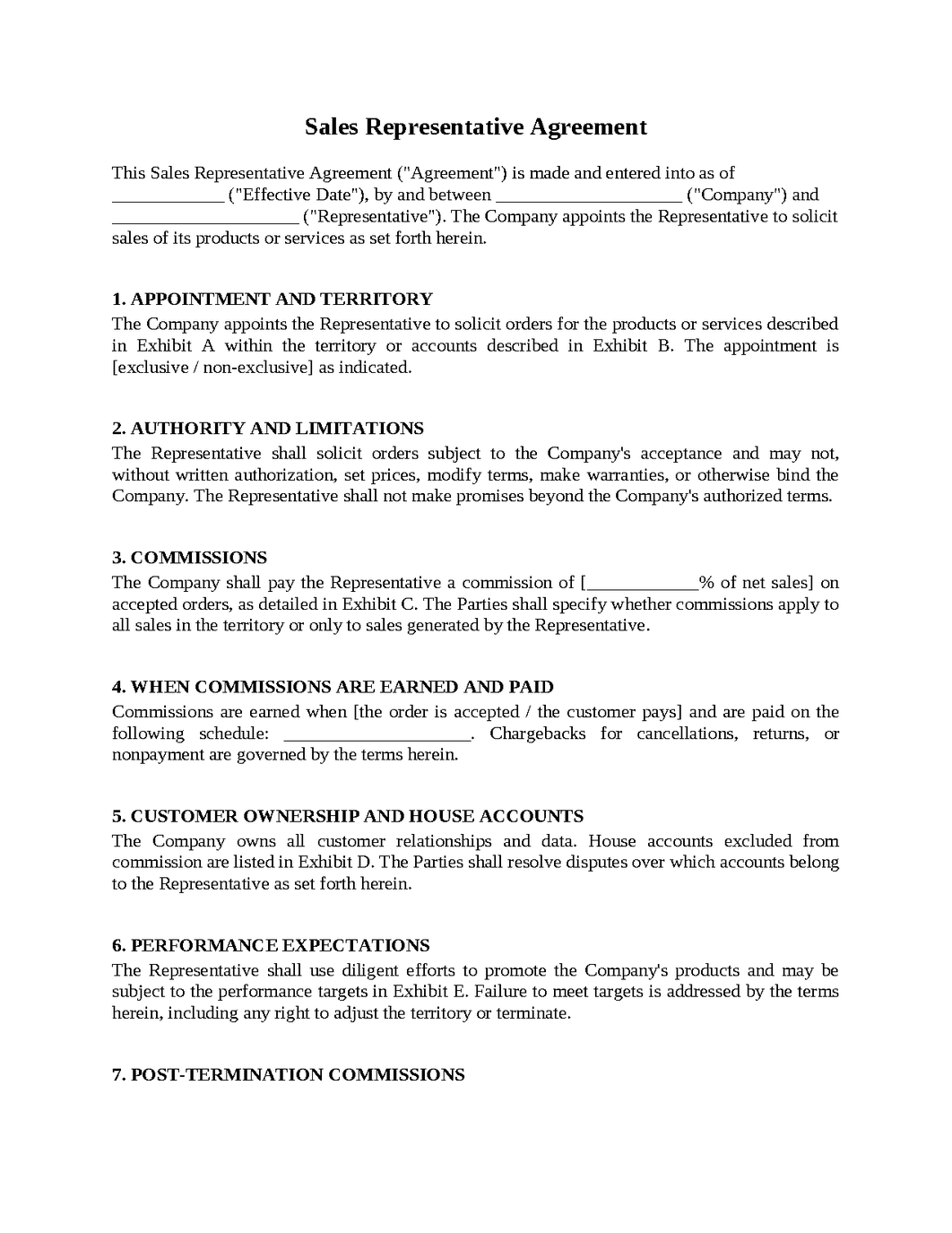
A Sales Representative Agreement is a legal contract that establishes the terms under which a salesperson or independent sales representative promotes, markets, and sells products or services on behalf of a company. These agreements are commonly used in manufacturing, technology, healthcare, wholesale distribution, consumer products, industrial equipment, and business services industries. A Sales Representative Agreement typically addresses territory assignments, sales responsibilities, commission structures, customer relationships, confidentiality obligations, performance standards, and termination rights. Because sales representatives often serve as the primary connection between a company and its customers, disputes can arise when expectations regarding compensation, authority, and customer ownership are not clearly documented. A well-drafted Sales Representative Agreement helps protect both parties and support productive business relationships.
The Representative Believes a Commission Is Owed on Every Sale
A company hires an independent sales representative to develop business within a specific territory.
The representative spends considerable time identifying prospects, conducting meetings, and educating customers about the company's products. As sales begin occurring, the representative expects commissions on all transactions involving customers within the assigned territory.
The company believes commissions should only be paid on customers directly solicited and managed by the representative. Sales generated through company marketing efforts, existing customer relationships, or online channels are viewed differently.
The representative argues that territory exclusivity should entitle them to broader compensation rights. The company disagrees and points to the specific efforts that generated certain sales.
The disagreement becomes increasingly significant as revenue grows.
To help avoid this problem, a Sales Representative Agreement should clearly define commissionable sales, establish territory rights, identify excluded transactions, and explain when commissions become earned.
Customer Ownership Becomes a Source of Conflict
A sales representative develops relationships with numerous customers over several years.
Through consistent communication and support, the representative becomes the primary point of contact for many accounts. The customers often associate the representative personally with the products being sold.
Eventually, the company reassigns certain accounts to internal personnel or other representatives. The original representative believes the accounts should remain under their control because of the relationships developed over time.
The company believes customer relationships ultimately belong to the business rather than any individual representative.
The disagreement affects both compensation and future business opportunities.
Neither party anticipated how important account ownership would become.
To reduce these risks, a Sales Representative Agreement should clearly define customer ownership rights, establish account reassignment procedures, and identify the effect of reassignment on future commissions.
The Representative Makes Promises Beyond Authorized Terms
A sales representative works aggressively to secure new business and meet ambitious sales goals.
During negotiations with prospective customers, the representative discusses pricing, service levels, delivery schedules, and product capabilities. In an effort to close a transaction, the representative makes commitments that exceed the company's standard policies.
When the customer later expects those commitments to be honored, the company discovers that the representative lacked authority to approve certain terms.
The customer becomes frustrated, and the company must address expectations it never intended to create.
The representative believes flexibility was necessary to secure the sale. The company believes established approval procedures should have been followed.
To help prevent these issues, a Sales Representative Agreement should clearly define the representative's authority, identify approval requirements, and prohibit commitments beyond authorized terms without written consent.
Sales Performance Falls Below Expectations
A company appoints a representative to expand market presence in a new region.
Initially, both parties are optimistic about growth opportunities and expected results. As time passes, however, sales remain lower than anticipated despite ongoing efforts by the representative.
The company believes stronger performance should be possible given the market potential. The representative points to competition, economic conditions, pricing challenges, and product limitations.
Neither side is satisfied with the results, yet both disagree regarding the cause of the underperformance.
The relationship becomes strained because expectations were never translated into measurable objectives.
To help avoid these problems, a Sales Representative Agreement should establish performance standards, identify sales goals where appropriate, define reporting obligations, and create procedures for addressing performance concerns before termination becomes necessary.
The Relationship Ends While Opportunities Remain Active
After several successful years, a sales representative and company decide to end their relationship.
At the time of termination, numerous opportunities remain pending. Some customers are evaluating proposals, others are negotiating contracts, and several transactions appear close to completion.
The representative believes commissions should still be paid on deals substantially developed before the relationship ended. The company believes future commissions should be limited once representation ceases.
The disagreement becomes significant because several pending opportunities could generate substantial revenue.
What should have been a straightforward separation becomes a dispute over future compensation rights.
To reduce these risks, a Sales Representative Agreement should clearly address post-termination commissions, establish customer protection periods, define pending opportunity rights, and identify which obligations survive termination.
Sales Representative Agreements play a critical role in defining relationships between companies and the individuals responsible for generating revenue and customer growth. However, issues involving commission eligibility, customer ownership, sales authority, performance expectations, and post-termination compensation can become significant sources of conflict when expectations are not documented clearly. A carefully drafted Sales Representative Agreement provides a structured framework for managing these relationships and protecting both parties involved. When prepared thoughtfully, it can help reduce misunderstandings, strengthen accountability, improve sales performance, and support long-term business success.

Get started with Upsign today!
Easily send, sign and track your documents