

Referral Agreement
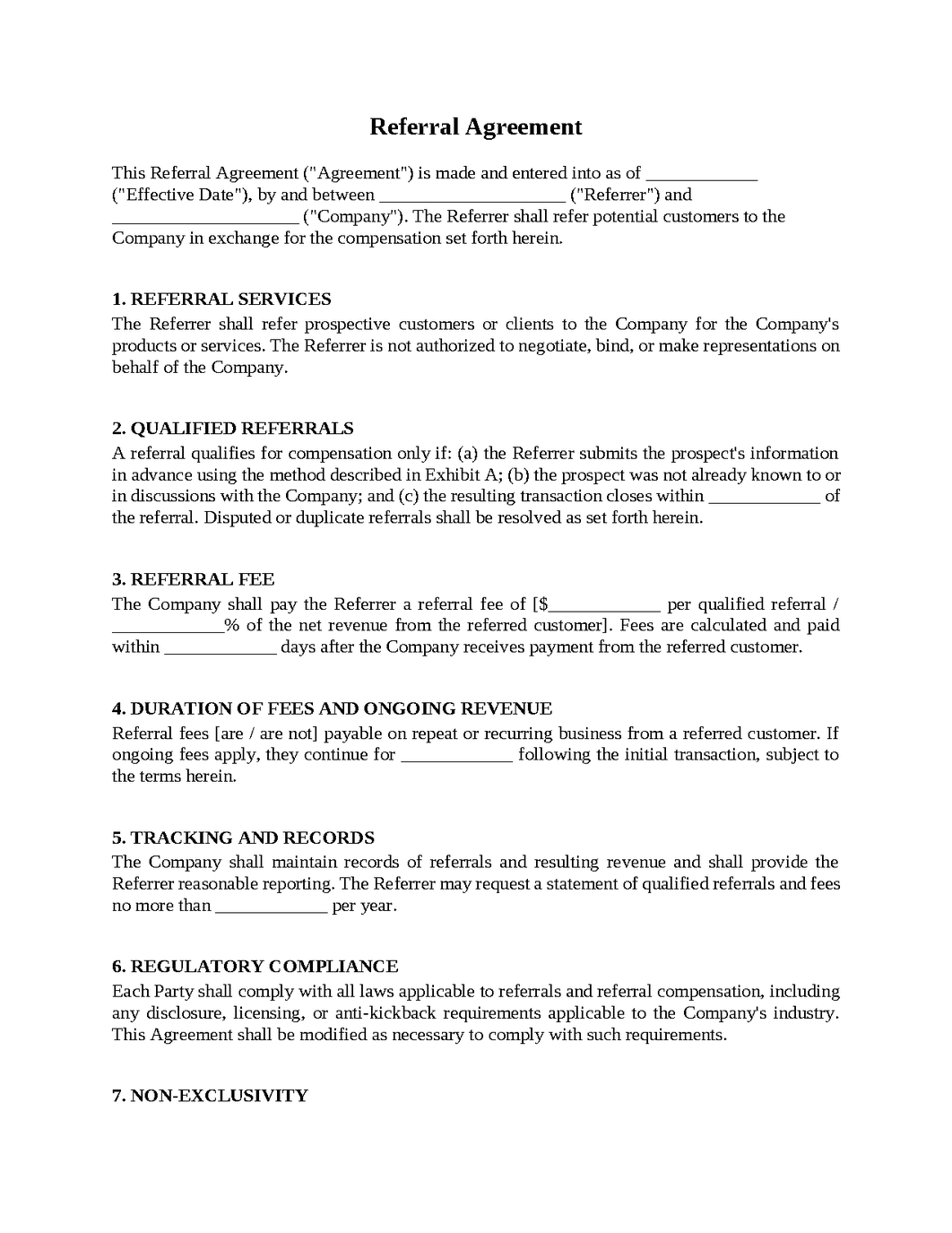
A Referral Agreement is a legal contract that establishes the terms under which one party refers potential customers, clients, patients, business opportunities, vendors, or transactions to another party in exchange for compensation, reciprocal benefits, or other consideration. Referral Agreements are commonly used in professional services, healthcare, real estate, financial services, insurance, technology, consulting, recruiting, and business development relationships. Because referrals often generate significant revenue and involve questions regarding ownership of business opportunities, disputes can arise when expectations are not clearly documented. A well-drafted Referral Agreement helps define responsibilities, compensation rights, and compliance obligations while reducing the likelihood of future conflicts.
The Parties Disagree About Which Referrals Qualify for Compensation
A consulting firm enters into a referral arrangement with a business advisor who regularly interacts with companies that may need consulting services.
Over time, the advisor introduces several prospective clients. Some become paying customers, while others engage with the consulting firm only after months of discussions and additional marketing efforts.
When revenue begins flowing from new clients, the advisor expects referral fees based on the introductions provided. The consulting firm argues that certain clients were already known to the company or were acquired through separate business development efforts.
The disagreement centers on whether the advisor's introduction was truly responsible for the business relationship.
Neither party disputes that introductions occurred, but both interpret the value of those introductions differently.
To help avoid this problem, a Referral Agreement should clearly define qualifying referrals, establish procedures for documenting introductions, and identify the circumstances under which compensation becomes payable.
A Referral Results in Business Years Later
A software company receives an introduction to a potential customer through a referral partner.
Initially, the prospect expresses interest but does not move forward with a purchase. The referral partner assumes the opportunity has ended and focuses on other business activities.
Several years later, the prospect returns and signs a substantial contract with the software company. The referral partner learns about the transaction and claims entitlement to a referral fee.
The software company argues that the sale occurred long after the original introduction and resulted from independent efforts. The referral partner believes the relationship would never have existed without the initial referral.
The dispute becomes significant because the transaction generates substantial revenue.
To reduce these risks, a Referral Agreement should establish referral protection periods, define expiration dates for referral rights, and specify when compensation obligations end.
Regulatory Restrictions Create Compliance Problems
A healthcare organization enters into a referral arrangement with another business that regularly interacts with potential patients.
Initially, both parties focus on increasing business opportunities and strengthening relationships. As the arrangement grows, questions arise regarding industry regulations governing referral fees, compensation structures, and permissible business practices.
The organizations become concerned that certain payments may create compliance risks under applicable laws and regulations.
Neither party intended to violate any legal requirements, but the relationship develops in ways that raise regulatory concerns.
The issue becomes increasingly important because noncompliance could result in financial penalties or reputational harm.
To help avoid these problems, a Referral Agreement should address applicable legal requirements, prohibit improper referral practices, and ensure that compensation arrangements comply with relevant laws and regulations.
The Referred Customer Becomes a Source of Ongoing Revenue
A marketing consultant refers a customer to a service provider under an agreement providing compensation based on business generated from the referral.
The customer initially purchases a modest service package. Over time, however, the relationship expands dramatically and the customer purchases additional products, upgrades, consulting services, and long-term support agreements.
Questions arise regarding whether referral fees apply only to the initial transaction or to future business generated by the customer.
The service provider believes compensation should be limited to the original sale. The consultant believes the referral created the entire customer relationship and should participate in ongoing revenue.
Neither side anticipated the customer's long-term value when the agreement was signed.
To help prevent these issues, a Referral Agreement should clearly define compensable revenue, identify whether future transactions are included, and establish the duration of referral fee obligations.
The Relationship Ends but Outstanding Referrals Remain Active
A referral partner and service provider work together successfully for several years.
Eventually, the parties decide to terminate the relationship and pursue different business strategies. At the time of termination, numerous referrals remain in various stages of discussion and negotiation.
The referral partner believes compensation should still be earned if those prospects later become customers. The service provider believes termination should end all future obligations except where specifically required.
The disagreement focuses on opportunities that were introduced before termination but did not generate revenue until afterward.
What should be a straightforward conclusion to the relationship becomes a dispute regarding post-termination rights.
To reduce these risks, a Referral Agreement should establish post-termination compensation rules, define treatment of pending referrals, identify survival provisions, and clarify which obligations continue after the agreement ends.
Referral Agreements can be valuable tools for generating new business opportunities and rewarding strategic partnerships. However, issues involving qualifying referrals, timing of transactions, regulatory compliance, ongoing revenue streams, and post-termination rights can become significant sources of conflict when expectations are not documented clearly. A carefully drafted Referral Agreement provides a structured framework for managing these relationships and protecting all parties involved. When prepared thoughtfully, it can help reduce misunderstandings, encourage collaboration, support compliance efforts, and promote successful long-term business relationships.

Get started with Upsign today!
Easily send, sign and track your documents