

Release of Real Estate Lien
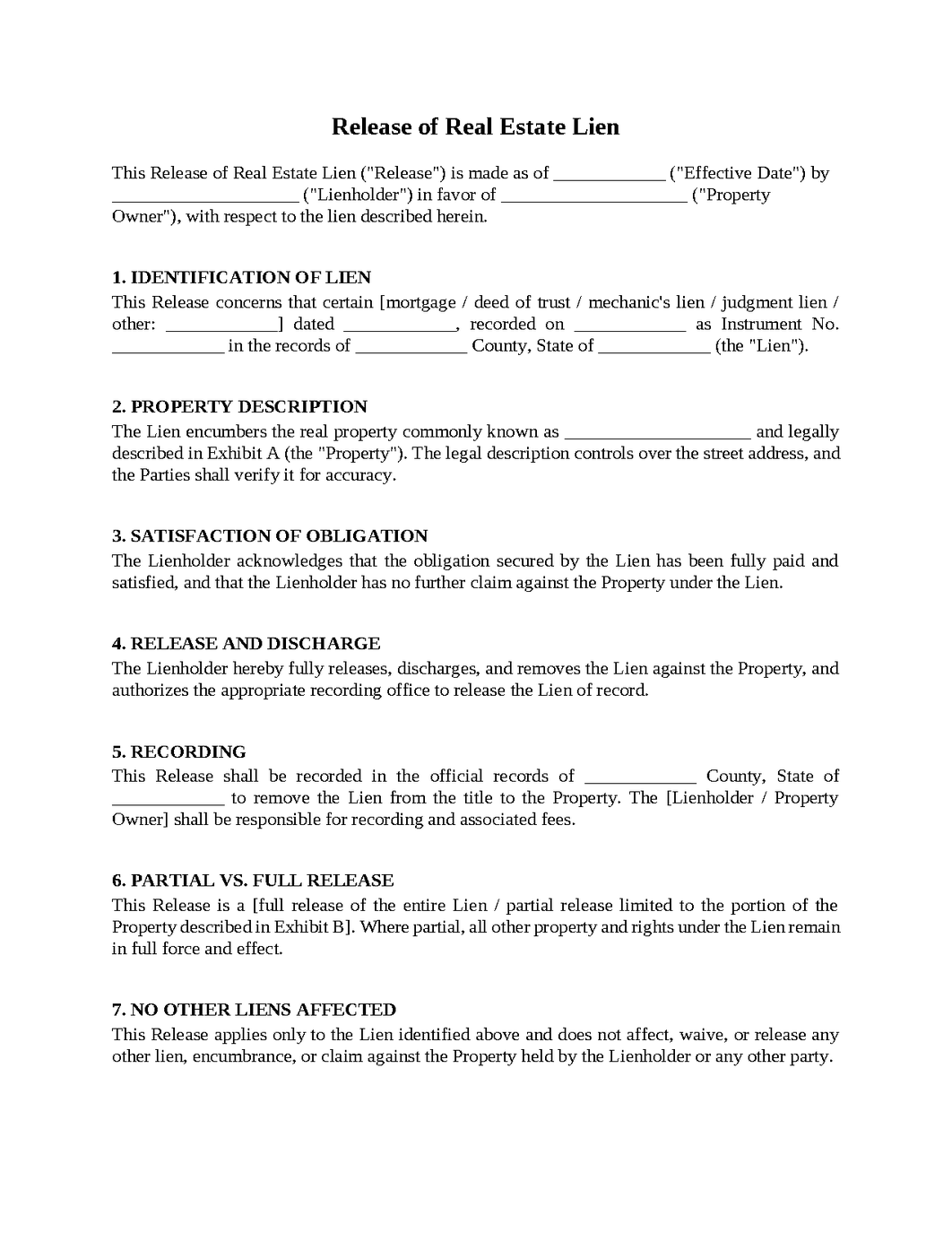
A Release of Real Estate Lien is a legal document used to formally remove a lien, claim, encumbrance, or security interest from real property after the underlying obligation has been satisfied. These releases are commonly used for mortgages, deeds of trust, mechanic's liens, judgment liens, tax liens, construction liens, and private financing arrangements. Once recorded, a Release of Real Estate Lien helps establish that the property is no longer subject to the specific claim and that the lienholder has relinquished its interest. Because liens directly affect ownership rights, financing opportunities, and property transfers, disputes can arise when lien releases are delayed, incomplete, or improperly documented. A well-prepared Release of Real Estate Lien helps ensure clear title and protects all parties involved.
The Debt Is Paid but the Lien Remains Recorded
A property owner repays a loan that was secured by a lien against real estate.
After making the final payment, the owner assumes the matter is complete and that the lien will be removed automatically. Months later, the owner applies for refinancing and discovers that the lien still appears in public records.
The lender acknowledges that the debt was paid but explains that the release documents were never recorded due to an administrative oversight.
The property owner becomes frustrated because the lingering lien delays financing and creates questions regarding title status.
What should have been a routine administrative step becomes an obstacle to future transactions.
To help avoid this problem, a Release of Real Estate Lien should be prepared and recorded promptly after the underlying obligation has been satisfied. Timely recording helps ensure that public records accurately reflect the property's ownership status.
A Contractor Refuses to Release a Mechanic's Lien
A homeowner hires a contractor to complete a major renovation project.
After construction is finished, a dispute develops regarding the final invoice. The homeowner believes all amounts owed have been paid, while the contractor claims that additional compensation remains outstanding.
The contractor records a mechanic's lien against the property. Even after negotiations and additional payments occur, disagreements remain regarding whether the lien should be released.
The homeowner wants the lien removed immediately so the property can be refinanced or sold. The contractor believes the lien should remain until every issue has been resolved.
The disagreement affects the owner's ability to use or transfer the property freely.
To reduce these risks, a Release of Real Estate Lien should clearly identify the obligation being satisfied and confirm that the lienholder waives future claims relating to the released lien.
A Property Sale Reveals an Old Lien
A property owner enters into a contract to sell real estate to a new buyer.
During the title review process, an old lien appears in the property's history. The seller believes the underlying obligation was resolved many years earlier and is surprised to learn that no release was ever recorded.
The buyer becomes concerned because the existence of the lien raises questions regarding title quality. The title company requires evidence that the claim was satisfied before closing can proceed.
Locating records becomes difficult because the transaction occurred long ago and some of the parties involved are no longer active.
A sale that should have closed smoothly becomes delayed by historical documentation problems.
To help avoid these issues, lien releases should be recorded promptly and retained permanently with property records. Proper documentation can prevent significant complications years later.
The Wrong Property Is Identified in the Release
A lender prepares a lien release after a borrower satisfies all obligations.
Everyone intends to remove the lien from the correct property, but a clerical error results in an incorrect legal description being included in the release document.
The release is recorded successfully, yet the original lien continues affecting the intended property because the recorded document references different real estate.
The mistake goes unnoticed until a future transaction reveals the problem.
Correcting the error requires additional legal work, title review, and coordination among multiple parties.
What should have been a routine release becomes a costly administrative issue.
To help prevent these problems, a Release of Real Estate Lien should be reviewed carefully before recording to ensure that legal descriptions, parcel information, and recording references are accurate and complete.
Multiple Liens Create Confusion About What Was Released
A commercial property is subject to several liens arising from different loans, vendor obligations, and construction activities.
One of the obligations is paid in full, and the lienholder agrees to release its claim. After the release is recorded, the property owner assumes all title issues have been resolved.
Later, the owner learns that only one lien was released and that other encumbrances remain active against the property.
The confusion results from a misunderstanding regarding which specific lien was being released.
Neither party intended to create uncertainty, but the documentation did not clearly distinguish among the various recorded claims.
To reduce these risks, a Release of Real Estate Lien should specifically identify the lien being released, reference applicable recording information, and make clear whether the release is partial or complete.
Real estate liens play an important role in protecting creditors, contractors, lenders, and other parties with legal claims against property. However, issues involving delayed recordings, disputed obligations, historical title defects, clerical errors, and multiple encumbrances can become significant sources of conflict when lien releases are not documented properly. A carefully prepared Release of Real Estate Lien provides a structured framework for confirming that obligations have been satisfied and that claims against the property have been removed. When prepared thoughtfully, it can help preserve clear title, facilitate future transactions, reduce legal disputes, and provide certainty for property owners and lienholders alike.

Get started with Upsign today!
Easily send, sign and track your documents