

Mortgage Brokerage Agreement
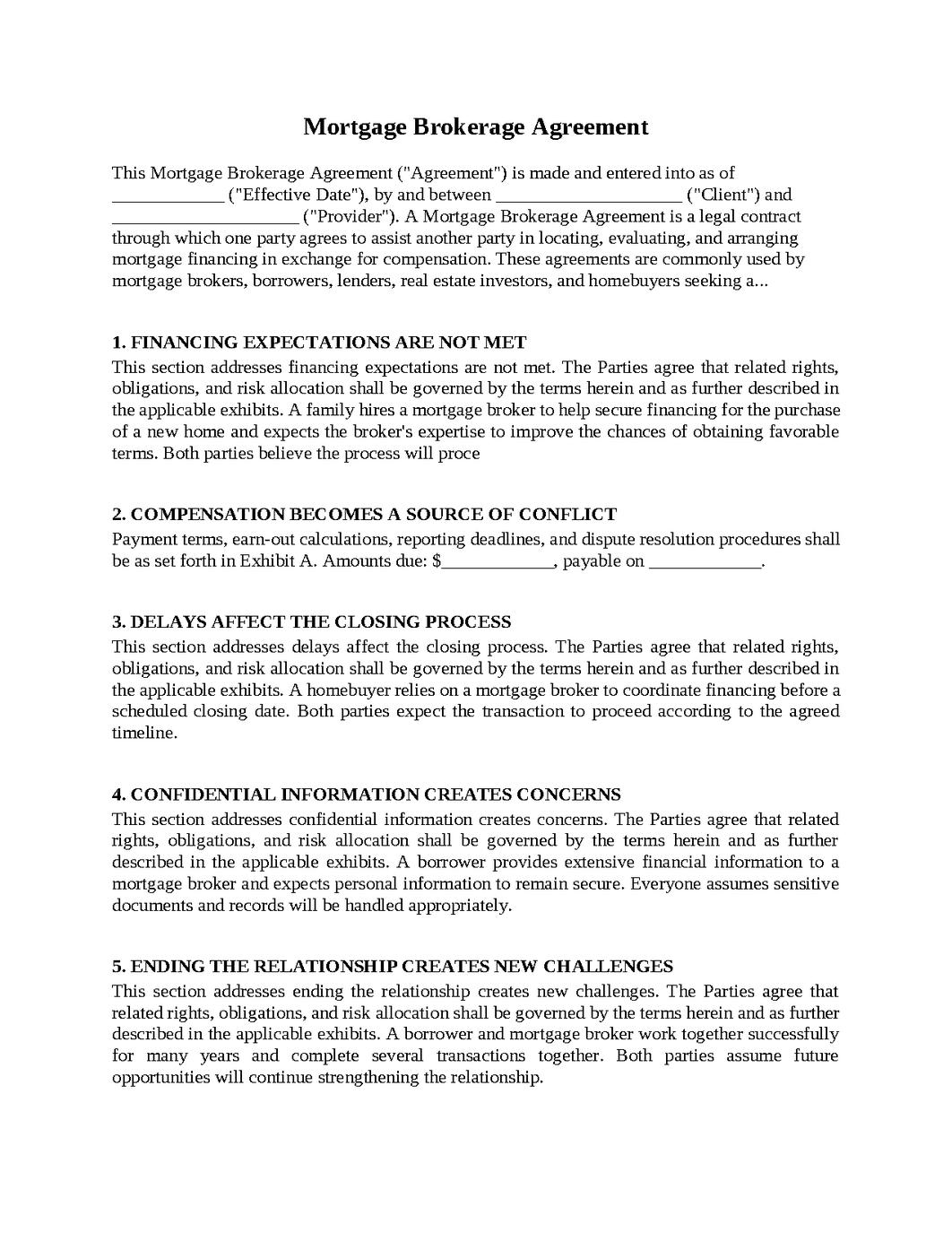
A Mortgage Brokerage Agreement is a legal contract through which one party agrees to assist another party in locating, evaluating, and arranging mortgage financing in exchange for compensation. These agreements are commonly used by mortgage brokers, borrowers, lenders, real estate investors, and homebuyers seeking access to financing options and professional guidance. A Mortgage Brokerage Agreement typically addresses the scope of services, compensation arrangements, disclosures, confidentiality obligations, regulatory compliance, and procedures governing disputes and termination. Because mortgage transactions involve significant financial commitments and multiple participants, disputes can arise when expectations regarding responsibilities and outcomes are not documented clearly. A carefully drafted Mortgage Brokerage Agreement helps establish certainty and protect the interests of both brokers and borrowers.
Financing Expectations Are Not Met
A family hires a mortgage broker to help secure financing for the purchase of a new home and expects the broker's expertise to improve the chances of obtaining favorable terms. Both parties believe the process will proceed smoothly and result in a successful closing.
Initially, the broker gathers information and presents several financing options. As underwriting progresses, however, unexpected issues involving credit history and income documentation prevent approval under the desired terms.
The borrowers believe the broker should have anticipated the challenges because professional guidance was one of the primary reasons for seeking assistance. The broker believes lending decisions ultimately belong to financial institutions and argues that reasonable efforts were made to identify appropriate options. As deadlines approach, tensions emerge regarding responsibility for the failed transaction.
To help avoid this problem, a Mortgage Brokerage Agreement should clearly establish the scope of services and define the limitations applicable to the broker's role.
Compensation Becomes a Source of Conflict
A real estate investor works with a mortgage broker to arrange financing for several properties and expects the compensation structure to remain transparent. Everyone assumes fees and commissions are clearly understood.
As the transactions move toward closing, questions arise regarding broker fees, lender-paid compensation, and additional charges associated with the financing process. Different interpretations create uncertainty regarding the amount owed.
The borrower believes all compensation should be disclosed because transparency is essential to maintaining trust. The broker believes the fees are customary and argues that compensation arrangements comply with industry standards. As closing costs increase, disagreements emerge regarding the financial obligations associated with the transaction.
To help prevent these issues, a Mortgage Brokerage Agreement should clearly establish compensation arrangements and define how fees and commissions will be disclosed.
Delays Affect the Closing Process
A homebuyer relies on a mortgage broker to coordinate financing before a scheduled closing date. Both parties expect the transaction to proceed according to the agreed timeline.
Unexpected appraisal issues and delays involving third-party documentation slow the underwriting process. Concerns increase as the closing date approaches.
The buyer believes the broker should have coordinated the process more effectively because timely financing was essential to completing the purchase. The broker believes lenders, appraisers, and title companies all influence the schedule and argues that reasonable efforts were made to avoid delays. As deadlines become more critical, tensions develop regarding responsibility for the missed timing.
To help avoid these problems, a Mortgage Brokerage Agreement should clearly establish communication responsibilities and define how delays and unexpected issues will be addressed.
Confidential Information Creates Concerns
A borrower provides extensive financial information to a mortgage broker and expects personal information to remain secure. Everyone assumes sensitive documents and records will be handled appropriately.
As the transaction progresses, concerns arise regarding access to information and the possibility of unauthorized disclosure. Questions emerge regarding whether adequate safeguards are in place.
The borrower believes protecting confidential information is essential because trust and privacy are fundamental to the relationship. The broker believes appropriate procedures are already in place and argues that no system can eliminate every risk. As concerns increase, disagreements emerge regarding data protection responsibilities.
To help prevent these issues, a Mortgage Brokerage Agreement should clearly establish confidentiality obligations and define how sensitive information will be safeguarded.
Ending the Relationship Creates New Challenges
A borrower and mortgage broker work together successfully for many years and complete several transactions together. Both parties assume future opportunities will continue strengthening the relationship.
Eventually, the borrower decides to work with another broker. Questions arise regarding outstanding fees, access to documents, and compensation for transactions already in progress.
The borrower believes changing providers should not create unnecessary complications because flexibility is important when evaluating financing options. The broker believes compensation should be protected because significant effort was invested in developing the transactions. As the relationship concludes, disagreements emerge regarding the obligations that survive termination.
To help avoid this problem, a Mortgage Brokerage Agreement should clearly establish termination procedures and identify the rights and responsibilities that continue after the relationship ends.
Mortgage Brokerage Agreements are valuable tools that allow borrowers to obtain professional assistance while navigating the complexities of mortgage financing. However, issues involving financing expectations, compensation arrangements, delays, confidentiality concerns, and post-termination obligations can become significant sources of conflict when expectations are not documented clearly. A carefully drafted Mortgage Brokerage Agreement provides a structured framework for allocating responsibilities and protecting the interests of both brokers and borrowers. When prepared thoughtfully, it can reduce uncertainty, strengthen professional relationships, improve transparency, and provide the foundation necessary for successful financing transactions.

Get started with Upsign today!
Easily send, sign and track your documents