

Farm Lease Agreement
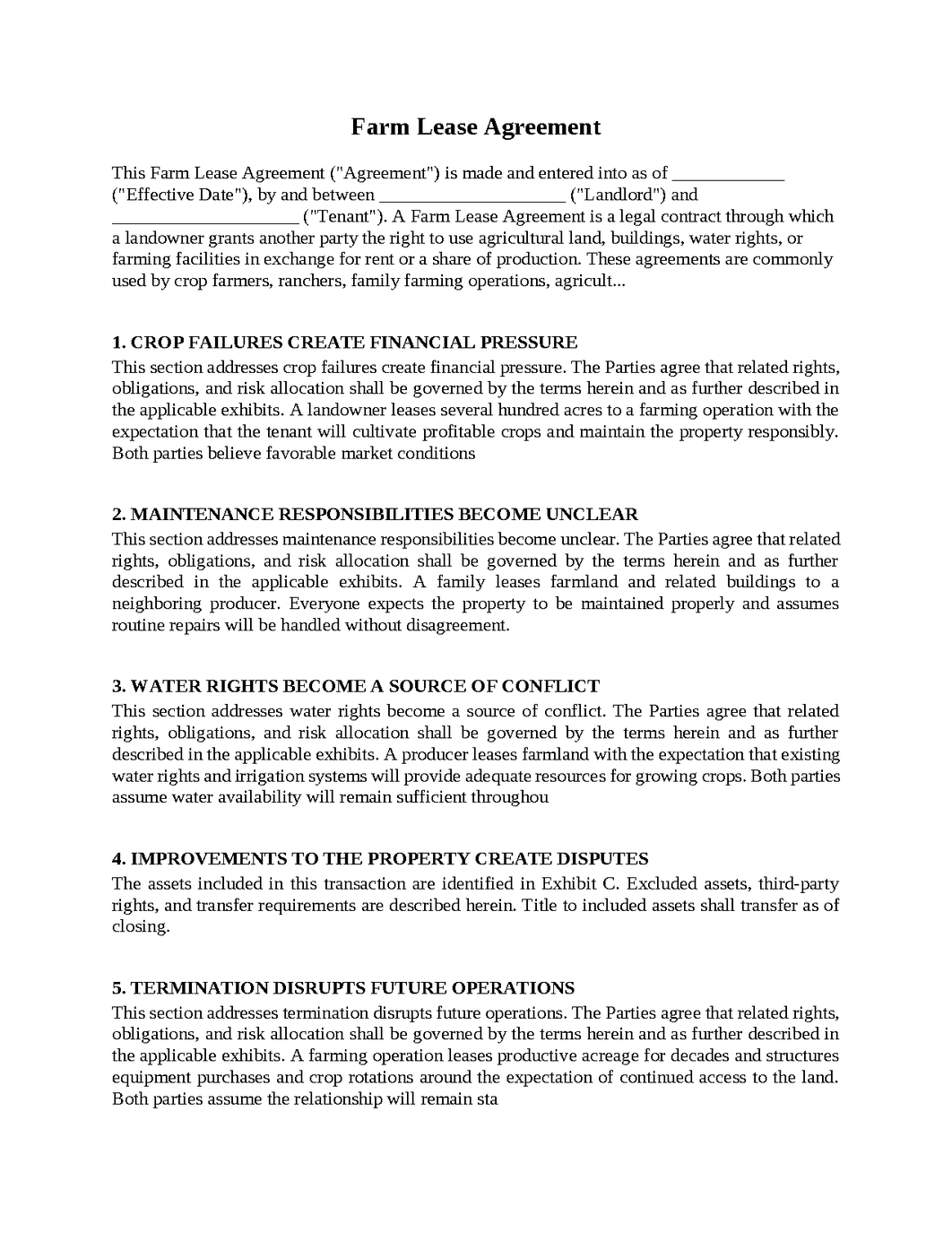
A Farm Lease Agreement is a legal contract through which a landowner grants another party the right to use agricultural land, buildings, water rights, or farming facilities in exchange for rent or a share of production. These agreements are commonly used by crop farmers, ranchers, family farming operations, agricultural investors, and landowners who wish to generate income from farmland without personally operating it. A Farm Lease Agreement typically addresses rental payments, permitted uses, crop rights, maintenance obligations, equipment responsibilities, and procedures governing renewal and termination. Because farming operations are heavily influenced by weather, markets, and long-term planning, disputes can arise when expectations regarding responsibilities and risks are not documented clearly. A carefully drafted Farm Lease Agreement helps establish certainty and protect the interests of both landlords and tenants.
Crop Failures Create Financial Pressure
A landowner leases several hundred acres to a farming operation with the expectation that the tenant will cultivate profitable crops and maintain the property responsibly. Both parties believe favorable market conditions and weather patterns will support a successful season.
As the growing season progresses, severe weather and unexpected pest problems significantly reduce yields. Revenues decline and the tenant struggles to generate enough income to satisfy all financial obligations.
The tenant believes extraordinary circumstances justify flexibility regarding rental payments because the losses were beyond anyone's control. The landowner believes the agreed rent should remain enforceable and argues that crop risks are part of agricultural operations. As financial pressures increase, tensions emerge regarding how the losses should be shared.
To help avoid this problem, a Farm Lease Agreement should clearly establish payment obligations and define how extraordinary events and production losses will affect the parties' responsibilities.
Maintenance Responsibilities Become Unclear
A family leases farmland and related buildings to a neighboring producer. Everyone expects the property to be maintained properly and assumes routine repairs will be handled without disagreement.
Over time, fences deteriorate, irrigation systems require attention, and buildings begin showing signs of wear. Questions arise regarding which repairs should be paid for by the tenant and which should remain the responsibility of the landowner.
The tenant believes major improvements and structural repairs should be handled by the owner because those assets remain part of the property. The landowner believes the tenant should bear more of the expenses because the farming operation directly benefits from the facilities. As costs increase, disagreements develop regarding maintenance obligations.
To help prevent these issues, a Farm Lease Agreement should clearly establish maintenance responsibilities and define how repair expenses will be allocated.
Water Rights Become a Source of Conflict
A producer leases farmland with the expectation that existing water rights and irrigation systems will provide adequate resources for growing crops. Both parties assume water availability will remain sufficient throughout the lease term.
Changing regulations and drought conditions eventually reduce access to water supplies. Crop production is affected, and questions arise regarding who bears the risks associated with the reduced availability.
The tenant believes access to water was essential to the value of the lease and expects the landowner to assist in preserving those rights. The landowner believes environmental conditions and regulations are beyond personal control and argues that farming risks belong primarily to the tenant. As yields decline, tensions emerge regarding responsibility for the resulting losses.
To help avoid these problems, a Farm Lease Agreement should clearly establish rights relating to water usage and define how shortages and regulatory changes will be addressed.
Improvements to the Property Create Disputes
A tenant invests significant resources into improving soil quality, drainage systems, and fencing with the expectation of operating the farm for many years. Both parties believe the improvements will increase productivity and benefit the property.
As the lease approaches expiration, the landowner begins considering leasing the property to someone else. Questions arise regarding whether the tenant should be compensated for investments made during the lease term.
The tenant believes years of effort and financial investment justify reimbursement or renewal opportunities. The landowner believes the improvements become part of the property and argues that ownership rights should remain unrestricted. As the lease expiration approaches, disagreements emerge regarding the value created by the tenant's contributions.
To help prevent these issues, a Farm Lease Agreement should clearly establish the treatment of improvements and define whether compensation or reimbursement rights exist.
Termination Disrupts Future Operations
A farming operation leases productive acreage for decades and structures equipment purchases and crop rotations around the expectation of continued access to the land. Both parties assume the relationship will remain stable for many years.
Changing family circumstances eventually cause the landowner to sell the property and terminate the lease. The tenant faces uncertainty regarding future planting seasons and existing financial commitments.
The tenant believes adequate notice and transition opportunities are necessary because farming operations require long-term planning. The landowner believes ownership rights allow flexibility and expects the property to be transferred according to personal objectives. As the sale progresses, tensions increase regarding the consequences of ending the relationship.
To help avoid this problem, a Farm Lease Agreement should clearly establish termination procedures and identify the rights and obligations that continue after the lease ends.
Farm Lease Agreements are valuable tools that allow landowners and producers to cooperate while preserving agricultural productivity and generating income. However, issues involving crop failures, maintenance obligations, water rights, property improvements, and lease termination can become significant sources of conflict when expectations are not documented clearly. A carefully drafted Farm Lease Agreement provides a structured framework for allocating responsibilities and protecting the interests of both parties. When prepared thoughtfully, it can reduce uncertainty, strengthen working relationships, support long-term planning, and provide the foundation necessary for successful agricultural operations.

Get started with Upsign today!
Easily send, sign and track your documents