

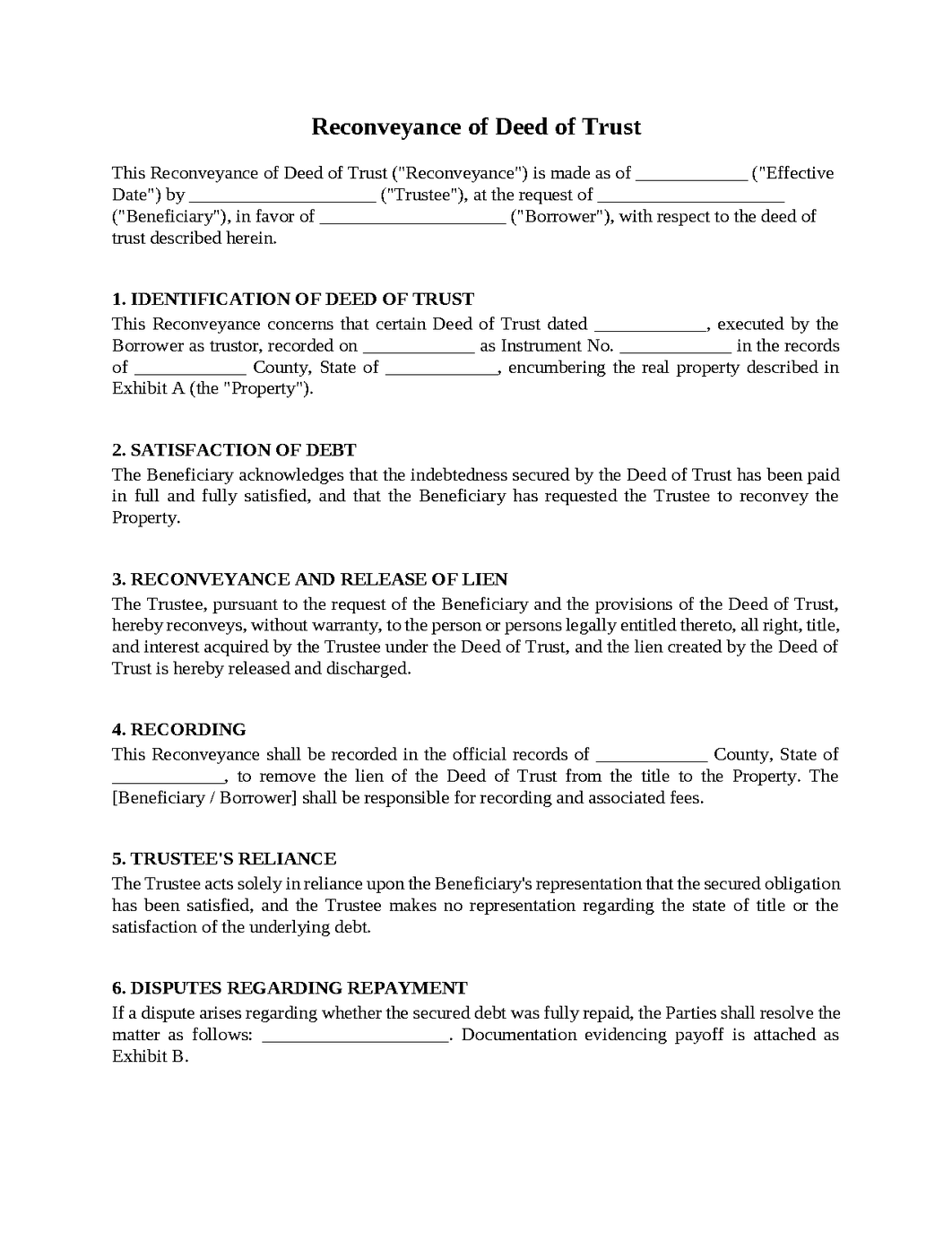
Reconveyance of Deed of Trust
A Reconveyance of Deed of Trust is a legal document used to release a borrower's property from a deed of trust after the underlying loan has been fully repaid. In states that use deeds of trust rather than mortgages, a trustee holds legal title to the property as security for the lender during the term of the loan. Once the debt has been satisfied, a reconveyance transfers full title back to the borrower and removes the lender's security interest from the property's title records. Reconveyances are commonly used in residential mortgages, commercial real estate loans, seller-financed transactions, and private lending arrangements. Because property ownership and title rights are involved, disputes can arise when reconveyance procedures are not handled properly. A well-prepared Reconveyance of Deed of Trust helps ensure clear title and protects property owners from future complications.
The Loan Is Paid Off but the Lien Remains on Title
A homeowner successfully completes payments on a mortgage after many years of timely repayment. The borrower assumes that once the final payment is made, the lender's claim against the property will disappear automatically.
Months later, the homeowner decides to refinance the property and discovers that the deed of trust still appears in public records. Although the debt has been paid in full, the reconveyance document was never recorded.
The homeowner becomes frustrated because the outstanding lien creates delays and raises questions about title status. The lender acknowledges that the loan was satisfied but points to administrative delays in processing the reconveyance.
What should have been a routine closing of the loan relationship becomes a title issue that affects future transactions.
To help avoid this problem, a Reconveyance of Deed of Trust should be prepared and recorded promptly after the loan is paid in full. Clear procedures help ensure that title records accurately reflect the satisfaction of the debt.
The Parties Disagree About Whether the Debt Was Fully Repaid
A borrower and lender enter into a private financing arrangement secured by a deed of trust.
Over several years, the borrower makes payments according to the agreed schedule. When the borrower believes the loan has been fully repaid, a request is made for reconveyance of the deed of trust.
The lender disagrees and claims that certain late fees, interest charges, or other obligations remain outstanding. The borrower believes all required payments have been made and that the lender is improperly withholding the reconveyance.
The disagreement creates uncertainty because ownership records cannot be cleared until the issue is resolved.
Neither party expected conflict after years of successful payments.
To reduce these risks, loan records should be maintained carefully, and a Reconveyance of Deed of Trust should only be withheld when legitimate outstanding obligations exist. Clear accounting procedures can help prevent disputes regarding loan balances.
A Property Sale Is Delayed by Missing Reconveyance Documents
A property owner enters into an agreement to sell real estate to a new buyer.
During the title review process, the buyer's title company discovers an old deed of trust that appears to remain active. The seller explains that the loan was paid off years ago, but no reconveyance can be located in the public records.
Closing is delayed while the parties attempt to locate documentation, contact former lenders, and verify that the debt was satisfied.
The buyer becomes concerned about potential title defects. The seller grows frustrated because the issue involves an obligation that no longer exists.
What should have been a straightforward sale becomes a time-consuming title problem.
To help avoid these issues, borrowers should retain copies of reconveyance documents and confirm that releases are recorded properly after a loan is paid. Accurate records can prevent significant delays years later.
A Lender Goes Out of Business Before Reconveyance Is Recorded
A borrower pays off a loan secured by a deed of trust shortly before the lender ceases operations.
At the time, both parties assume the reconveyance process will be completed routinely. Years later, the borrower discovers that the release was never recorded and that the lender no longer exists.
Without a functioning lender, obtaining replacement documentation becomes significantly more difficult. Additional legal work may be required to establish that the debt was satisfied and remove the lien from title records.
The borrower is forced to address a problem that should have been resolved automatically years earlier.
The issue creates unnecessary expense and delay despite the fact that the loan was paid in full.
To help prevent these problems, reconveyance documents should be prepared and recorded promptly whenever a secured obligation is satisfied. Delays increase the risk of future complications.
Errors in the Reconveyance Create Future Title Problems
A lender properly authorizes a reconveyance after a loan is repaid, and the document is recorded.
Years later, a title review reveals that the reconveyance contains errors involving legal descriptions, recording references, property identification numbers, or borrower information.
Although everyone intended to release the deed of trust, the recording errors create uncertainty regarding whether the lien was actually removed from the correct property.
The property owner must now work with title professionals, attorneys, and former lenders to correct the issue.
A simple administrative mistake creates complications long after the loan relationship has ended.
To reduce these risks, a Reconveyance of Deed of Trust should be reviewed carefully before recording to ensure that all legal descriptions, loan references, and property information are accurate and complete.
Reconveyances of Deeds of Trust play a critical role in clearing title and confirming that secured debts have been satisfied. However, issues involving delayed recordings, disputed balances, missing documentation, inactive lenders, and recording errors can become significant sources of conflict when procedures are not handled properly. A carefully prepared and recorded Reconveyance of Deed of Trust helps ensure that borrowers receive clear title once their obligations are fulfilled. When completed thoughtfully, it can prevent future title disputes, facilitate property transactions, and provide certainty for all parties involved.

Get started with Upsign today!
Easily send, sign and track your documents