

Voting Agreement
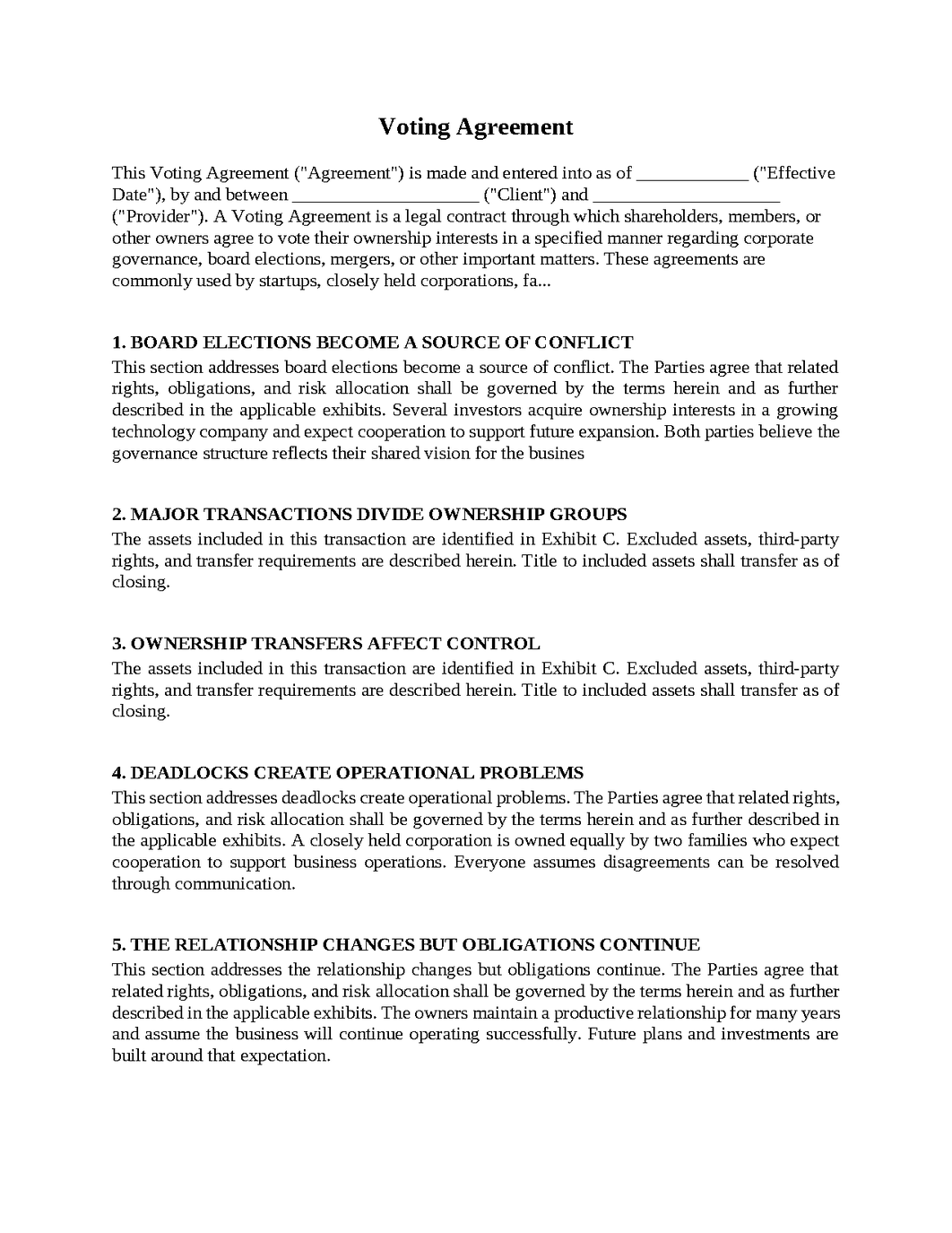
A Voting Agreement is a legal contract through which shareholders, members, or other owners agree to vote their ownership interests in a specified manner regarding corporate governance, board elections, mergers, or other important matters. These agreements are commonly used by startups, closely held corporations, family businesses, private equity investors, and joint ventures seeking to create stability and avoid disputes concerning control and decision-making. A Voting Agreement typically addresses voting rights, board composition, transfer restrictions, proxy arrangements, dispute resolution procedures, and provisions governing termination. Because ownership interests often involve significant financial and strategic considerations, disputes can arise when expectations regarding control and governance are not documented clearly. A carefully drafted Voting Agreement helps establish certainty and protect the interests of all parties involved.
Board Elections Become a Source of Conflict
Several investors acquire ownership interests in a growing technology company and expect cooperation to support future expansion. Both parties believe the governance structure reflects their shared vision for the business.
Initially, decisions are made collaboratively and the company performs well. Over time, however, disagreements emerge regarding board appointments and leadership priorities. Questions arise concerning who should control future elections.
The founders believe maintaining influence is essential because their long-term vision created the business and continues to guide its growth. The investors believe representation is necessary because their capital and involvement contributed to the company's success. As differences increase, tensions emerge regarding board control.
To help avoid this problem, a Voting Agreement should clearly establish voting procedures and define how directors and officers will be selected.
Major Transactions Divide Ownership Groups
A family-owned manufacturing company experiences strong growth and receives an acquisition offer from a larger competitor. Everyone assumes important decisions will be made in the best interests of the business.
As negotiations progress, owners disagree about whether selling the company is appropriate. Questions arise regarding whether certain shareholders possess the ability to block the transaction.
Some owners believe selling the company is necessary because it creates liquidity and provides opportunities for future growth. Others believe maintaining independence is essential because the business represents years of family effort and legacy. As negotiations continue, disagreements emerge regarding approval rights.
To help prevent these issues, a Voting Agreement should clearly establish voting requirements and define the procedures applicable to mergers and major transactions.
Ownership Transfers Affect Control
A group of business partners enters into a Voting Agreement and expects their ownership structure to remain stable. Both parties believe the arrangement provides certainty and continuity.
Over time, one owner wishes to transfer shares to a third party. Questions arise regarding whether the new owner will be bound by the same voting obligations.
The remaining owners believe continuity is essential because governance arrangements were designed to protect long-term interests. The departing owner believes flexibility is necessary because ownership rights should allow transfers without excessive restrictions. As ownership changes become more likely, tensions develop regarding transfer rights.
To help avoid these problems, a Voting Agreement should clearly establish transfer restrictions and define how future owners will become subject to the agreement.
Deadlocks Create Operational Problems
A closely held corporation is owned equally by two families who expect cooperation to support business operations. Everyone assumes disagreements can be resolved through communication.
Eventually, strategic differences emerge regarding expansion plans and management decisions. Neither side possesses enough voting power to control the outcome, creating uncertainty and delaying important decisions.
One group believes growth opportunities should be pursued aggressively because future success depends upon expansion. The other group believes caution is necessary because preserving financial stability should remain the priority. As disagreements intensify, operations begin suffering from indecision.
To help prevent these issues, a Voting Agreement should clearly establish deadlock resolution procedures and define how disputes involving governance decisions will be resolved.
The Relationship Changes but Obligations Continue
The owners maintain a productive relationship for many years and assume the business will continue operating successfully. Future plans and investments are built around that expectation.
Eventually, changing priorities and ownership interests alter the relationship. Questions arise regarding prior commitments, voting obligations, and responsibilities associated with earlier agreements.
Certain owners believe existing arrangements should remain enforceable because important decisions and investments were made in reliance upon those commitments. Others believe changing circumstances justify greater flexibility and expect the agreement to evolve. As ownership structures change, disagreements emerge regarding the rights and responsibilities that survive.
To help avoid this problem, a Voting Agreement should clearly establish termination procedures and identify the obligations and protections that continue after the relationship changes.
Voting Agreements are valuable tools that help businesses maintain governance stability and align ownership interests while reducing uncertainty regarding important decisions. However, issues involving board elections, major transactions, ownership transfers, deadlocks, and continuing obligations can become significant sources of conflict when expectations are not documented clearly. A carefully drafted Voting Agreement provides a structured framework for allocating responsibilities and protecting the interests of shareholders and owners. When prepared thoughtfully, it can reduce uncertainty, preserve business continuity, strengthen relationships among owners, and provide the foundation necessary for effective corporate governance.

Get started with Upsign today!
Easily send, sign and track your documents