

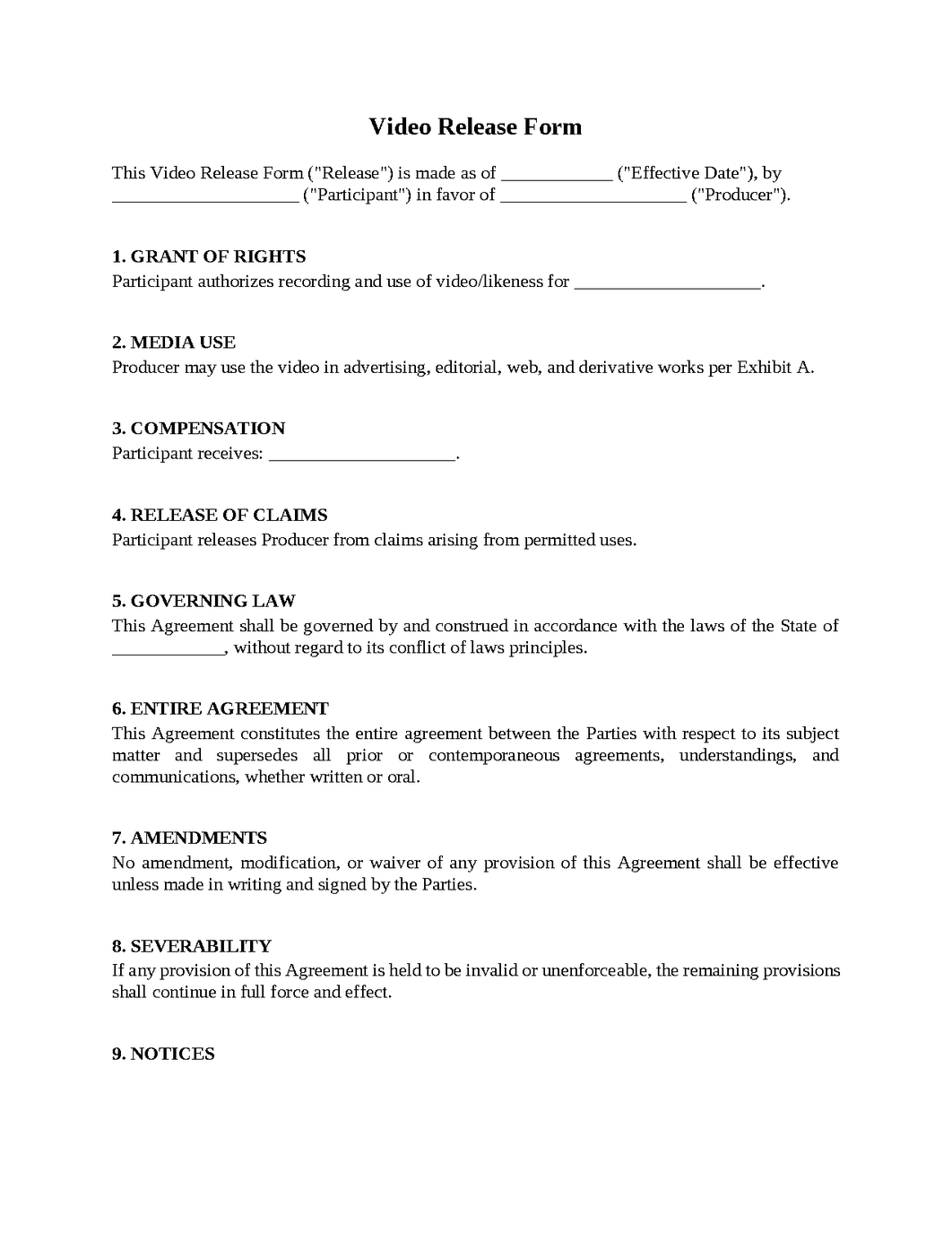
Video Release Form
A Video Release Form is a legal agreement through which an individual grants permission for video recordings containing their image, likeness, voice, appearance, actions, or statements to be recorded, edited, distributed, published, displayed, or otherwise used by another person or organization. Video Release Forms are commonly used by businesses, filmmakers, schools, churches, nonprofits, marketing agencies, event organizers, content creators, educational institutions, and media companies. Because video recordings can capture not only a person's appearance but also their voice, behavior, and interactions, disputes can arise when the parties have different expectations regarding how the recordings will be edited, distributed, or reused in the future. A carefully drafted Video Release Form helps establish clear rights and permissions while protecting both the participant and the organization producing the content.
A Participant Is Uncomfortable With How the Video Is Edited
A company produces a promotional video highlighting customer experiences and success stories.
Several customers voluntarily agree to participate in interviews and sign Video Release Forms before filming begins. During production, the participants answer questions, share personal experiences, and provide comments that will later be incorporated into the final project.
After the video is released, one participant believes the editing process changed the context of certain statements. Although the participant's words were used accurately, the final presentation creates an impression that differs from what the participant expected.
The company believes it exercised normal editorial judgment and produced a truthful and effective marketing piece. The participant feels that greater control should have existed over how the interview footage was presented.
The disagreement shifts away from the filming itself and focuses on the creative decisions made during post-production.
To help avoid this problem, a Video Release Form should clearly address editing rights, production discretion, and the extent to which recorded content may be modified before publication.
The Video Is Used for Purposes Not Originally Anticipated
A nonprofit organization records a community event to document its programs and outreach efforts.
Participants are informed that video footage may be used in future communications and most attendees willingly cooperate. The resulting footage is initially used in newsletters, event recaps, and informational presentations.
Several years later, the organization incorporates portions of the same footage into fundraising campaigns, online advertising, and promotional videos designed to attract donors and sponsors.
One participant becomes concerned because the video is now being used in a context that appears more commercial and public than originally anticipated. The organization believes the Video Release Form authorized continued use of the footage across a variety of communications.
The disagreement develops because the parties have different understandings regarding how broadly the footage could be used over time.
To help prevent these issues, a Video Release Form should clearly describe authorized uses and explain whether future promotional, fundraising, marketing, or commercial uses are permitted.
A Parent Objects to the Use of a Child's Video Footage
A youth organization records participants during camps, competitions, and educational activities.
Parents are asked to complete Video Release Forms before their children participate. Most families sign the forms because they expect the recordings to be used primarily for internal communications and event summaries.
Months later, a parent discovers that a child appears prominently in online videos used to promote future programs. The parent becomes concerned about privacy, visibility, and the long-term availability of the recordings.
The organization believes it obtained appropriate consent through the signed release. The parent believes the scope of the video's distribution was never explained clearly.
The disagreement becomes especially sensitive because it involves a minor and questions regarding parental expectations and consent.
To help avoid these problems, a Video Release Form should clearly explain how recordings involving minors may be used and ensure that parents or guardians understand the full scope of the authorization.
Voice Recordings Become a Source of Conflict
A business creates a series of training and promotional videos featuring employees and industry experts.
The participants willingly appear on camera and sign Video Release Forms before production begins. The completed videos include interviews, presentations, demonstrations, and narrated commentary.
Years later, portions of the audio recordings are reused in different projects and marketing materials. One participant objects to the continued use of their voice and argues that permission was granted only for the original production.
The business believes the release authorized the use of both video and audio recordings across future projects. The participant believes voice recordings should have been addressed separately.
The disagreement arises because video content often includes rights relating to both visual and audio components.
To help prevent these issues, a Video Release Form should clearly address the use of voice recordings, audio excerpts, and other identifying characteristics captured during production.
Third Parties Gain Access to the Footage
A company commissions a professional video project to support its marketing efforts.
Individuals appearing in the recordings sign Video Release Forms and understand that the company will use the footage in connection with its business activities. The project is completed successfully and becomes part of the company's marketing strategy.
Over time, the footage is shared with affiliates, advertising agencies, production partners, and other organizations assisting with promotional efforts. One participant becomes concerned after learning that parties not directly involved in the original project now have access to the recordings.
The company believes the sharing is necessary to support legitimate business operations. The participant believes the authorization extended only to the organization that originally produced the video.
The disagreement centers on who may use the footage and under what circumstances.
To help avoid these problems, a Video Release Form should clearly identify authorized users and explain whether affiliates, contractors, successors, partners, and third parties may receive rights to use the recordings.
Video Release Forms are important tools for establishing permissions regarding the recording and use of video content featuring identifiable individuals. However, issues involving editing rights, future uses, recordings of minors, voice rights, and third-party access can become significant sources of conflict when expectations are not documented clearly. A carefully drafted Video Release Form provides a structured framework for allocating rights and establishing permissions before filming occurs. When prepared thoughtfully, it can reduce misunderstandings, protect privacy interests, support creative and marketing efforts, and provide certainty for everyone involved.

Get started with Upsign today!
Easily send, sign and track your documents