

Vendor Agreement
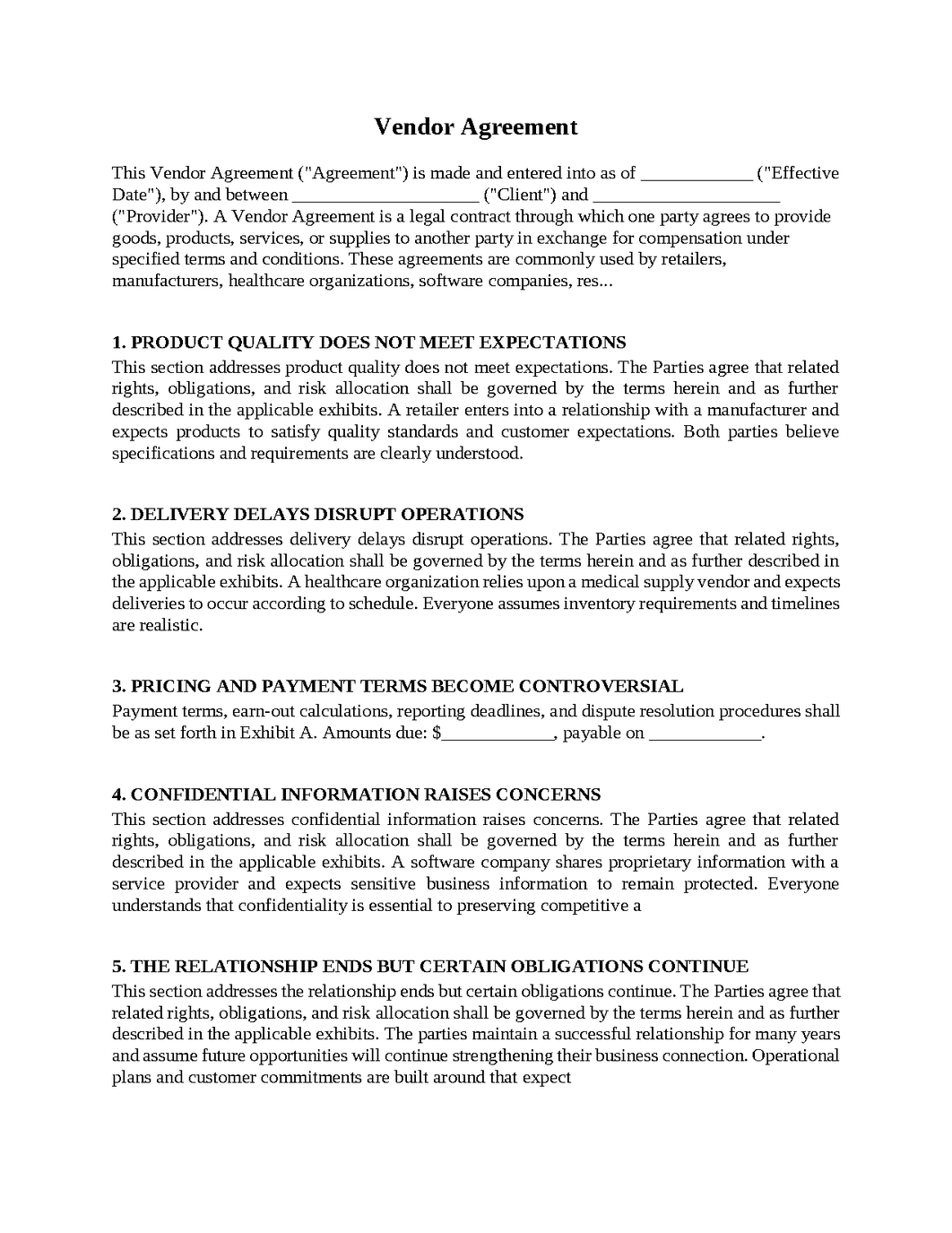
A Vendor Agreement is a legal contract through which one party agrees to provide goods, products, services, or supplies to another party in exchange for compensation under specified terms and conditions. These agreements are commonly used by retailers, manufacturers, healthcare organizations, software companies, restaurants, and government agencies seeking reliable relationships with suppliers and service providers. A Vendor Agreement typically addresses pricing, delivery requirements, quality standards, payment terms, confidentiality obligations, and procedures governing disputes and termination. Because businesses often depend heavily upon vendors to maintain operations and satisfy customer expectations, disputes can arise when responsibilities and expectations are not documented clearly. A carefully drafted Vendor Agreement helps establish certainty and protect the interests of both customers and vendors.
Product Quality Does Not Meet Expectations
A retailer enters into a relationship with a manufacturer and expects products to satisfy quality standards and customer expectations. Both parties believe specifications and requirements are clearly understood.
Initially, shipments arrive on schedule and customer satisfaction remains high. Over time, however, defects and inconsistencies begin appearing, resulting in returns and complaints. Questions arise regarding responsibility for correcting the problems.
The retailer believes consistent quality is essential because customer confidence and brand reputation depend upon reliable products. The vendor believes certain variations are unavoidable and argues that reasonable standards have been maintained. As complaints increase, tensions emerge regarding quality obligations.
To help avoid this problem, a Vendor Agreement should clearly establish product specifications and define the procedures governing inspections, returns, and quality control.
Delivery Delays Disrupt Operations
A healthcare organization relies upon a medical supply vendor and expects deliveries to occur according to schedule. Everyone assumes inventory requirements and timelines are realistic.
Unexpected shortages and transportation problems eventually delay shipments and affect operations. Questions arise regarding responsibility for missed deadlines and resulting expenses.
The healthcare organization believes timely delivery is essential because patient care and operational continuity depend upon adequate supplies. The vendor believes external circumstances and supply chain challenges affected performance and argues that reasonable efforts were made to minimize delays. As disruptions continue, disagreements emerge regarding delivery obligations.
To help prevent these issues, a Vendor Agreement should clearly establish delivery requirements and define the consequences applicable to delays and interruptions.
Pricing and Payment Terms Become Controversial
A manufacturing company enters into a long-term relationship with a component supplier and expects costs to remain predictable. Both parties believe the pricing arrangement accurately reflects anticipated demand.
As market conditions change, raw material costs increase and additional fees begin appearing on invoices. Different interpretations create uncertainty regarding payment obligations.
The manufacturer believes stable pricing is essential because budgets and customer contracts depend upon predictable expenses. The vendor believes changing market conditions justify adjustments and argues that additional charges are necessary to maintain profitability. As costs rise, tensions develop regarding pricing arrangements.
To help avoid these problems, a Vendor Agreement should clearly establish pricing provisions and define the circumstances under which adjustments may occur.
Confidential Information Raises Concerns
A software company shares proprietary information with a service provider and expects sensitive business information to remain protected. Everyone understands that confidentiality is essential to preserving competitive advantages.
As employees and subcontractors become involved, concerns arise regarding unauthorized disclosures and improper use of information. Questions emerge regarding the adequacy of existing safeguards.
The software company believes strict protections are necessary because trade secrets and customer information represent valuable assets. The vendor believes reasonable precautions are already in place and argues that collaboration requires some degree of information sharing. As concerns increase, disagreements emerge regarding confidentiality obligations.
To help prevent these issues, a Vendor Agreement should clearly establish confidentiality requirements and define the procedures governing access to and protection of sensitive information.
The Relationship Ends but Certain Obligations Continue
The parties maintain a successful relationship for many years and assume future opportunities will continue strengthening their business connection. Operational plans and customer commitments are built around that expectation.
Eventually, changing priorities lead one side to terminate the relationship. Questions arise regarding unpaid invoices, outstanding orders, confidential information, and obligations associated with products already delivered or services already performed.
The customer believes continued cooperation is necessary because unresolved matters and business obligations may continue after termination. The vendor believes its responsibilities should conclude once contractual requirements have been satisfied and expects finality. As unresolved issues remain, disagreements emerge regarding the rights and responsibilities that survive termination.
To help avoid this problem, a Vendor Agreement should clearly establish termination procedures and identify the obligations and protections that continue after the relationship ends.
Vendor Agreements are valuable tools that allow businesses to establish dependable relationships with suppliers and service providers while promoting operational stability and long-term growth. However, issues involving product quality, delivery delays, pricing disputes, confidentiality concerns, and post-termination obligations can become significant sources of conflict when expectations are not documented clearly. A carefully drafted Vendor Agreement provides a structured framework for allocating responsibilities and protecting the interests of both customers and vendors. When prepared thoughtfully, it can reduce uncertainty, strengthen commercial relationships, improve operational efficiency, and provide the foundation necessary for successful supplier partnerships.

Get started with Upsign today!
Easily send, sign and track your documents