

Vehicle Accident Release
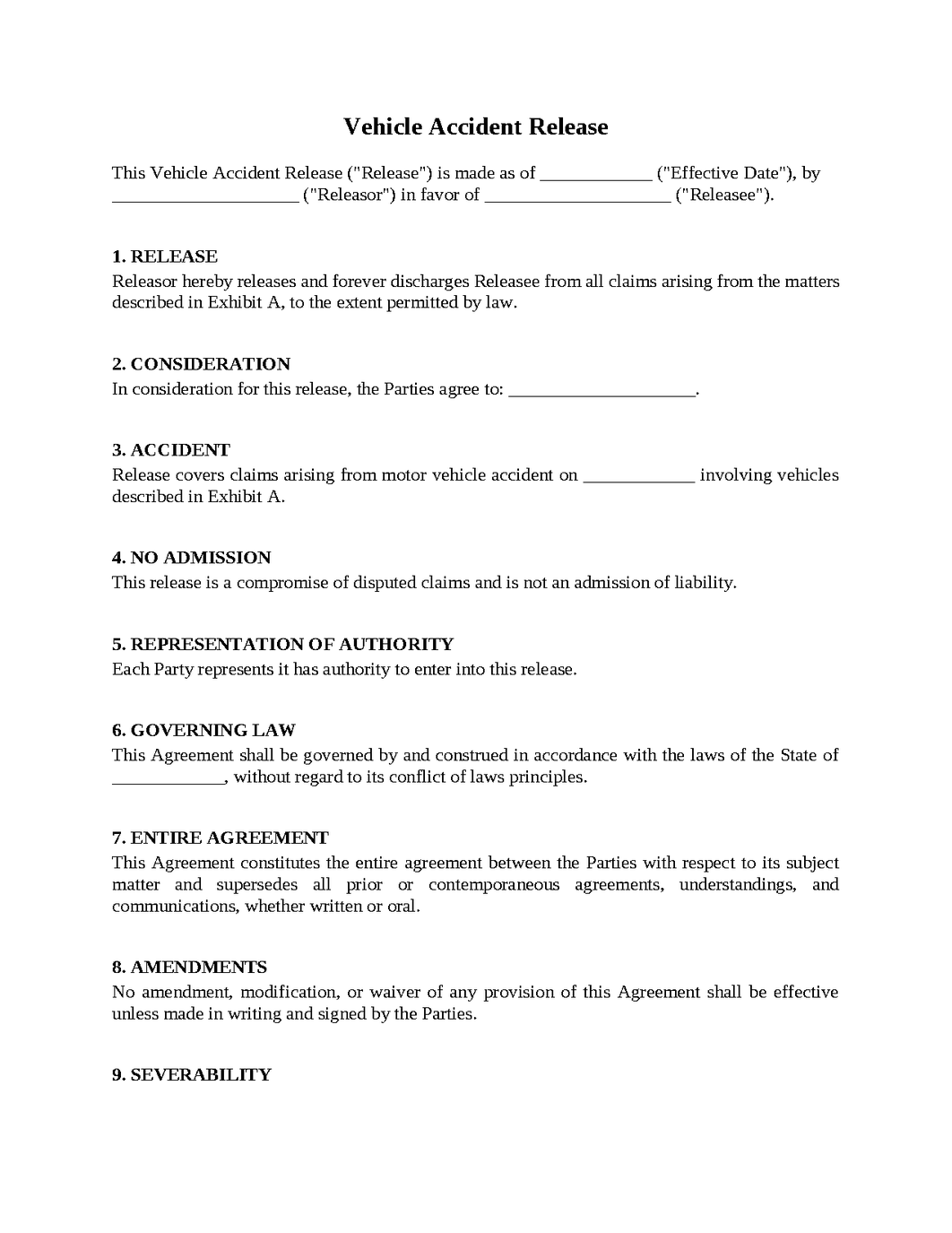
A Vehicle Accident Release is a legal agreement through which one party agrees to release another party from liability arising out of a motor vehicle accident in exchange for compensation or other consideration. These agreements are commonly used following automobile collisions, motorcycle accidents, commercial vehicle incidents, rideshare accidents, parking lot collisions, and other transportation-related disputes. A Vehicle Accident Release typically resolves claims relating to vehicle damage, towing expenses, rental vehicle costs, loss of use, personal injuries, and other damages arising from the accident. Because the full consequences of an accident are not always known immediately, disputes can arise when the parties have different expectations regarding the scope of the settlement and the claims being released. A carefully drafted Vehicle Accident Release helps provide finality while protecting the interests of all parties involved.
Additional Injuries Are Discovered After the Release Is Signed
Two drivers are involved in a collision at a busy intersection.
Immediately following the accident, both drivers inspect the damage and discuss the situation. One driver experiences minor soreness but does not believe any serious injuries have occurred.
The parties negotiate a settlement that covers vehicle repairs and other apparent losses. In exchange for payment, the injured driver signs a Vehicle Accident Release and both parties expect the matter to be resolved permanently.
Several weeks later, the driver begins experiencing worsening symptoms and seeks additional medical evaluation. Doctors determine that the accident may have caused injuries that were not apparent immediately after the collision.
The driver believes the settlement did not account for the true extent of the injuries. The other driver and insurer maintain that the release was intended to resolve all claims arising from the accident.
To help avoid this problem, a Vehicle Accident Release should clearly address known and unknown injuries and explain the effect of the settlement on future claims relating to medical conditions discovered after execution of the agreement.
Vehicle Damage Turns Out to Be More Extensive Than Expected
A vehicle is damaged in a rear-end collision during routine traffic.
After obtaining an initial repair estimate, the vehicle owner negotiates a settlement with the responsible driver's insurer. The estimate appears reasonable, and the owner signs a Vehicle Accident Release after receiving payment.
Once repairs begin, technicians discover hidden structural damage, electronic system failures, and additional mechanical issues that were not visible during the original inspection.
The vehicle owner becomes concerned because the repair costs now far exceed the settlement amount. The insurer believes the release resolved the property damage claim and provided certainty for all parties.
The owner argues that the settlement was based on incomplete information. The insurer maintains that unknown repair issues are part of the risk associated with settling claims.
To help prevent these issues, a Vehicle Accident Release should clearly explain the treatment of hidden damage and address whether future repair discoveries affect the finality of the settlement.
A Passenger Brings a Separate Claim
A driver and insurer settle a motor vehicle accident claim shortly after the incident occurs.
The settlement negotiations focus primarily on vehicle repairs and losses suffered by the driver. A Vehicle Accident Release is executed, and everyone involved believes the matter has been concluded successfully.
Months later, a passenger who was present during the accident asserts claims for medical expenses, lost income, and other damages. The passenger was not directly involved in the settlement discussions and did not sign the release.
The driver and insurer believe the settlement resolved all issues arising from the accident. The passenger argues that individual rights cannot be waived through an agreement signed by someone else.
The disagreement becomes more complicated because multiple people were affected by the same event but participated differently in the settlement process.
To help avoid these problems, a Vehicle Accident Release should clearly identify the parties being released and specify whose claims are affected by the agreement.
Rental Car and Loss-of-Use Costs Continue to Grow
A business vehicle is damaged in an accident and must be taken out of service for repairs.
The owner obtains repair estimates and negotiates a settlement intended to cover the apparent losses resulting from the collision. A Vehicle Accident Release is signed, and repair work begins shortly thereafter.
Unexpected parts shortages and repair delays extend the process far longer than anticipated. The business incurs substantial rental vehicle costs and operational disruptions while waiting for repairs to be completed.
The vehicle owner believes these additional expenses were caused by the accident and should be compensated. The responsible party argues that the settlement was intended to resolve all losses associated with the incident.
The disagreement focuses on whether future expenses that arise after settlement remain recoverable.
To help prevent these issues, a Vehicle Accident Release should clearly identify the categories of damages included in the settlement and explain whether future loss-of-use expenses are covered.
The Settlement Is Reached Before Fault Is Fully Understood
Two vehicles collide under circumstances that initially appear straightforward.
Shortly after the accident, one driver accepts responsibility and offers compensation to resolve the matter quickly. The parties negotiate a settlement and execute a Vehicle Accident Release before a detailed investigation is completed.
Later, additional evidence becomes available through witness statements, traffic camera footage, or accident reconstruction analysis. The new information suggests that fault may have been shared or that responsibility may differ from what the parties originally believed.
One party argues that the settlement was based on an inaccurate understanding of the accident. The other believes the release was intended to provide finality regardless of later discoveries.
The dispute shifts from the accident itself to whether new evidence should affect a completed settlement.
To help avoid these problems, a Vehicle Accident Release should clearly address disputed liability and explain whether future information regarding fault will affect the enforceability of the agreement.
Vehicle Accident Releases are commonly used to resolve claims arising from motor vehicle collisions without prolonged disputes or litigation. However, issues involving hidden injuries, unexpected repair costs, passenger claims, continuing economic losses, and newly discovered evidence can become significant sources of conflict when expectations are not documented clearly. A carefully drafted Vehicle Accident Release provides a structured framework for settling claims and allocating risk between the parties. When prepared thoughtfully, it can reduce uncertainty, preserve negotiated resolutions, and provide the finality necessary for everyone involved to move forward with confidence.

Get started with Upsign today!
Easily send, sign and track your documents