

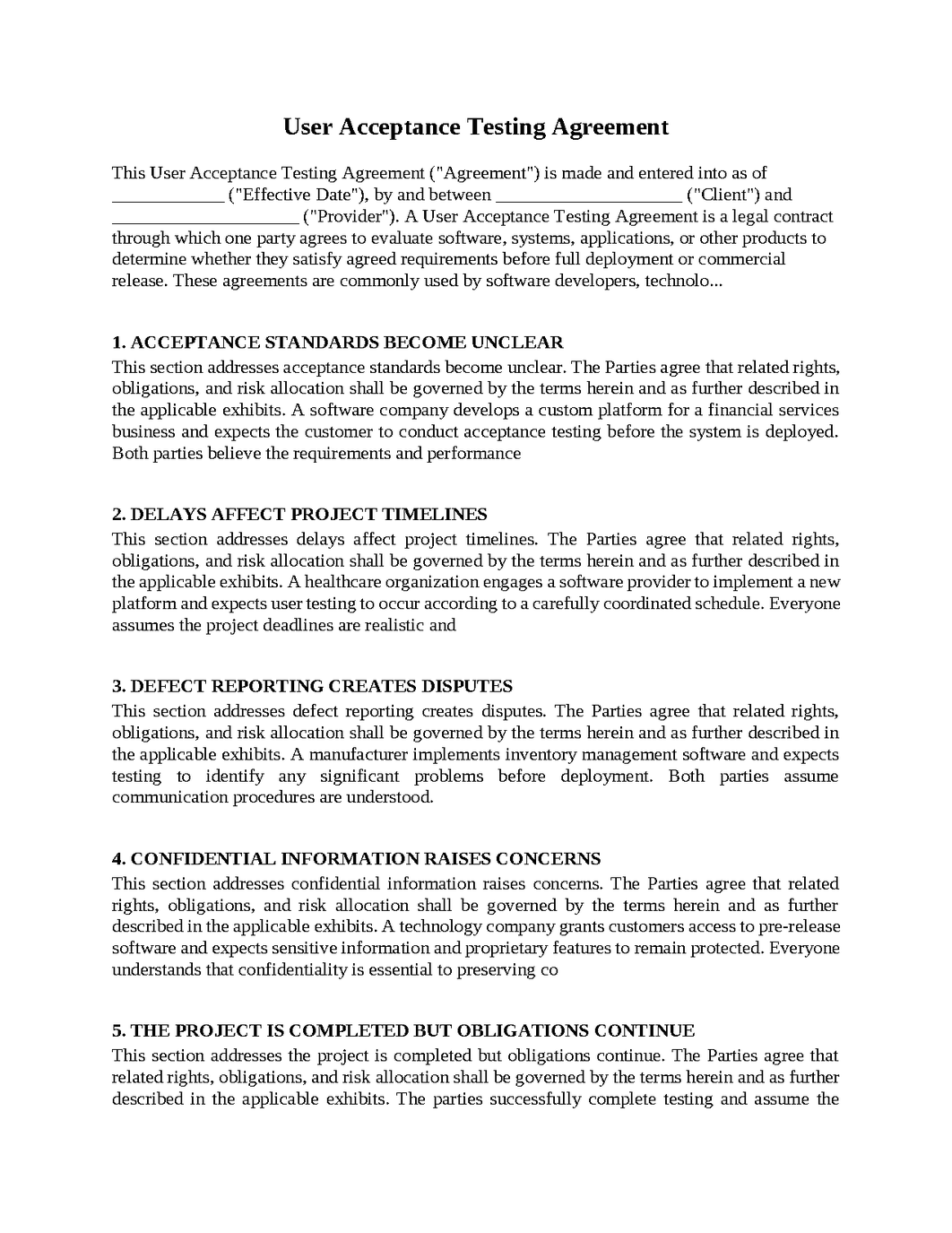
User Acceptance Testing Agreement
A User Acceptance Testing Agreement is a legal contract through which one party agrees to evaluate software, systems, applications, or other products to determine whether they satisfy agreed requirements before full deployment or commercial release. These agreements are commonly used by software developers, technology companies, healthcare organizations, financial institutions, manufacturers, and consulting firms seeking to ensure products function properly and meet customer expectations. A User Acceptance Testing Agreement typically addresses testing procedures, responsibilities, acceptance criteria, reporting requirements, confidentiality obligations, and procedures governing disputes and termination. Because successful implementation often depends upon identifying problems before launch, disputes can arise when expectations regarding testing and approval are not documented clearly. A carefully drafted User Acceptance Testing Agreement helps establish certainty and protect the interests of both developers and customers.
Acceptance Standards Become Unclear
A software company develops a custom platform for a financial services business and expects the customer to conduct acceptance testing before the system is deployed. Both parties believe the requirements and performance standards are clearly understood.
Initially, testing proceeds smoothly and most features function as expected. Over time, however, questions arise regarding whether certain deficiencies constitute acceptable issues or material defects.
The customer believes the software should satisfy all operational requirements because future performance and customer relationships depend upon reliability. The developer believes minor issues are inevitable and argues that the system substantially complies with the agreed specifications. As concerns increase, tensions emerge regarding acceptance standards.
To help avoid this problem, a User Acceptance Testing Agreement should clearly establish acceptance criteria and define the circumstances under which the product will be considered satisfactory.
Delays Affect Project Timelines
A healthcare organization engages a software provider to implement a new platform and expects user testing to occur according to a carefully coordinated schedule. Everyone assumes the project deadlines are realistic and achievable.
As testing progresses, employees identify additional issues and request changes that extend the review process. Questions arise regarding responsibility for missed milestones and increased expenses.
The healthcare organization believes thorough testing is essential because patient services and regulatory requirements depend upon dependable systems. The developer believes repeated revisions and changing requests have affected the schedule and argues that reasonable efforts have been made to satisfy the project requirements. As delays continue, disagreements emerge regarding timing obligations.
To help prevent these issues, a User Acceptance Testing Agreement should clearly establish testing schedules and define the consequences applicable to delays and change requests.
Defect Reporting Creates Disputes
A manufacturer implements inventory management software and expects testing to identify any significant problems before deployment. Both parties assume communication procedures are understood.
As testing continues, questions arise regarding whether certain defects were reported properly and whether additional corrections are required. Different expectations create uncertainty regarding responsibility.
The manufacturer believes all problems should be corrected because operational efficiency and customer service depend upon reliable systems. The software provider believes defects must be reported according to agreed procedures and argues that new requests should be treated separately from original requirements. As testing expands, tensions develop regarding defect reporting.
To help avoid these problems, a User Acceptance Testing Agreement should clearly establish reporting procedures and define how issues and corrections will be documented and addressed.
Confidential Information Raises Concerns
A technology company grants customers access to pre-release software and expects sensitive information and proprietary features to remain protected. Everyone understands that confidentiality is essential to preserving competitive advantages.
As employees and third parties participate in testing, concerns arise regarding unauthorized disclosures and access to confidential information. Questions emerge regarding the adequacy of safeguards.
The developer believes strict protections are necessary because the software represents years of investment and innovation. The customer believes collaboration requires flexibility and argues that reasonable precautions have been implemented. As concerns increase, disagreements emerge regarding confidentiality obligations.
To help prevent these issues, a User Acceptance Testing Agreement should clearly establish confidentiality requirements and define the procedures governing access to and protection of proprietary information.
The Project Is Completed but Obligations Continue
The parties successfully complete testing and assume the system will operate effectively after deployment. Long-term plans and operational strategies are built around that expectation.
Eventually, questions arise regarding unresolved defects, documentation, confidential information, and obligations relating to issues discovered after implementation. Different interpretations create uncertainty regarding continuing responsibilities.
The customer believes ongoing support is necessary because business operations depend upon stable performance. The developer believes future obligations should be limited according to the agreement and expects finality. As new issues emerge, disagreements arise regarding the rights and responsibilities that survive the testing process.
To help avoid this problem, a User Acceptance Testing Agreement should clearly establish post-acceptance procedures and identify the obligations and protections that continue after testing has been completed.
User Acceptance Testing Agreements are valuable tools that help organizations verify that products satisfy expectations before full implementation. However, issues involving acceptance standards, project delays, defect reporting, confidentiality concerns, and post-completion obligations can become significant sources of conflict when expectations are not documented clearly. A carefully drafted User Acceptance Testing Agreement provides a structured framework for allocating responsibilities and protecting the interests of both developers and customers. When prepared thoughtfully, it can reduce uncertainty, improve product quality, strengthen business relationships, and provide the foundation necessary for successful technology implementations.

Get started with Upsign today!
Easily send, sign and track your documents