

Usage Rights Agreement
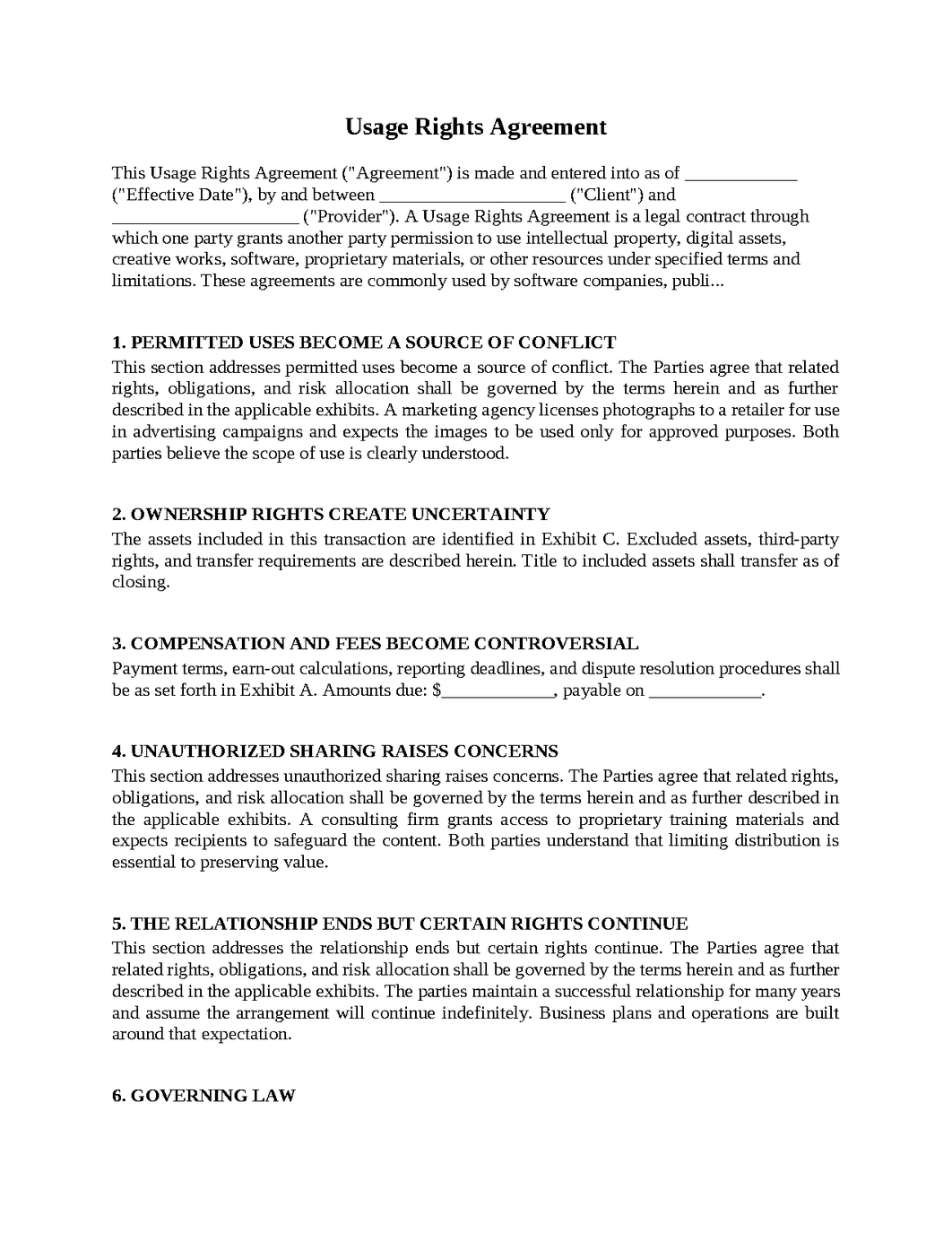
A Usage Rights Agreement is a legal contract through which one party grants another party permission to use intellectual property, digital assets, creative works, software, proprietary materials, or other resources under specified terms and limitations. These agreements are commonly used by software companies, publishers, photographers, marketing agencies, entertainment businesses, and content creators seeking to control how their assets are used while generating revenue and preserving ownership rights. A Usage Rights Agreement typically addresses permitted uses, duration, geographic limitations, compensation arrangements, ownership rights, and procedures governing disputes and termination. Because valuable assets often derive their worth from how they are used and protected, disputes can arise when expectations regarding rights and restrictions are not documented clearly. A carefully drafted Usage Rights Agreement helps establish certainty and protect the interests of both owners and users.
Permitted Uses Become a Source of Conflict
A marketing agency licenses photographs to a retailer for use in advertising campaigns and expects the images to be used only for approved purposes. Both parties believe the scope of use is clearly understood.
Initially, the materials are used appropriately and the relationship remains productive. Over time, however, questions arise regarding whether the retailer may use the images in additional media and promotional campaigns not originally contemplated.
The agency believes restrictions are essential because the value of creative works depends upon controlling how they are used. The retailer believes broader usage is appropriate because the original purpose of the relationship was to promote products effectively. As new opportunities emerge, tensions develop regarding the scope of the rights granted.
To help avoid this problem, a Usage Rights Agreement should clearly establish the permitted uses of the materials and define any restrictions applicable to additional applications.
Ownership Rights Create Uncertainty
A software developer grants customers certain usage rights and expects ownership of the underlying code and technology to remain protected. Everyone assumes the distinction between ownership and usage rights is understood.
As modifications and integrations occur, questions arise regarding whether users have acquired ownership interests through their investments and contributions. Different expectations create uncertainty regarding intellectual property rights.
The developer believes ownership should remain intact because the software represents years of effort and innovation. The users believe their investments and enhancements justify broader rights and argue that practical realities should be recognized. As the value of the technology increases, disagreements emerge regarding ownership.
To help prevent these issues, a Usage Rights Agreement should clearly establish ownership provisions and define the rights granted to users.
Compensation and Fees Become Controversial
A publishing company grants rights to educational materials and expects licensing fees to provide ongoing revenue. Both parties believe the payment structure is straightforward and fair.
As demand increases, questions arise regarding additional uses, renewals, and whether new projects require separate compensation. Different interpretations create uncertainty regarding payment obligations.
The publisher believes additional compensation is appropriate because expanded uses increase the value received by the customer. The customer believes the original fees should provide sufficient flexibility and argues that repeated charges create unnecessary burdens. As revenues increase, tensions develop regarding compensation.
To help avoid these problems, a Usage Rights Agreement should clearly establish fee arrangements and define the circumstances under which additional payments are required.
Unauthorized Sharing Raises Concerns
A consulting firm grants access to proprietary training materials and expects recipients to safeguard the content. Both parties understand that limiting distribution is essential to preserving value.
As employees and third parties gain access to the materials, concerns arise regarding unauthorized copying and sharing. Questions emerge regarding the adequacy of existing safeguards.
The consulting firm believes strict controls are essential because the materials represent valuable intellectual property and competitive advantages. The customer believes internal collaboration requires flexibility and argues that reasonable precautions have been implemented. As concerns increase, disagreements emerge regarding confidentiality and distribution rights.
To help prevent these issues, a Usage Rights Agreement should clearly establish confidentiality requirements and define the procedures governing access and sharing.
The Relationship Ends but Certain Rights Continue
The parties maintain a successful relationship for many years and assume the arrangement will continue indefinitely. Business plans and operations are built around that expectation.
Eventually, changing priorities lead one side to terminate the agreement. Questions arise regarding previously distributed materials, continuing access rights, outstanding fees, and obligations associated with prior uses.
The owner believes continuing protections are necessary because intellectual property remains valuable after the relationship ends. The user believes future obligations should be limited according to the agreement and expects finality. As unresolved issues remain, disagreements emerge regarding the rights and responsibilities that survive termination.
To help avoid this problem, a Usage Rights Agreement should clearly establish termination procedures and identify the rights and responsibilities that continue after the relationship ends.
Usage Rights Agreements are valuable tools that allow owners to commercialize assets while preserving ownership and controlling how valuable resources are used. However, issues involving permitted uses, ownership rights, compensation arrangements, unauthorized sharing, and post-termination obligations can become significant sources of conflict when expectations are not documented clearly. A carefully drafted Usage Rights Agreement provides a structured framework for allocating responsibilities and protecting the interests of both owners and users. When prepared thoughtfully, it can reduce uncertainty, preserve intellectual property rights, strengthen commercial relationships, and provide the foundation necessary for successful licensing and usage arrangements.

Get started with Upsign today!
Easily send, sign and track your documents