

Unanimous Consent Agreement
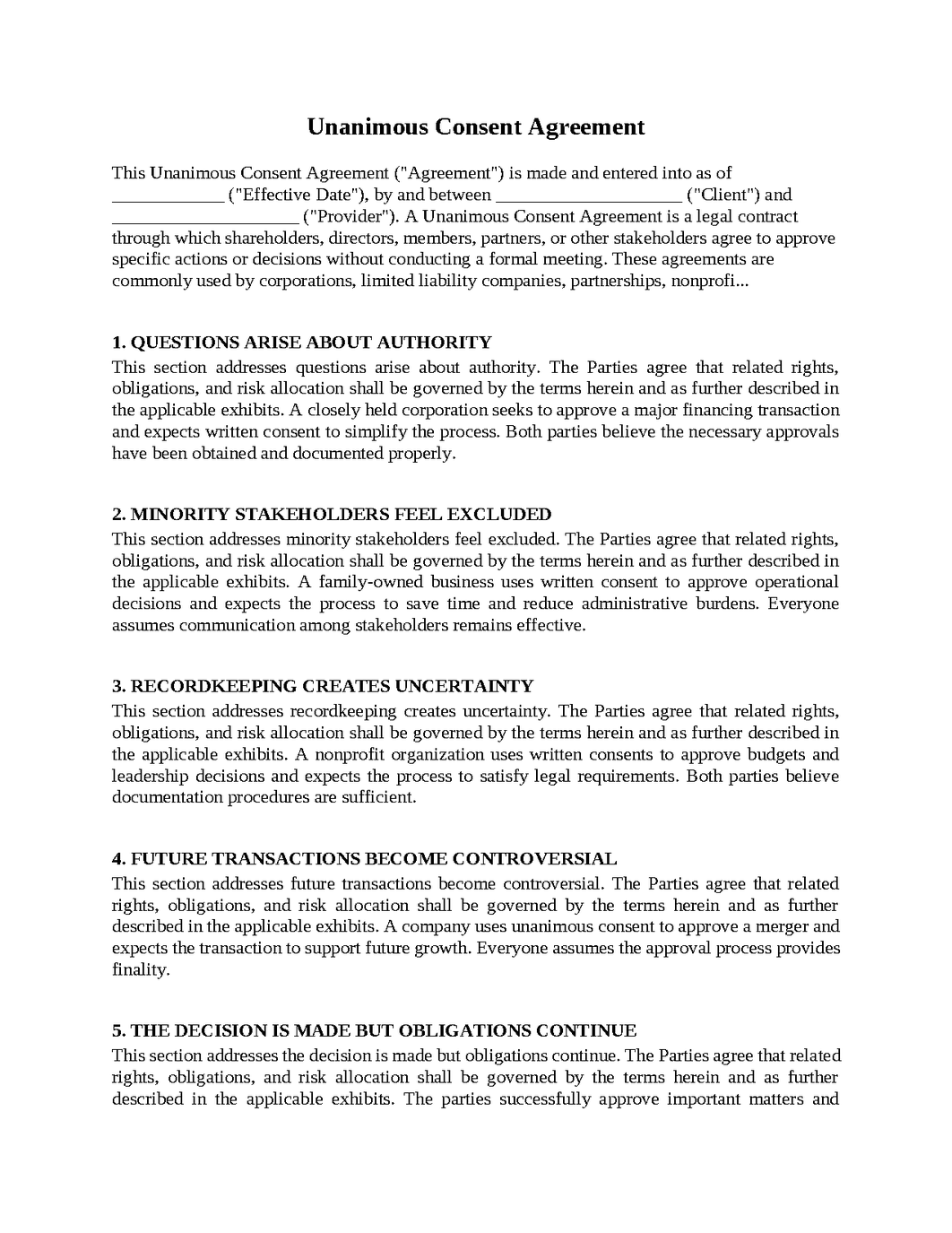
A Unanimous Consent Agreement is a legal contract through which shareholders, directors, members, partners, or other stakeholders agree to approve specific actions or decisions without conducting a formal meeting. These agreements are commonly used by corporations, limited liability companies, partnerships, nonprofit organizations, and closely held businesses seeking to streamline decision-making while preserving compliance with governance requirements. A Unanimous Consent Agreement typically addresses the actions being approved, voting rights, authority, effective dates, recordkeeping requirements, and procedures governing disputes and termination. Because important organizational decisions can affect ownership rights and future operations, disputes can arise when expectations regarding authority and approval are not documented clearly. A carefully drafted Unanimous Consent Agreement helps establish certainty and protect the interests of all parties involved.
Questions Arise About Authority
A closely held corporation seeks to approve a major financing transaction and expects written consent to simplify the process. Both parties believe the necessary approvals have been obtained and documented properly.
Initially, the transaction proceeds smoothly and everyone assumes the approvals are valid. Over time, however, questions emerge regarding whether certain individuals possessed authority to provide consent and whether all required parties participated.
The majority shareholders believe the transaction should remain valid because everyone involved acted in good faith and intended to support the company. Minority shareholders believe governance requirements are essential because ownership rights deserve protection and proper procedures matter. As concerns increase, tensions emerge regarding authority.
To help avoid this problem, a Unanimous Consent Agreement should clearly establish who possesses approval rights and define the procedures required for valid consent.
Minority Stakeholders Feel Excluded
A family-owned business uses written consent to approve operational decisions and expects the process to save time and reduce administrative burdens. Everyone assumes communication among stakeholders remains effective.
As additional transactions occur, some owners begin feeling excluded from important discussions. Questions arise regarding whether meaningful participation has been replaced by convenience.
The majority owners believe efficiency is necessary because delays could affect opportunities and business performance. Minority owners believe full participation is essential because major decisions affect ownership interests and long-term value. As strategic matters become more significant, disagreements emerge regarding governance practices.
To help prevent these issues, a Unanimous Consent Agreement should clearly establish communication procedures and define how information will be shared before consent is obtained.
Recordkeeping Creates Uncertainty
A nonprofit organization uses written consents to approve budgets and leadership decisions and expects the process to satisfy legal requirements. Both parties believe documentation procedures are sufficient.
As audits and regulatory reviews occur, questions arise regarding whether all approvals were properly recorded and preserved. Different expectations create uncertainty regarding compliance.
The organization believes maintaining accurate records is essential because governance obligations and regulatory requirements depend upon reliable documentation. Certain stakeholders believe administrative procedures should remain simple and argue that excessive formalities create unnecessary burdens. As reviews continue, tensions develop regarding recordkeeping responsibilities.
To help avoid these problems, a Unanimous Consent Agreement should clearly establish documentation requirements and define the procedures governing records and approvals.
Future Transactions Become Controversial
A company uses unanimous consent to approve a merger and expects the transaction to support future growth. Everyone assumes the approval process provides finality.
As additional transactions are proposed, questions arise regarding whether previous consents authorize related activities or whether new approvals are necessary. Different interpretations create uncertainty regarding future authority.
Management believes flexibility is necessary because business opportunities often evolve rapidly. Certain owners believe each significant transaction deserves separate review because ownership rights should remain protected. As expansion plans develop, disagreements emerge regarding the scope of prior approvals.
To help prevent these issues, a Unanimous Consent Agreement should clearly establish the actions being approved and define any limitations applicable to future transactions.
The Decision Is Made but Obligations Continue
The parties successfully approve important matters and assume the organization will continue operating smoothly. Long-term planning is built around those expectations.
Eventually, ownership changes and disputes arise regarding prior approvals and continuing obligations. Questions emerge regarding records, enforcement rights, and the effect of previously granted consents.
Certain stakeholders believe prior decisions should remain binding because substantial reliance and investments followed those approvals. Others believe changing circumstances justify revisiting earlier decisions and expect greater flexibility. As new issues emerge, disagreements arise regarding the rights and responsibilities that survive prior actions.
To help avoid this problem, a Unanimous Consent Agreement should clearly establish the effect of approved actions and identify the obligations and protections that continue after consent has been granted.
Unanimous Consent Agreements are valuable tools that allow organizations to approve important actions efficiently while maintaining compliance with governance requirements. However, issues involving authority, stakeholder participation, recordkeeping, future transactions, and continuing obligations can become significant sources of conflict when expectations are not documented clearly. A carefully drafted Unanimous Consent Agreement provides a structured framework for allocating responsibilities and protecting the interests of owners, directors, and stakeholders. When prepared thoughtfully, it can reduce uncertainty, strengthen governance practices, preserve accountability, and provide the foundation necessary for effective organizational decision-making.

Get started with Upsign today!
Easily send, sign and track your documents