

Trademark License Agreement
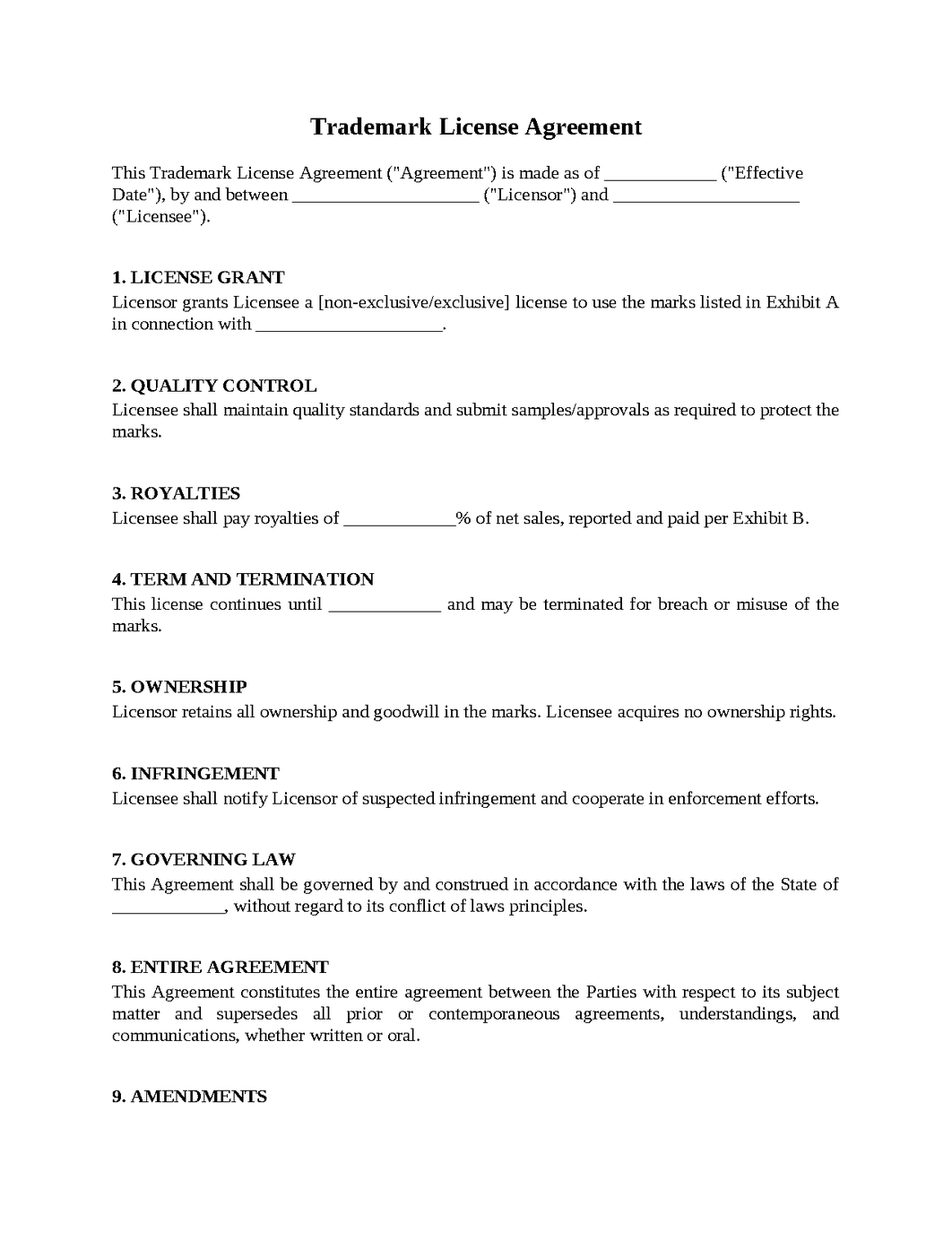
A Trademark License Agreement is a legal contract through which a trademark owner grants another party permission to use a trademark, service mark, logo, brand name, slogan, or other brand identifier under specified conditions. These agreements are commonly used in franchising, merchandising, manufacturing, distribution, co-branding arrangements, sponsorships, affiliate relationships, and strategic partnerships. Unlike a trademark assignment, which transfers ownership, a Trademark License Agreement allows the trademark owner to retain ownership while granting limited usage rights to another party. Because trademarks derive value from reputation, goodwill, and consumer trust, disputes can arise when expectations regarding use and quality control are not documented clearly. A well-drafted Trademark License Agreement helps protect both the trademark owner and the licensee while preserving the integrity of the brand.
The Licensee Uses the Trademark in Unexpected Ways
A company licenses a well-known trademark to a manufacturer for use on a specific line of products.
Initially, both parties are excited about the opportunity and expect the arrangement to benefit everyone involved. Over time, however, the licensee begins using the trademark in marketing materials, product categories, and promotional campaigns that were never discussed during negotiations.
The trademark owner becomes concerned that the expanded use may confuse consumers and weaken the brand's identity. The licensee believes the broader use helps maximize the value of the licensing arrangement.
The disagreement grows because the parties have different interpretations of the permitted scope of use.
What began as a mutually beneficial relationship becomes a dispute regarding brand control.
To help avoid this problem, a Trademark License Agreement should clearly define permitted uses, identify prohibited activities, establish usage guidelines, and describe the specific products, services, or territories covered by the license.
Product Quality Damages the Brand's Reputation
A trademark owner licenses its brand to another company that manufactures products under the licensed mark.
The licensee initially meets quality expectations and customer feedback is positive. Over time, however, product quality begins declining and customer complaints increase.
Consumers continue associating the products with the trademark owner because the brand appears prominently on the packaging and marketing materials.
The trademark owner becomes concerned that poor quality may damage years of goodwill and customer trust. The licensee believes quality standards remain commercially reasonable.
The disagreement becomes increasingly significant because the value of the trademark depends heavily on reputation.
To reduce these risks, a Trademark License Agreement should establish quality-control standards, provide inspection rights, define approval procedures, and allow the trademark owner to monitor compliance with brand requirements.
The Licensee Believes the License Is Exclusive
A business obtains the right to use a trademark in connection with certain products and services.
The licensee invests substantial resources into marketing, product development, and customer acquisition. Later, the trademark owner grants similar rights to another company operating in the same market.
The licensee becomes frustrated and argues that the investment was made with the expectation of exclusivity. The trademark owner believes the agreement never granted exclusive rights.
The disagreement centers on whether the license was intended to prevent additional licensing arrangements.
Neither party anticipated the conflict when the relationship began.
To help prevent these issues, a Trademark License Agreement should clearly state whether the license is exclusive, non-exclusive, or partially exclusive and define any territorial or market restrictions that apply.
Royalties Become a Source of Conflict
A trademark owner licenses a valuable brand in exchange for royalty payments based on sales generated by the licensee.
Initially, royalty payments are made regularly and the relationship functions smoothly. As sales increase, questions arise regarding how royalties should be calculated.
The trademark owner believes all revenue generated from licensed products should be included. The licensee believes certain discounts, returns, promotional allowances, and other deductions should reduce royalty obligations.
The financial impact becomes substantial as business volume grows.
Neither side disputes that royalties are owed, but both disagree regarding the calculation method.
To help avoid these problems, a Trademark License Agreement should clearly define royalty calculations, establish reporting requirements, provide audit rights, and identify allowable deductions when determining payments.
The License Ends but Trademark Use Continues
A trademark licensing relationship concludes after several successful years.
The trademark owner expects the licensee to stop using the trademark immediately upon expiration or termination. The licensee continues selling inventory, maintaining marketing materials, and using branded content after the agreement ends.
The trademark owner believes continued use infringes on its rights and creates consumer confusion. The licensee argues that additional time is necessary to transition away from the brand.
The disagreement becomes increasingly urgent because trademark rights depend on proper control and enforcement.
What should have been a routine conclusion to the relationship becomes a legal dispute.
To reduce these risks, a Trademark License Agreement should clearly define post-termination obligations, establish inventory sell-off rights if applicable, identify deadlines for discontinuing use, and require removal of branding materials after the license ends.
Trademark License Agreements are valuable tools for expanding brand reach while allowing trademark owners to maintain ownership of their intellectual property. However, issues involving permitted uses, quality control, exclusivity rights, royalty calculations, and post-termination obligations can become significant sources of conflict when expectations are not documented clearly. A carefully drafted Trademark License Agreement provides a structured framework for managing these relationships and protecting all parties involved. When prepared thoughtfully, it can help preserve brand value, reduce misunderstandings, support successful licensing arrangements, and promote long-term commercial success.

Get started with Upsign today!
Easily send, sign and track your documents