

Territory Development Agreement
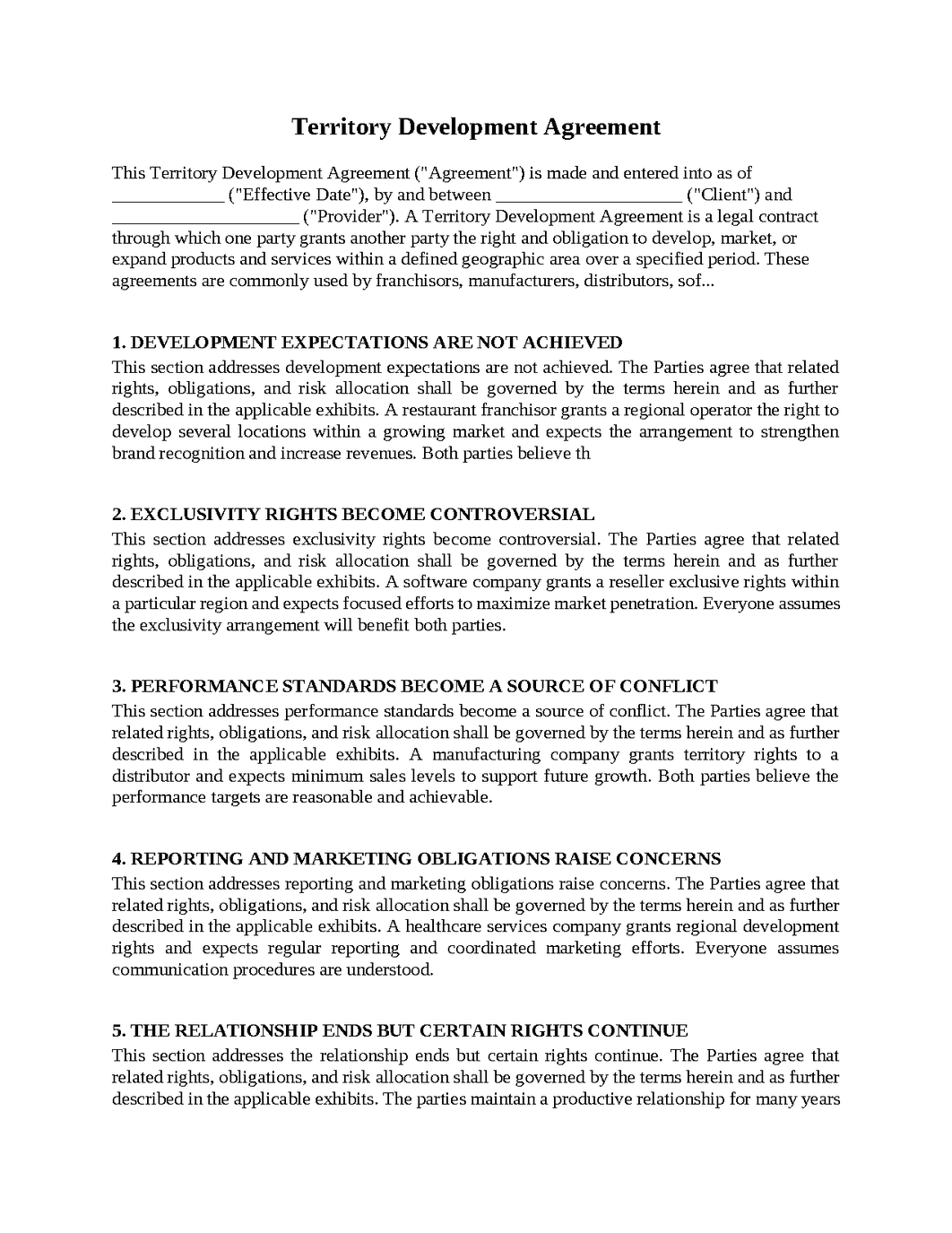
A Territory Development Agreement is a legal contract through which one party grants another party the right and obligation to develop, market, or expand products and services within a defined geographic area over a specified period. These agreements are commonly used by franchisors, manufacturers, distributors, software companies, and service organizations seeking controlled expansion while leveraging local expertise. A Territory Development Agreement typically addresses development schedules, exclusivity rights, performance requirements, compensation arrangements, reporting obligations, and procedures governing disputes and termination. Because both parties often make significant investments based upon expected growth within the territory, disputes can arise when expectations regarding responsibilities and rights are not documented clearly. A carefully drafted Territory Development Agreement helps establish certainty and protect the interests of both parties.
Development Expectations Are Not Achieved
A restaurant franchisor grants a regional operator the right to develop several locations within a growing market and expects the arrangement to strengthen brand recognition and increase revenues. Both parties believe the development schedule is realistic and attainable.
Initially, expansion efforts proceed according to plan and customer demand remains strong. Over time, however, labor shortages and rising costs slow development, causing certain milestones to be missed.
The franchisor believes timely expansion is essential because market opportunities and competitive advantages depend upon maintaining growth. The operator believes changing economic conditions affected performance and argues that reasonable efforts have been made to satisfy the obligations. As delays continue, tensions emerge regarding development requirements.
To help avoid this problem, a Territory Development Agreement should clearly establish development schedules and define the consequences applicable to missed milestones.
Exclusivity Rights Become Controversial
A software company grants a reseller exclusive rights within a particular region and expects focused efforts to maximize market penetration. Everyone assumes the exclusivity arrangement will benefit both parties.
As customer demand increases, additional opportunities arise and the software company considers appointing other representatives to accelerate growth. Questions arise regarding the extent of the reseller's exclusive rights.
The reseller believes exclusivity is essential because substantial resources were invested in developing the market and promoting the products. The software company believes broader distribution may increase revenue and argues that changing business conditions require flexibility. As expansion opportunities emerge, disagreements arise regarding exclusivity rights.
To help prevent these issues, a Territory Development Agreement should clearly establish territorial rights and define the circumstances under which additional representatives may be appointed.
Performance Standards Become a Source of Conflict
A manufacturing company grants territory rights to a distributor and expects minimum sales levels to support future growth. Both parties believe the performance targets are reasonable and achievable.
As market conditions fluctuate, revenues decline and questions arise regarding whether the distributor has satisfied its obligations. Different interpretations create uncertainty regarding future rights.
The manufacturer believes measurable results are essential because production planning and market share depend upon consistent growth. The distributor believes economic conditions and competitive pressures affected results and argues that reasonable efforts should be considered. As revenues fluctuate, tensions develop regarding performance standards.
To help avoid these problems, a Territory Development Agreement should clearly establish performance requirements and define the criteria used to evaluate success.
Reporting and Marketing Obligations Raise Concerns
A healthcare services company grants regional development rights and expects regular reporting and coordinated marketing efforts. Everyone assumes communication procedures are understood.
As operations expand, questions arise regarding advertising expenditures, reporting accuracy, and market development activities. Concerns increase regarding whether both parties are contributing appropriately.
The company believes regular reporting is essential because growth strategies and budgeting depend upon accurate information. The developer believes excessive reporting creates unnecessary administrative burdens and argues that local conditions require flexibility. As misunderstandings increase, disagreements emerge regarding communication obligations.
To help prevent these issues, a Territory Development Agreement should clearly establish reporting requirements and define the responsibilities applicable to marketing and business development activities.
The Relationship Ends but Certain Rights Continue
The parties maintain a productive relationship for many years and assume expansion efforts will continue indefinitely. Long-term plans and investments are built around that expectation.
Eventually, changing priorities lead one side to terminate the arrangement. Questions arise regarding customer relationships, pending developments, confidential information, and obligations associated with previously established locations.
The developer believes investments made over many years should continue to provide value because substantial resources were devoted to building the territory. The granting party believes future rights should be limited according to the agreement and expects finality. As the relationship concludes, disagreements emerge regarding the rights and responsibilities that survive termination.
To help avoid this problem, a Territory Development Agreement should clearly establish termination procedures and identify the rights and responsibilities that continue after the relationship ends.
Territory Development Agreements are valuable tools that allow businesses to expand strategically while leveraging local expertise and investment. However, issues involving development schedules, exclusivity rights, performance standards, reporting obligations, and post-termination responsibilities can become significant sources of conflict when expectations are not documented clearly. A carefully drafted Territory Development Agreement provides a structured framework for allocating responsibilities and protecting the interests of both parties. When prepared thoughtfully, it can reduce uncertainty, strengthen commercial relationships, encourage growth, and provide the foundation necessary for successful territorial expansion.

Get started with Upsign today!
Easily send, sign and track your documents