

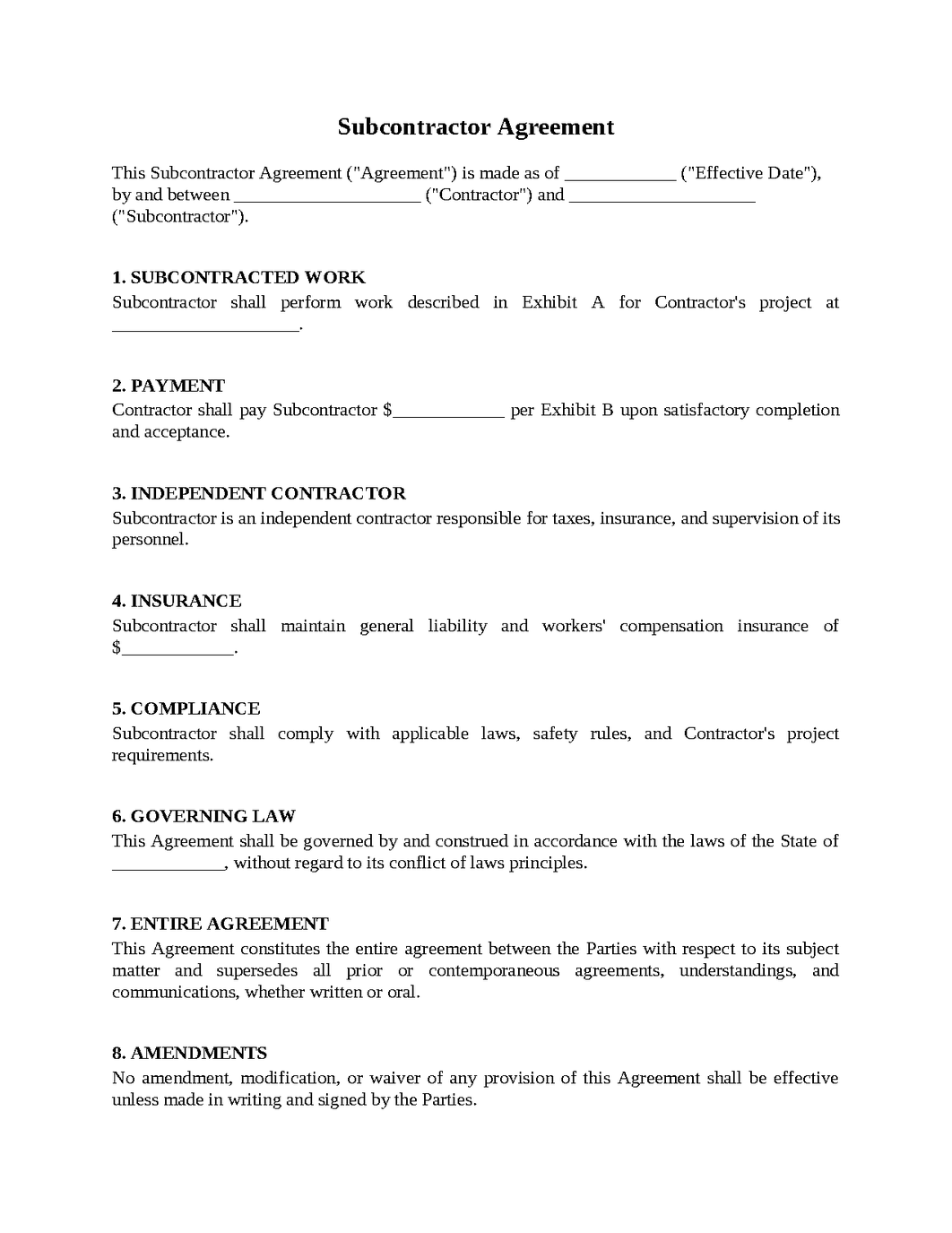
Subcontractor Agreement
A Subcontractor Agreement is a legal contract under which a contractor engages another individual or business to perform a portion of the work the contractor has agreed to provide to a client. Subcontractor Agreements are commonly used in construction, technology services, consulting, manufacturing, marketing, engineering, logistics, and professional services industries. These agreements typically address the scope of work, payment terms, project schedules, quality standards, confidentiality obligations, insurance requirements, and responsibility for completed work. Because subcontractors often perform critical portions of larger projects, disputes can arise when expectations regarding performance and accountability are not documented clearly. A well-drafted Subcontractor Agreement helps protect both contractors and subcontractors while supporting successful project completion.
The Subcontractor's Work Does Not Meet Expectations
A contractor wins a large project and hires a subcontractor to perform a specialized portion of the work.
Initially, both parties are confident that the project will proceed smoothly. The subcontractor begins work and delivers completed tasks according to its understanding of the requirements.
When the contractor reviews the work, concerns arise regarding quality, accuracy, or compliance with project specifications. The contractor believes corrections are necessary before the work can be delivered to the client.
The subcontractor argues that the work satisfies the instructions provided and that additional revisions fall outside the agreed scope.
The disagreement becomes significant because the contractor remains responsible to the client for the final deliverable.
To help avoid this problem, a Subcontractor Agreement should clearly define performance standards, establish acceptance criteria, identify quality requirements, and explain procedures for correcting deficiencies.
Project Delays Affect Multiple Parties
A subcontractor agrees to complete a specific phase of a larger project according to a defined schedule.
The contractor relies on timely completion because other project activities depend on the subcontractor's work. As the project progresses, unforeseen challenges arise and deadlines begin slipping.
The subcontractor explains that circumstances beyond its control affected performance. The contractor becomes concerned because delays threaten commitments made to the client.
The client begins asking questions regarding project status, creating additional pressure on everyone involved.
What began as a scheduling issue becomes a broader dispute regarding responsibility for delays.
To reduce these risks, a Subcontractor Agreement should establish project timelines, identify milestone requirements, address delay procedures, and define consequences if deadlines are missed.
Payment Depends on the Contractor Being Paid First
A subcontractor completes work successfully and submits invoices according to the agreement.
The contractor is satisfied with the work but has not yet received payment from the client. The contractor believes payment to the subcontractor should occur only after client funds are received.
The subcontractor argues that payment is owed regardless of the client's actions because the contracted work has already been completed.
The disagreement creates financial strain and uncertainty.
Neither party expected payment timing to become controversial, but their expectations differ significantly.
To help prevent these issues, a Subcontractor Agreement should clearly define payment terms, address whether payment depends on client funding, establish invoicing procedures, and explain the parties' rights if payments are delayed.
The Client Attempts to Hire the Subcontractor Directly
A subcontractor performs exceptional work on a project and develops a positive relationship with the contractor's client.
As the project progresses, the client begins communicating directly with the subcontractor regarding future opportunities. Eventually, the client expresses interest in hiring the subcontractor independently for additional work.
The contractor becomes concerned that business relationships developed through its efforts may be bypassed.
The subcontractor believes new opportunities should be available without restriction. The contractor believes the client relationship is a valuable business asset that deserves protection.
The disagreement threatens the ongoing relationship between the contractor and subcontractor.
To help avoid these problems, a Subcontractor Agreement should address non-solicitation obligations, define permissible communications, and establish expectations regarding future work opportunities involving project clients.
Liability Arises From the Subcontractor's Work
A subcontractor performs services as part of a large commercial project.
Months after completion, problems emerge that allegedly result from the subcontractor's work. The client seeks compensation from the contractor because the contractor remains responsible for the overall project.
The contractor believes the subcontractor should bear responsibility for the portion of the work that caused the problem. The subcontractor argues that other factors contributed to the issue and disputes responsibility.
The disagreement becomes increasingly significant because financial damages may be substantial.
Questions arise regarding insurance coverage, indemnification obligations, and responsibility for corrective actions.
To reduce these risks, a Subcontractor Agreement should clearly allocate responsibility for work performed, establish indemnification provisions, identify insurance requirements, and define procedures for responding to claims.
Subcontractor Agreements are essential tools for managing complex projects that rely on specialized expertise and multiple service providers. However, issues involving work quality, project delays, payment obligations, client relationships, and liability allocation can become significant sources of conflict when expectations are not documented clearly. A carefully drafted Subcontractor Agreement provides a structured framework for managing these relationships and protecting all parties involved. When prepared thoughtfully, it can help reduce misunderstandings, improve accountability, support successful project execution, and strengthen long-term business partnerships.

Get started with Upsign today!
Easily send, sign and track your documents