

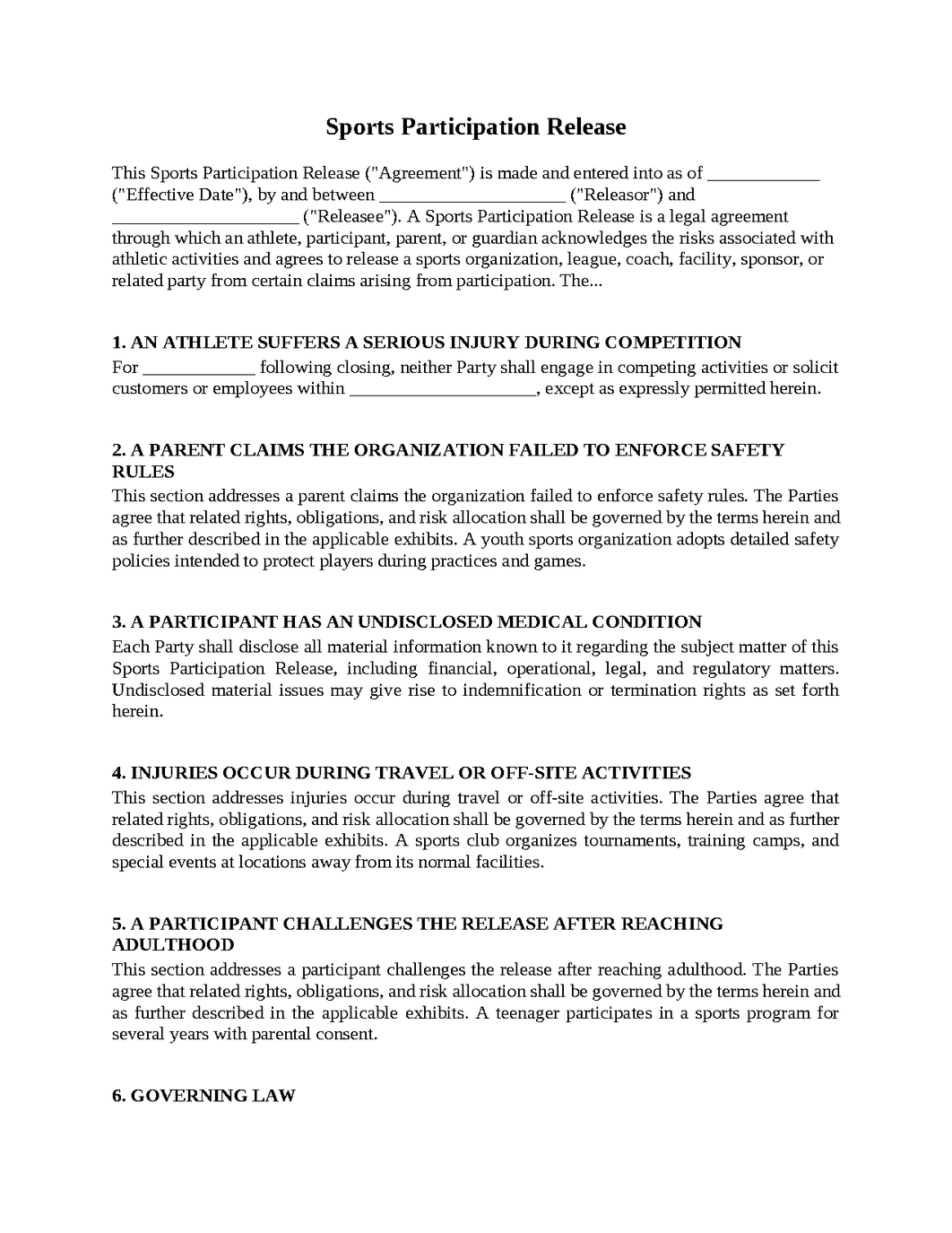
Sports Participation Release
A Sports Participation Release is a legal agreement through which an athlete, participant, parent, or guardian acknowledges the risks associated with athletic activities and agrees to release a sports organization, league, coach, facility, sponsor, or related party from certain claims arising from participation. These agreements are commonly used by youth sports leagues, amateur athletic associations, school programs, recreational leagues, competitive clubs, tournament organizers, and sports camps. Because athletic activities often involve physical contact, strenuous exertion, unpredictable conditions, and the possibility of injury, disputes can arise when participants and organizers have different expectations regarding responsibility for accidents and injuries. A carefully drafted Sports Participation Release helps communicate risks, establish responsibilities, and reduce uncertainty regarding potential claims.
An Athlete Suffers a Serious Injury During Competition
A recreational sports league organizes a competitive season involving teams from several communities.
Before participating, athletes complete registration forms and sign Sports Participation Releases acknowledging the physical risks associated with the sport. Most participants understand that injuries are possible and willingly accept the opportunity to compete.
During an important game, an athlete suffers a serious injury requiring surgery and extensive rehabilitation. The athlete incurs significant medical expenses and misses school, work, or other activities during recovery.
The athlete believes inadequate supervision, unsafe conditions, or improper enforcement of rules contributed to the injury. The league believes the injury resulted from risks that are inherent in athletic competition and were disclosed before participation.
What began as a routine sporting event becomes a dispute regarding responsibility for the injury and the scope of the release.
To help avoid this problem, a Sports Participation Release should clearly identify the risks associated with the sport and explain the claims participants are agreeing to release.
A Parent Claims the Organization Failed to Enforce Safety Rules
A youth sports organization adopts detailed safety policies intended to protect players during practices and games.
Parents review league materials, register their children, and sign Sports Participation Releases before the season begins. Everyone expects the organization to follow the established safety standards throughout the year.
During a game, an injury occurs under circumstances that cause parents to question whether coaches and officials enforced the league's safety requirements properly. Concerns arise regarding equipment, player conduct, supervision, and adherence to established procedures.
The organization believes reasonable efforts were made to maintain a safe environment. The parents believe the injury could have been avoided if league policies had been followed more carefully.
The disagreement becomes particularly sensitive because it involves the health and well-being of a minor athlete.
To help prevent these issues, a Sports Participation Release should clearly explain the risks associated with participation while remaining consistent with the organization's commitment to maintaining appropriate safety standards.
A Participant Has an Undisclosed Medical Condition
An athlete joins a competitive sports program and completes the required registration process.
As part of enrollment, the athlete signs a Sports Participation Release and provides basic health information. Coaches rely on the information provided when planning practices and athletic activities.
Several weeks into the season, the athlete experiences a medical emergency during training. It later becomes apparent that a preexisting condition may have contributed to the incident and was not fully disclosed during registration.
The athlete's family believes the training program was too demanding under the circumstances. The organization believes it lacked critical information that would have affected participation decisions and safety planning.
The disagreement focuses on whether responsibility rests with the participant, the organization, or both.
To help avoid these problems, a Sports Participation Release should clearly address participant health disclosures and explain the importance of providing accurate medical information before participation begins.
Injuries Occur During Travel or Off-Site Activities
A sports club organizes tournaments, training camps, and special events at locations away from its normal facilities.
Athletes sign Sports Participation Releases at the beginning of the season and participate in numerous activities without incident. Most families assume the release applies generally to league activities.
During an out-of-town tournament, an athlete is injured while participating in an event connected to the program. Questions arise regarding whether the release applies to travel-related activities, off-site facilities, and events hosted by third parties.
The club believes the injury occurred during an authorized sports activity covered by the release. The athlete's family believes the agreement did not clearly address activities occurring away from the organization's regular facilities.
The disagreement centers on the scope of the release and the activities it was intended to cover.
To help prevent these issues, a Sports Participation Release should clearly identify the events, locations, and activities covered by the agreement.
A Participant Challenges the Release After Reaching Adulthood
A teenager participates in a sports program for several years with parental consent.
At the time of enrollment, a parent signs a Sports Participation Release on the athlete's behalf. The participant competes successfully and eventually reaches adulthood while continuing involvement in the sport.
Years later, a dispute arises relating to an injury that occurred while the participant was still a minor. Questions emerge regarding the legal effect of the parental release and whether the participant's own rights were affected.
The sports organization believes the release was valid and enforceable when executed. The participant argues that additional considerations apply because the agreement was signed by a parent during childhood.
The disagreement becomes more complicated because it involves both parental authority and the rights of the participant.
To help avoid these problems, a Sports Participation Release should clearly address participation by minors, parental consent requirements, and the rights and responsibilities associated with youth athletics.
Sports Participation Releases are important tools for helping athletes and families understand the risks associated with athletic competition and training. However, issues involving injuries, safety procedures, medical conditions, off-site events, and participation by minors can become significant sources of conflict when expectations are not documented clearly. A carefully drafted Sports Participation Release provides a structured framework for communicating risks and establishing responsibilities before participation begins. When prepared thoughtfully, it can reduce misunderstandings, support informed decision-making, and provide greater certainty for athletes, families, coaches, and sports organizations.

Get started with Upsign today!
Easily send, sign and track your documents