

Software License Agreement
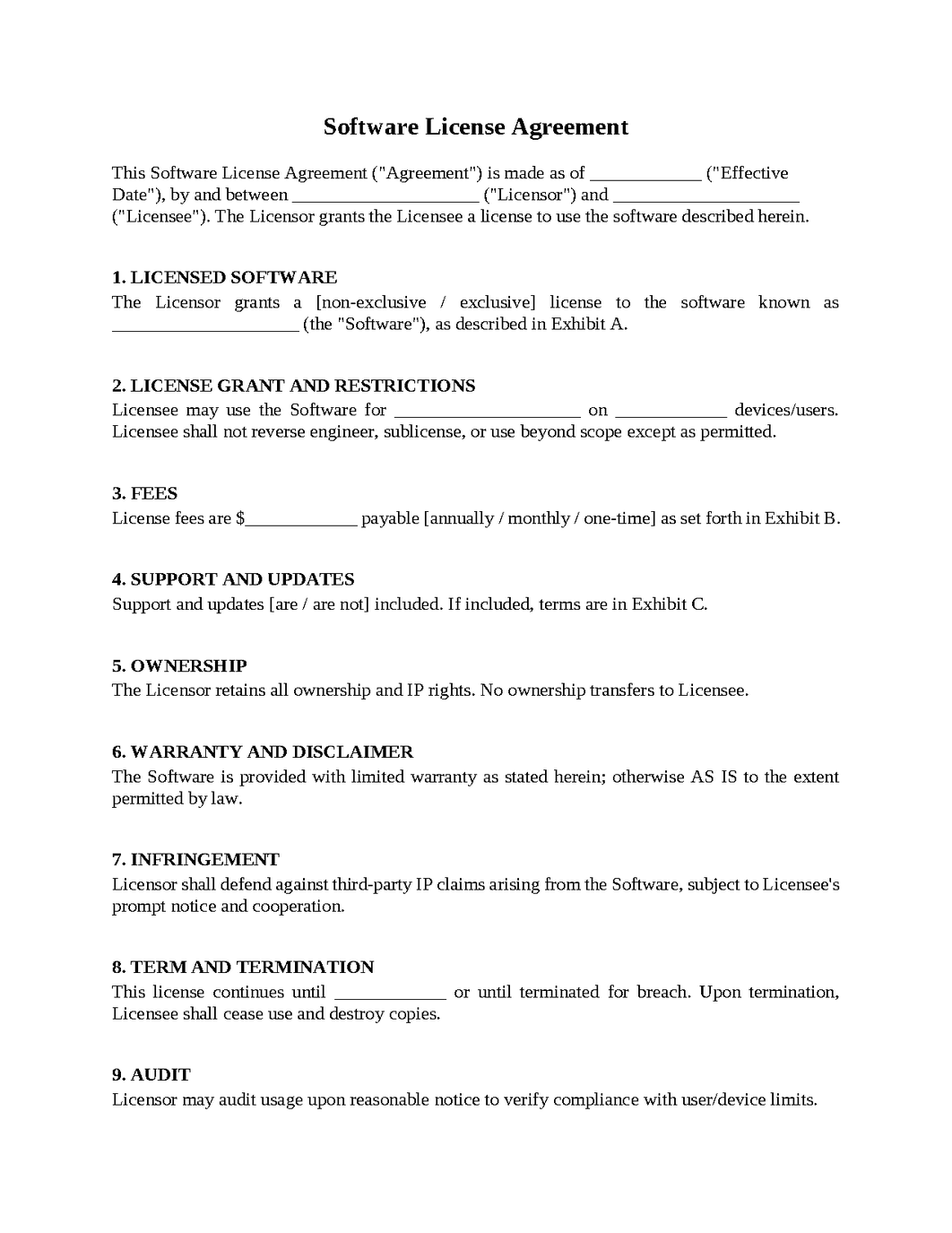
A Software License Agreement is a legal contract that establishes the terms under which a software owner grants another party the right to use, access, install, distribute, or otherwise utilize software. These agreements are commonly used for SaaS platforms, desktop applications, mobile apps, enterprise software, APIs, developer tools, operating systems, and custom business applications. A Software License Agreement typically addresses permitted uses, licensing restrictions, intellectual property rights, subscription terms, fees, support obligations, warranties, and termination rights. Because software often represents valuable intellectual property and serves critical business functions, disputes can arise when expectations regarding usage rights and responsibilities are not documented clearly. A well-drafted Software License Agreement helps protect both software providers and users while reducing legal and operational risks.
The Customer Uses the Software Beyond the Licensed Scope
A technology company licenses software to a growing business under an agreement that limits usage to a specific number of users.
Initially, the customer complies with the licensing terms and deploys the software only to approved employees. As the organization expands, however, additional users begin accessing the system without corresponding license purchases.
The customer views the expanded use as a practical necessity and assumes it will address licensing adjustments later. The software provider believes the customer is exceeding the rights granted under the agreement.
When an audit reveals the increased usage, disagreements emerge regarding licensing obligations and additional fees.
Neither party necessarily intended a dispute, but the permitted scope of use was not monitored carefully.
To help avoid this problem, a Software License Agreement should clearly define user limitations, deployment restrictions, licensing metrics, and the consequences of exceeding authorized usage levels.
The Customer Assumes Ownership of the Software
A business purchases a perpetual software license to support important internal operations.
Management views the purchase as a major investment and assumes broad rights exist to modify, distribute, and customize the software as needed. The software developer believes ownership of the underlying intellectual property remains entirely with the developer.
Over time, the customer begins making modifications and sharing portions of the software with affiliated organizations.
The developer becomes concerned that activities are occurring beyond the rights granted under the license.
The disagreement centers on the distinction between ownership of software and ownership of a license to use software.
What appeared to be a straightforward transaction becomes an intellectual property dispute.
To reduce these risks, a Software License Agreement should clearly distinguish ownership rights from license rights, identify permitted modifications, and explain what activities are prohibited without additional authorization.
Software Updates Create Unexpected Problems
A company licenses a software platform that receives regular updates and feature enhancements.
The customer appreciates ongoing improvements and expects updates to improve performance over time. During a major software release, however, certain workflows change significantly and compatibility issues affect existing business processes.
The customer believes the update disrupted operations and created unexpected costs. The software provider argues that updates are necessary to improve security, functionality, and long-term performance.
The disagreement grows because the parties have different expectations regarding future software changes.
Neither side anticipated the operational impact of the update.
To help avoid these problems, a Software License Agreement should address update policies, compatibility expectations, support obligations, and procedures for implementing significant changes.
A Security Incident Raises Questions About Responsibility
A business relies heavily on licensed software to manage sensitive operational and customer information.
Following a cybersecurity event, questions arise regarding how the software handled data protection, access controls, and system security. The customer believes the software provider should bear responsibility for certain consequences of the incident.
The provider argues that security depends on multiple factors, including customer configurations, user practices, and third-party systems.
Both parties become concerned about liability, reputational harm, and business disruption.
The disagreement becomes increasingly complex because responsibility may be shared across multiple parties.
To help prevent these issues, a Software License Agreement should address security responsibilities, data protection expectations, liability limitations, and incident-response obligations.
The Provider Terminates the License
A business incorporates licensed software deeply into its daily operations over several years.
Eventually, a disagreement develops regarding payment obligations, compliance with license terms, or other contractual requirements. The software provider exercises termination rights under the agreement.
The customer becomes concerned because business operations depend heavily on continued access to the software. Questions arise regarding data access, transition assistance, and post-termination obligations.
The provider believes termination is justified under the agreement. The customer believes additional opportunities should be provided to resolve the issue.
The dispute becomes critical because the software plays an essential role in ongoing operations.
To reduce these risks, a Software License Agreement should clearly define termination rights, establish cure periods where appropriate, identify post-termination obligations, and explain how customer data and system access will be handled after termination.
Software License Agreements serve as the foundation of most software relationships by defining how technology may be used and protected. However, issues involving licensing scope, intellectual property ownership, software updates, cybersecurity responsibilities, and termination rights can become significant sources of conflict when expectations are not documented clearly. A carefully drafted Software License Agreement provides a structured framework for managing these relationships and protecting both software providers and customers. When prepared thoughtfully, it can help reduce misunderstandings, safeguard valuable intellectual property, support business continuity, and promote successful long-term technology partnerships.

Get started with Upsign today!
Easily send, sign and track your documents