

Software Development Agreement
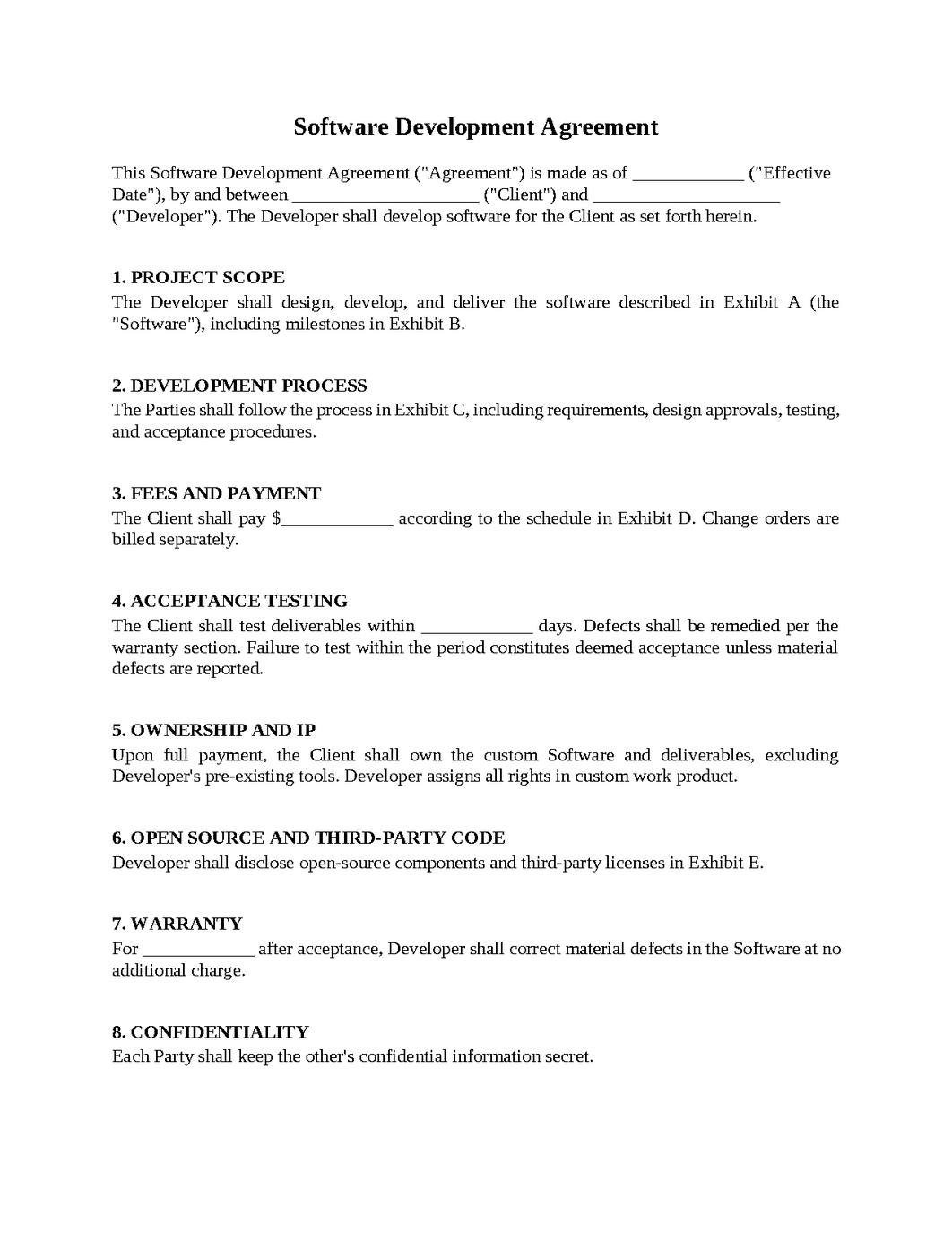
A Software Development Agreement is a legal contract that establishes the terms under which a developer, software company, agency, or technology consultant designs, develops, modifies, implements, or maintains software for a client. These agreements are commonly used for web applications, mobile apps, SaaS platforms, custom business software, integrations, APIs, enterprise systems, and technology modernization projects. Because software projects often involve evolving requirements, technical complexity, intellectual property considerations, and significant financial investments, disputes can arise when expectations are not documented clearly. A well-drafted Software Development Agreement helps protect both developers and clients while providing a framework for successful project delivery.
The Client Continually Expands the Project Scope
A company hires a software development firm to build a custom application intended to automate key business processes.
At the beginning of the engagement, both parties agree on a list of features, timelines, and project objectives. Development begins smoothly, and the initial milestones are completed successfully.
As the client sees progress, however, new ideas emerge. Additional features, integrations, reporting tools, user roles, and workflow enhancements are requested throughout the project.
The client believes the additions are natural extensions of the original vision. The development team believes the requests substantially expand the scope of work and require additional time and compensation.
The disagreement grows because each new request seems small individually but collectively transforms the project.
To help avoid this problem, a Software Development Agreement should clearly define project requirements, establish change-order procedures, identify approval processes for new features, and explain how scope changes affect pricing and timelines.
The Finished Software Does Not Match Expectations
A business invests significant resources in developing a custom software platform.
The development team follows the agreed specifications and delivers the software according to documented requirements. When the client begins using the system, however, dissatisfaction emerges.
The client expected the software to solve broader operational challenges and provide functionality that was never specifically requested. The developers believe they delivered exactly what was described in the project documentation.
Both parties are frustrated because expectations differ despite substantial effort and investment.
The disagreement centers on whether the software should be evaluated against written specifications or broader business goals.
To reduce these risks, a Software Development Agreement should clearly define requirements, acceptance criteria, testing procedures, and approval processes. Detailed specifications help ensure that both parties share the same expectations.
Intellectual Property Ownership Becomes Unclear
A startup hires a software developer to create a proprietary technology platform that will serve as the foundation of the company's business.
The project progresses successfully, and the software becomes highly valuable. As the relationship evolves, questions arise regarding ownership of the source code, custom features, development tools, and underlying technology.
The client believes ownership should transfer automatically because it paid for the development work. The developer believes certain frameworks, reusable components, and proprietary methodologies remain the developer's property.
The disagreement becomes especially significant because the software represents a valuable business asset.
Neither party intended confusion, but ownership rights were never discussed in sufficient detail.
To help prevent these issues, a Software Development Agreement should clearly define intellectual property ownership, identify any retained rights, establish licensing terms where appropriate, and specify what transfers upon project completion.
Deadlines Are Missed and Business Plans Are Affected
A company plans a major product launch around the expected completion of a software project.
Marketing campaigns, customer commitments, investor presentations, and operational changes are all scheduled based on the anticipated launch date. As development progresses, unforeseen technical challenges arise and milestones begin slipping.
The client becomes concerned because delays affect broader business objectives. The development team explains that software projects often involve complexities that cannot always be predicted accurately.
The parties disagree regarding responsibility for the delays and the consequences that follow.
What began as a development project becomes a dispute regarding project management and accountability.
To help avoid these problems, a Software Development Agreement should establish realistic timelines, identify milestone requirements, address delay procedures, and define remedies available if deadlines are missed.
The Relationship Ends Before the Software Is Finished
A business hires a development firm to build a complex software platform expected to take many months to complete.
Partway through the project, the relationship deteriorates due to disagreements regarding budget, performance, priorities, or communication. One party decides to terminate the engagement before completion.
Immediately, questions arise regarding partially completed code, project documentation, development environments, work product ownership, and final payments.
The client wants access to everything necessary to continue development elsewhere. The developer wants compensation for work performed and protection of proprietary technology.
The project becomes more difficult to complete because responsibilities were never defined for an early termination scenario.
To reduce these risks, a Software Development Agreement should establish termination procedures, define ownership of partially completed work, address source code access rights, and identify each party's obligations during a project transition.
Software Development Agreements play a critical role in modern technology projects by establishing expectations regarding scope, timelines, ownership, and performance. However, issues involving changing requirements, unmet expectations, intellectual property rights, project delays, and early termination can become significant sources of conflict when responsibilities are not documented clearly. A carefully drafted Software Development Agreement provides a structured framework for managing these relationships and protecting both developers and clients. When prepared thoughtfully, it can help reduce misunderstandings, improve project outcomes, safeguard valuable technology assets, and support successful software development initiatives.

Get started with Upsign today!
Easily send, sign and track your documents