

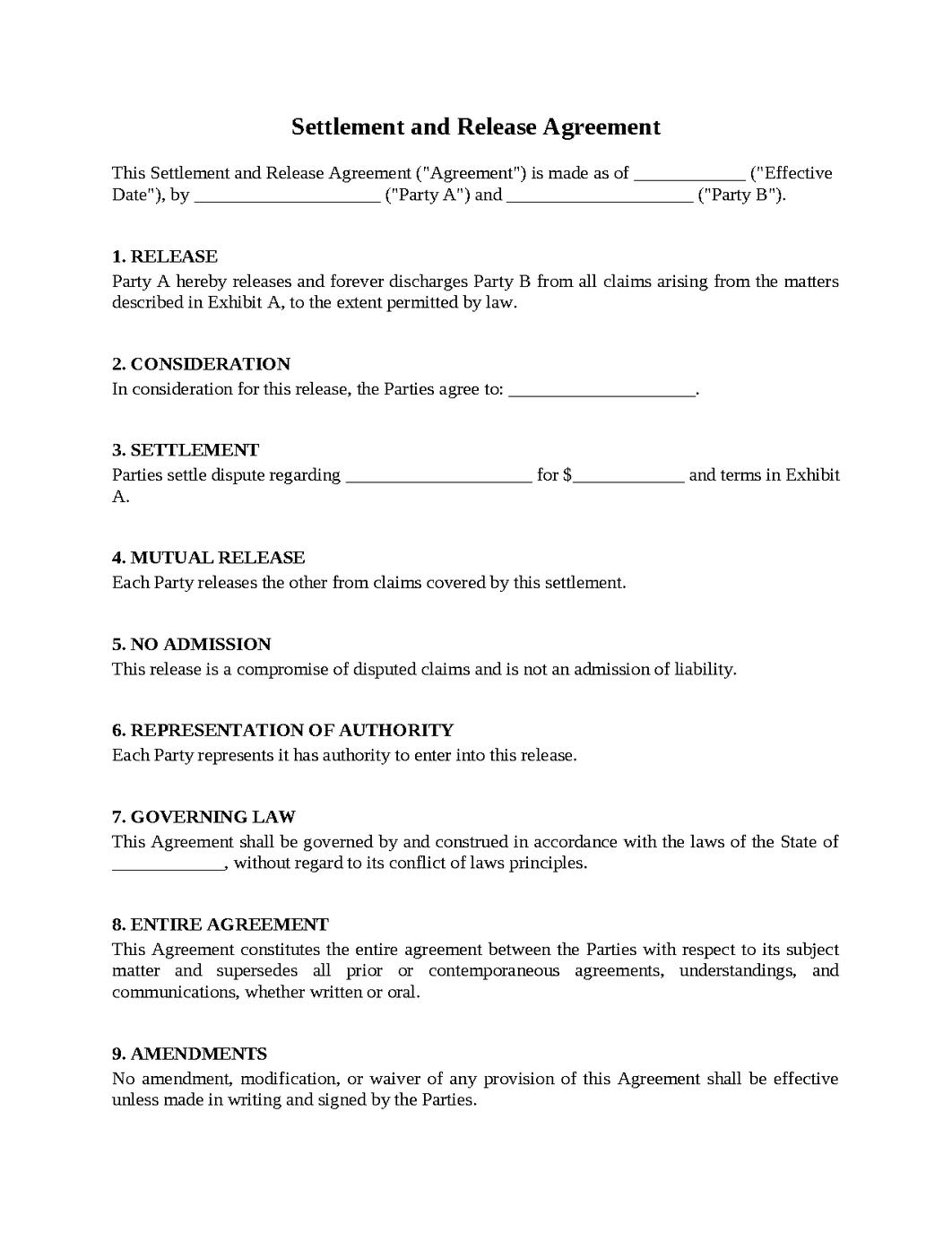
Settlement and Release Agreement
A Settlement and Release Agreement is a legal contract through which parties resolve an existing dispute by agreeing to specific terms and exchanging releases of claims. These agreements are commonly used in business disputes, contract disagreements, employment matters, partnership conflicts, personal injury claims, commercial litigation, shareholder disputes, and other situations where parties seek to avoid the cost, uncertainty, and disruption of continued legal proceedings. A Settlement and Release Agreement typically includes payment obligations, confidentiality provisions, non-disparagement clauses, dismissal requirements, and releases of liability. Because settlements often involve significant compromises and the surrender of valuable legal rights, disputes can arise when expectations regarding the agreement are not documented clearly. A carefully drafted Settlement and Release Agreement helps provide finality while protecting the interests of all parties involved.
A Party Believes the Settlement Did Not Cover Every Claim
Two companies become involved in a lawsuit arising from a failed business relationship.
After months of litigation, both sides incur substantial legal fees and management distractions. Rather than continue the dispute, the companies negotiate a Settlement and Release Agreement that includes a financial payment and mutual releases.
The parties sign the agreement and dismiss the lawsuit. For a period of time, everyone believes the matter has been resolved completely.
Several months later, one company discovers additional conduct that allegedly occurred during the same business relationship. The company argues that the newly discovered claim was never discussed during settlement negotiations and therefore remains actionable.
The other company insists that the settlement was intended to resolve every dispute connected to the relationship, whether known or unknown at the time. What began as a completed settlement becomes a disagreement regarding the scope of the release provisions.
To help avoid this problem, a Settlement and Release Agreement should clearly define the claims being released, identify any excluded claims, and specify whether unknown or future-discovered claims are covered.
Settlement Payments Are Not Made on Time
A former employee and employer resolve a workplace dispute through a negotiated settlement.
Under the agreement, the employer agrees to make several payments over a defined period of time. In exchange, the employee agrees to release all claims and dismiss pending legal proceedings.
Initially, both parties expect the arrangement to proceed smoothly. The employee relies on the settlement funds and begins moving forward with personal and professional plans.
As time passes, however, several payments are delayed. The employer cites administrative issues and temporary financial constraints, while the employee becomes increasingly concerned about whether the remaining obligations will be fulfilled.
The employee argues that the release should not remain effective if the promised consideration is never delivered. The employer maintains that the release became binding when the agreement was signed.
To help prevent these issues, a Settlement and Release Agreement should clearly establish payment schedules, define default remedies, and explain the consequences of failing to satisfy settlement obligations.
Confidentiality Obligations Become a Source of Conflict
Two parties settle a highly publicized dispute that attracted attention within their industry.
As part of the resolution, both sides agree to keep the settlement terms confidential. They believe privacy will help protect business relationships and reduce further controversy.
For several months, the confidentiality provisions appear successful. Eventually, however, details regarding the settlement begin circulating among customers, vendors, and industry contacts.
Each party suspects the other may have disclosed protected information. The parties disagree regarding whether the information originated from an unauthorized disclosure or from independent sources outside their control.
The original dispute may be resolved, but a new disagreement emerges regarding compliance with the confidentiality requirements.
To help avoid these problems, a Settlement and Release Agreement should clearly define confidential information, identify permitted disclosures, and establish remedies for violations of confidentiality obligations.
One Party Makes Negative Statements After Settlement
A business dispute concludes through a comprehensive Settlement and Release Agreement.
Both parties are eager to move beyond the conflict and return their attention to normal operations. To support that goal, the agreement includes non-disparagement provisions intended to discourage future attacks on either party's reputation.
Initially, communications remain professional and respectful. Over time, however, one party begins making public comments about the dispute during customer meetings, social media discussions, and industry events.
The other party believes the statements violate the settlement agreement and undermine the purpose of the resolution. The speaker argues that the comments are truthful and do not breach the agreement.
The disagreement shifts away from the original dispute and focuses instead on post-settlement conduct.
To help prevent these issues, a Settlement and Release Agreement should clearly define non-disparagement obligations, identify prohibited conduct, and explain the consequences of violating those provisions.
Future Litigation Arises Despite the Settlement
Two shareholders become involved in a contentious disagreement regarding company management and ownership rights.
After extensive negotiations, they execute a Settlement and Release Agreement intended to resolve all existing disputes. The agreement requires the transfer of ownership interests, payment of consideration, and dismissal of pending claims.
For several years, the settlement appears successful. Eventually, however, one party files a new lawsuit that is closely related to the issues previously resolved.
The defendant argues that the new claims are barred by the settlement and release. The plaintiff contends that the lawsuit concerns different conduct and therefore falls outside the scope of the agreement.
Both parties spend substantial time and resources litigating the effect of a settlement that was originally intended to prevent future litigation.
To help avoid these problems, a Settlement and Release Agreement should clearly identify the matters being resolved, define the scope of released claims, and establish procedures for enforcing the agreement if future disputes arise.
Settlement and Release Agreements are among the most effective tools available for resolving disputes without prolonged litigation. However, issues involving the scope of released claims, payment obligations, confidentiality requirements, non-disparagement provisions, and future litigation can become significant sources of conflict when expectations are not documented clearly. A carefully drafted Settlement and Release Agreement provides a structured framework for achieving finality while protecting the interests of all parties involved. When prepared thoughtfully, it can reduce legal uncertainty, preserve negotiated compromises, minimize future disputes, and allow the parties to move forward with confidence.

Get started with Upsign today!
Easily send, sign and track your documents