

Royalty Agreement
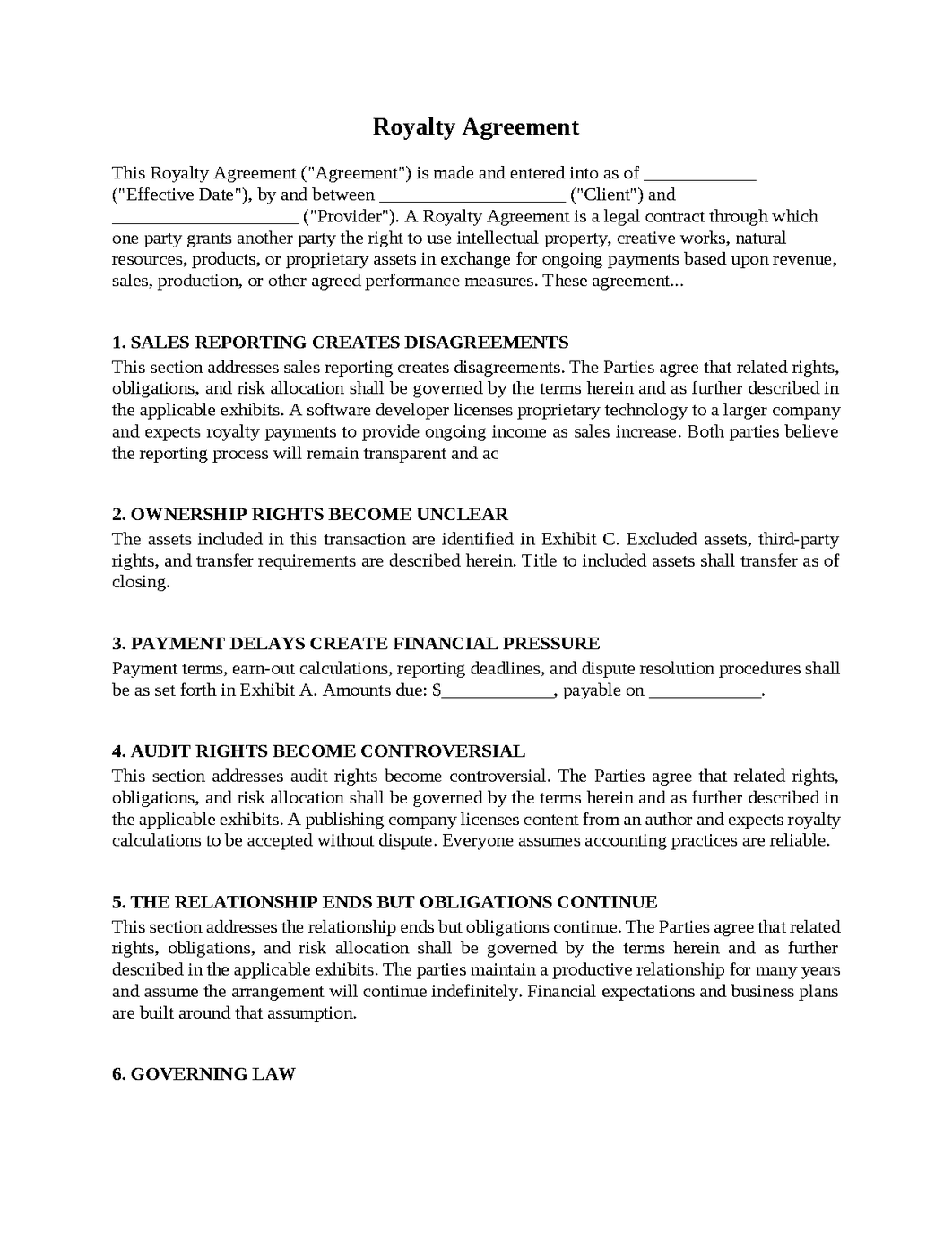
A Royalty Agreement is a legal contract through which one party grants another party the right to use intellectual property, creative works, natural resources, products, or proprietary assets in exchange for ongoing payments based upon revenue, sales, production, or other agreed performance measures. These agreements are commonly used by authors, musicians, inventors, software companies, licensors, manufacturers, and mineral rights owners seeking to monetize valuable assets while retaining ownership. A Royalty Agreement typically addresses royalty calculations, reporting requirements, payment schedules, audit rights, ownership protections, and procedures governing disputes and termination. Because royalty payments often continue for years and depend upon accurate reporting, disputes can arise when expectations regarding obligations and rights are not documented clearly. A carefully drafted Royalty Agreement helps establish certainty and protect the interests of both licensors and licensees.
Sales Reporting Creates Disagreements
A software developer licenses proprietary technology to a larger company and expects royalty payments to provide ongoing income as sales increase. Both parties believe the reporting process will remain transparent and accurate.
Initially, payments are made consistently and sales appear strong. Over time, however, questions arise regarding product classifications, discounts, and whether certain revenues should be included in royalty calculations.
The developer believes all qualifying sales should be reported because the licensed technology contributed directly to the products being sold. The licensee believes certain transactions should be excluded and argues that the agreement does not require every source of revenue to be included. As revenues increase, tensions emerge regarding royalty calculations.
To help avoid this problem, a Royalty Agreement should clearly establish reporting requirements and define the formulas used to calculate royalty payments.
Ownership Rights Become Unclear
A songwriter grants a publisher rights to distribute music and expects ownership of the compositions to remain protected. Everyone assumes the licensing arrangement will benefit both parties.
As additional opportunities arise, questions emerge regarding derivative works, sublicensing rights, and ownership of future adaptations. Different expectations create uncertainty regarding intellectual property rights.
The songwriter believes ownership should remain intact because the agreement was intended to generate income rather than transfer rights permanently. The publisher believes broader rights are necessary to maximize commercial opportunities and argues that flexibility benefits both parties. As new projects develop, disagreements emerge regarding ownership rights.
To help prevent these issues, a Royalty Agreement should clearly establish ownership provisions and define the rights granted under the arrangement.
Payment Delays Create Financial Pressure
A mineral rights owner enters into a royalty arrangement with an energy company and expects regular payments based upon production levels. Both parties assume the payment process will operate smoothly.
Unexpected market conditions and operational issues eventually affect revenues and delay payments. Questions arise regarding whether interest should apply to overdue amounts.
The rights owner believes timely payments are essential because future financial planning depends upon predictable income. The energy company believes changing market conditions and accounting complexities contributed to the delays and argues that temporary issues should not create excessive penalties. As delays continue, tensions develop regarding payment obligations.
To help avoid these problems, a Royalty Agreement should clearly establish payment schedules and define the consequences applicable to late payments.
Audit Rights Become Controversial
A publishing company licenses content from an author and expects royalty calculations to be accepted without dispute. Everyone assumes accounting practices are reliable.
As royalties increase, the author requests access to records to verify payments. Questions arise regarding the scope of audit rights and the confidentiality of financial information.
The author believes transparency is necessary because royalty payments depend upon accurate records and calculations. The publisher believes unrestricted audits create unnecessary costs and administrative burdens and argues that confidential information must remain protected. As concerns increase, disagreements emerge regarding access to records.
To help prevent these issues, a Royalty Agreement should clearly establish audit procedures and define the circumstances under which records may be reviewed.
The Relationship Ends but Obligations Continue
The parties maintain a productive relationship for many years and assume the arrangement will continue indefinitely. Financial expectations and business plans are built around that assumption.
Eventually, changing priorities lead one side to terminate the agreement. Questions arise regarding post-termination sales, outstanding royalties, and rights associated with products already in the marketplace.
The owner believes royalty payments should continue for qualifying sales because the licensed assets remain valuable and continue generating revenue. The licensee believes obligations should end according to the terms of the agreement and expects finality. As the relationship concludes, disagreements emerge regarding the rights and responsibilities that survive termination.
To help avoid this problem, a Royalty Agreement should clearly establish termination procedures and identify the rights and responsibilities that continue after the relationship ends.
Royalty Agreements are valuable tools that allow owners of intellectual property and other valuable assets to generate recurring income while preserving ownership rights. However, issues involving reporting obligations, ownership rights, payment delays, audit procedures, and post-termination responsibilities can become significant sources of conflict when expectations are not documented clearly. A carefully drafted Royalty Agreement provides a structured framework for allocating responsibilities and protecting the interests of both licensors and licensees. When prepared thoughtfully, it can reduce uncertainty, strengthen commercial relationships, encourage innovation, and provide the foundation necessary for successful long-term licensing arrangements.

Get started with Upsign today!
Easily send, sign and track your documents