

Quotation Acceptance Agreement
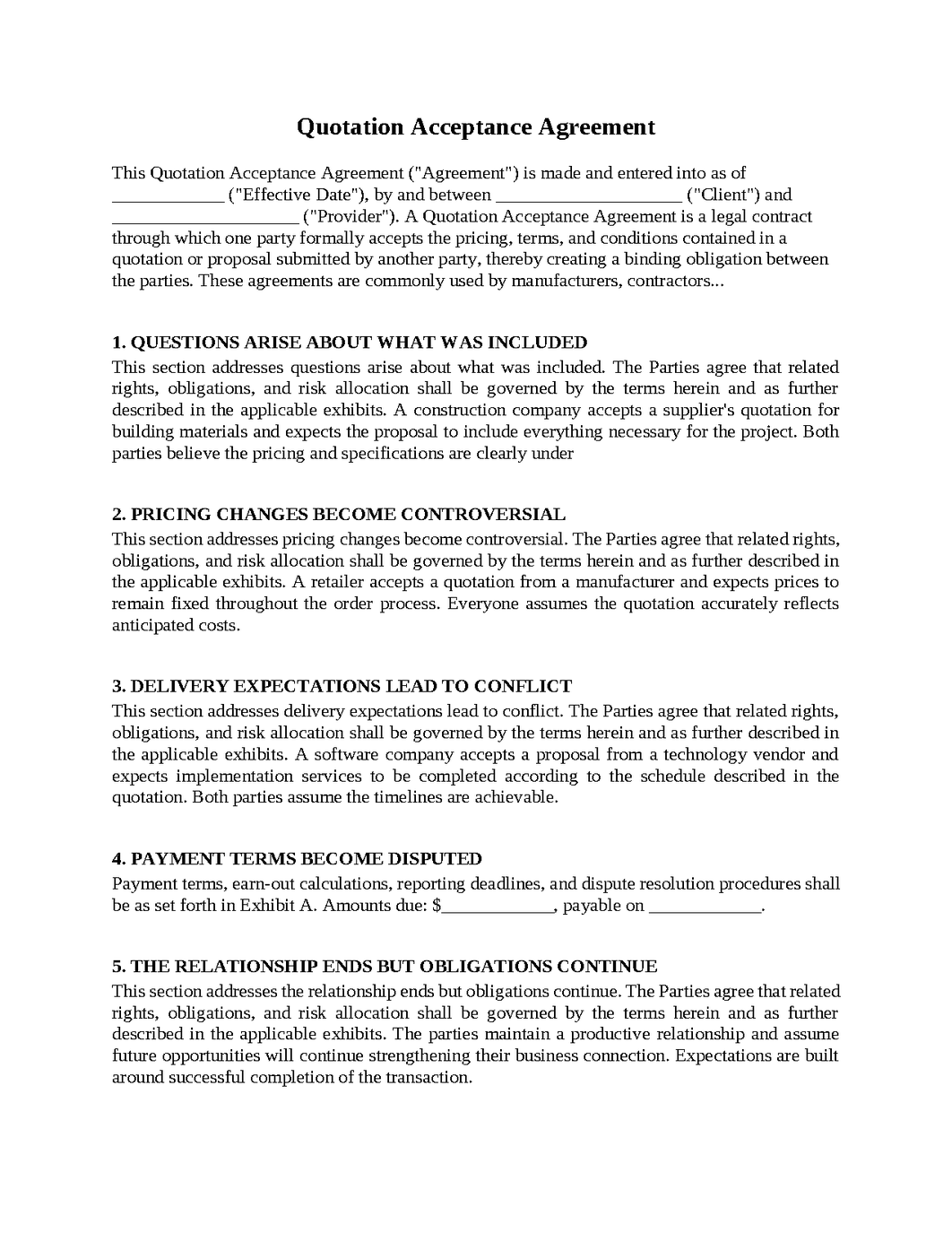
A Quotation Acceptance Agreement is a legal contract through which one party formally accepts the pricing, terms, and conditions contained in a quotation or proposal submitted by another party, thereby creating a binding obligation between the parties. These agreements are commonly used by manufacturers, contractors, software companies, service providers, wholesalers, and commercial customers seeking to document pricing and performance expectations before work begins. A Quotation Acceptance Agreement typically addresses the scope of work, pricing, delivery schedules, payment obligations, change orders, and procedures governing disputes and termination. Because quotations often form the basis of future business relationships, disputes can arise when expectations regarding terms and obligations are not documented clearly. A carefully drafted Quotation Acceptance Agreement helps establish certainty and protect the interests of both buyers and sellers.
Questions Arise About What Was Included
A construction company accepts a supplier's quotation for building materials and expects the proposal to include everything necessary for the project. Both parties believe the pricing and specifications are clearly understood.
Initially, deliveries proceed smoothly and work begins according to schedule. Over time, however, disagreements emerge regarding certain materials and services that were assumed to be included but are not specifically identified in the quotation.
The contractor believes the quotation should include all items reasonably necessary to complete the project because the pricing influenced project budgets and customer commitments. The supplier believes only the products expressly listed were included and argues that additional items require separate pricing. As costs increase, tensions emerge regarding the scope of the agreement.
To help avoid this problem, a Quotation Acceptance Agreement should clearly establish the products and services being provided and define any exclusions that apply.
Pricing Changes Become Controversial
A retailer accepts a quotation from a manufacturer and expects prices to remain fixed throughout the order process. Everyone assumes the quotation accurately reflects anticipated costs.
Unexpected increases in labor and material expenses eventually affect production costs. Questions arise regarding whether the manufacturer may revise prices after acceptance.
The retailer believes pricing certainty is essential because purchasing decisions and customer commitments relied upon the quoted amounts. The manufacturer believes changing market conditions justify adjustments and argues that continuing under outdated pricing may create financial hardship. As costs continue to rise, disagreements emerge regarding pricing obligations.
To help prevent these issues, a Quotation Acceptance Agreement should clearly establish pricing provisions and define the circumstances under which changes are permitted.
Delivery Expectations Lead to Conflict
A software company accepts a proposal from a technology vendor and expects implementation services to be completed according to the schedule described in the quotation. Both parties assume the timelines are achievable.
As the project progresses, delays begin affecting operations and customer expectations. Questions arise regarding whether the delivery schedule formed a binding commitment.
The software company believes timely performance is essential because project deadlines and customer relationships depend upon reliable execution. The vendor believes unforeseen challenges affected progress and argues that estimated timelines were never intended to guarantee completion dates. As delays continue, tensions develop regarding delivery obligations.
To help avoid these problems, a Quotation Acceptance Agreement should clearly establish delivery schedules and define the consequences applicable to delays.
Payment Terms Become Disputed
A manufacturer accepts a quotation for specialized equipment and expects payment obligations to follow ordinary business practices. Everyone assumes the invoicing procedures are straightforward.
After delivery, disagreements arise regarding deposits, progress payments, and amounts due upon completion. Different interpretations create uncertainty regarding the payment schedule.
The supplier believes prompt payment is essential because production expenses and cash flow depend upon receiving compensation according to the agreed terms. The customer believes certain payments should be delayed until performance is fully completed and argues that unresolved issues justify withholding amounts. As invoices become overdue, disagreements emerge regarding payment obligations.
To help prevent these issues, a Quotation Acceptance Agreement should clearly establish payment terms and define the procedures governing invoicing and collections.
The Relationship Ends but Obligations Continue
The parties maintain a productive relationship and assume future opportunities will continue strengthening their business connection. Expectations are built around successful completion of the transaction.
Eventually, changing priorities or unexpected circumstances bring the relationship to an end. Questions arise regarding unfinished work, outstanding invoices, warranties, and obligations associated with products already delivered.
The customer believes previously promised support and warranties should remain available because purchasing decisions relied upon those commitments. The supplier believes future obligations should be limited to those specifically described in the agreement and expects contractual rights to be respected. As the transaction concludes, disagreements emerge regarding the rights and responsibilities that survive completion.
To help avoid this problem, a Quotation Acceptance Agreement should clearly establish termination procedures and identify the rights and responsibilities that continue after performance has been completed.
Quotation Acceptance Agreements are valuable tools that transform proposals into enforceable obligations while providing certainty regarding pricing, performance, and expectations. However, issues involving scope, pricing changes, delivery schedules, payment obligations, and post-completion responsibilities can become significant sources of conflict when expectations are not documented clearly. A carefully drafted Quotation Acceptance Agreement provides a structured framework for allocating responsibilities and protecting the interests of both buyers and sellers. When prepared thoughtfully, it can reduce uncertainty, strengthen commercial relationships, facilitate transactions, and provide the foundation necessary for successful business dealings.

Get started with Upsign today!
Easily send, sign and track your documents