

Quiet Enjoyment Agreement
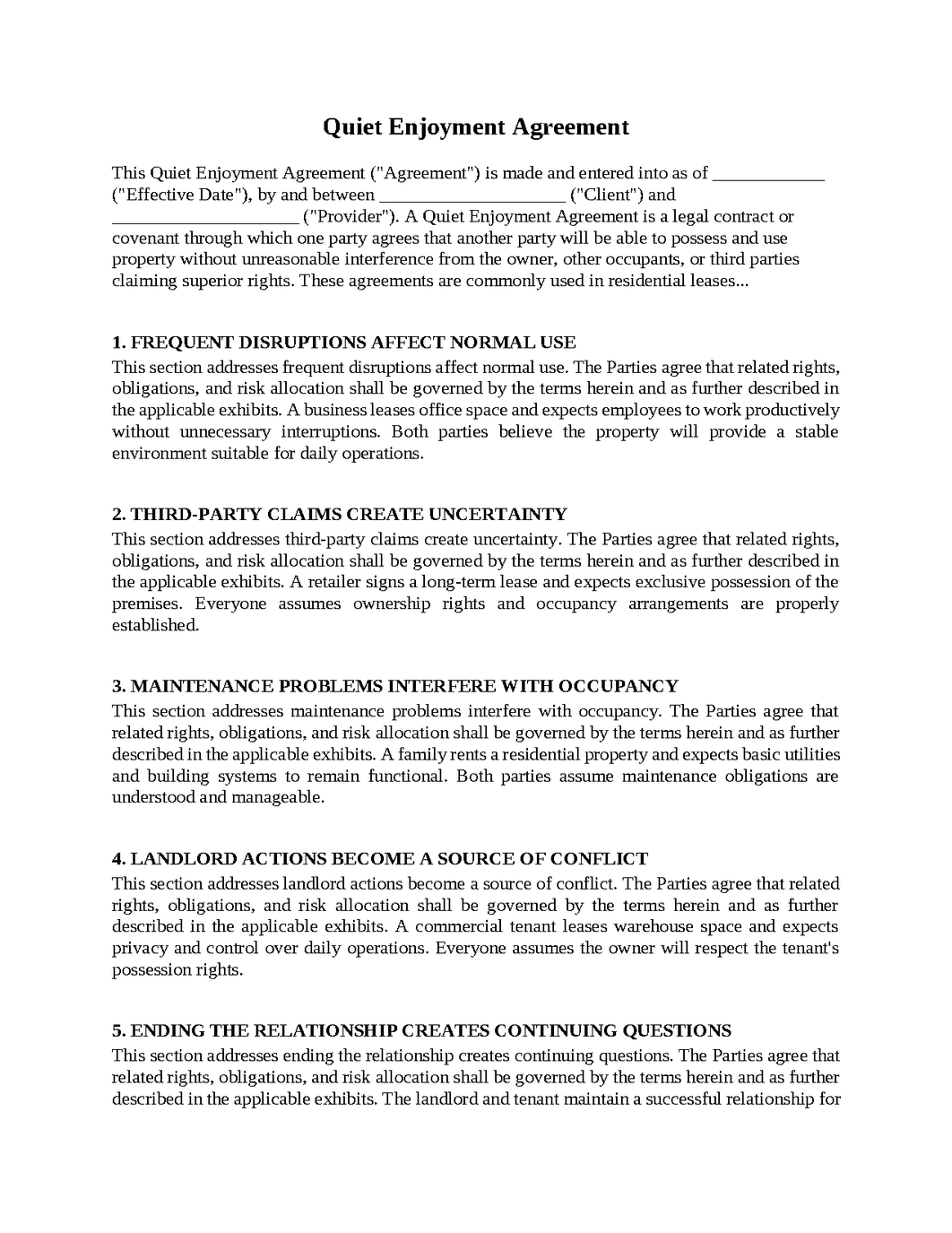
A Quiet Enjoyment Agreement is a legal contract or covenant through which one party agrees that another party will be able to possess and use property without unreasonable interference from the owner, other occupants, or third parties claiming superior rights. These agreements are commonly used in residential leases, commercial leases, real estate transactions, and property management arrangements to protect a tenant's ability to occupy and enjoy the premises peacefully. A Quiet Enjoyment Agreement typically addresses access rights, landlord obligations, interference by third parties, remedies for disruptions, maintenance responsibilities, and procedures governing disputes and termination. Because uninterrupted possession is fundamental to the value of leased property, disputes can arise when expectations regarding occupancy and use are not documented clearly. A carefully drafted Quiet Enjoyment Agreement helps establish certainty and protect the interests of both owners and occupants.
Frequent Disruptions Affect Normal Use
A business leases office space and expects employees to work productively without unnecessary interruptions. Both parties believe the property will provide a stable environment suitable for daily operations.
Initially, the space functions as expected and the relationship remains positive. Over time, however, recurring construction activities and unexpected visits begin disrupting employees and customers.
The tenant believes uninterrupted access is essential because the purpose of leasing the property was to conduct business efficiently. The landlord believes improvements and inspections are necessary and argues that temporary inconveniences are unavoidable. As disruptions increase, tensions emerge regarding the tenant's rights.
To help avoid this problem, a Quiet Enjoyment Agreement should clearly establish access rights and define the circumstances under which interruptions are permitted.
Third-Party Claims Create Uncertainty
A retailer signs a long-term lease and expects exclusive possession of the premises. Everyone assumes ownership rights and occupancy arrangements are properly established.
Several months later, another party asserts competing rights to a portion of the property. Questions arise regarding whether the tenant's use of the premises will be affected.
The tenant believes the landlord should resolve the issue because uninterrupted possession formed the foundation of the lease. The property owner believes the dispute originated from events outside current control and argues that efforts are being made to address the matter. As uncertainty increases, disagreements emerge regarding responsibility for protecting occupancy rights.
To help prevent these issues, a Quiet Enjoyment Agreement should clearly establish the owner's obligations and define the protections available against competing claims.
Maintenance Problems Interfere With Occupancy
A family rents a residential property and expects basic utilities and building systems to remain functional. Both parties assume maintenance obligations are understood and manageable.
Over time, recurring plumbing issues and heating failures make the home increasingly difficult to use. Questions arise regarding whether the disruptions substantially interfere with occupancy.
The tenants believe habitable conditions are essential because the lease was intended to provide a comfortable place to live. The landlord believes repairs are being addressed and argues that occasional maintenance issues are unavoidable. As problems continue, tensions develop regarding the right to peaceful enjoyment of the property.
To help avoid these problems, a Quiet Enjoyment Agreement should clearly establish maintenance responsibilities and define the standards applicable to habitability and repairs.
Landlord Actions Become a Source of Conflict
A commercial tenant leases warehouse space and expects privacy and control over daily operations. Everyone assumes the owner will respect the tenant's possession rights.
As time passes, the owner begins entering the premises frequently without advance notice. Questions arise regarding whether these actions interfere with the tenant's use of the property.
The tenant believes privacy and uninterrupted operations are essential because business efficiency depends upon predictable access. The owner believes inspections and oversight are reasonable and argues that protecting the property requires flexibility. As visits become more frequent, disagreements emerge regarding appropriate conduct.
To help prevent these issues, a Quiet Enjoyment Agreement should clearly establish notice requirements and define the circumstances under which the owner may enter the property.
Ending the Relationship Creates Continuing Questions
The landlord and tenant maintain a successful relationship for many years and assume the occupancy arrangement will continue smoothly. Future plans are built around that expectation.
Eventually, changing circumstances bring the lease relationship to an end. Questions arise regarding security deposits, access rights, and obligations associated with events that occurred before termination.
The tenant believes previous disruptions should be resolved fairly because uninterrupted possession was a fundamental expectation of the lease. The owner believes obligations should conclude once the tenancy ends and expects contractual procedures to be followed. As the relationship concludes, disagreements emerge regarding the rights and responsibilities that survive termination.
To help avoid this problem, a Quiet Enjoyment Agreement should clearly establish termination procedures and identify the rights and responsibilities that continue after occupancy ends.
Quiet Enjoyment Agreements are valuable tools that protect tenants and occupants by ensuring peaceful possession and uninterrupted use of property. However, issues involving disruptions, competing claims, maintenance problems, landlord conduct, and post-termination obligations can become significant sources of conflict when expectations are not documented clearly. A carefully drafted Quiet Enjoyment Agreement provides a structured framework for allocating responsibilities and protecting the interests of both owners and occupants. When prepared thoughtfully, it can reduce uncertainty, strengthen landlord-tenant relationships, preserve property rights, and provide the foundation necessary for successful occupancy arrangements.

Get started with Upsign today!
Easily send, sign and track your documents