

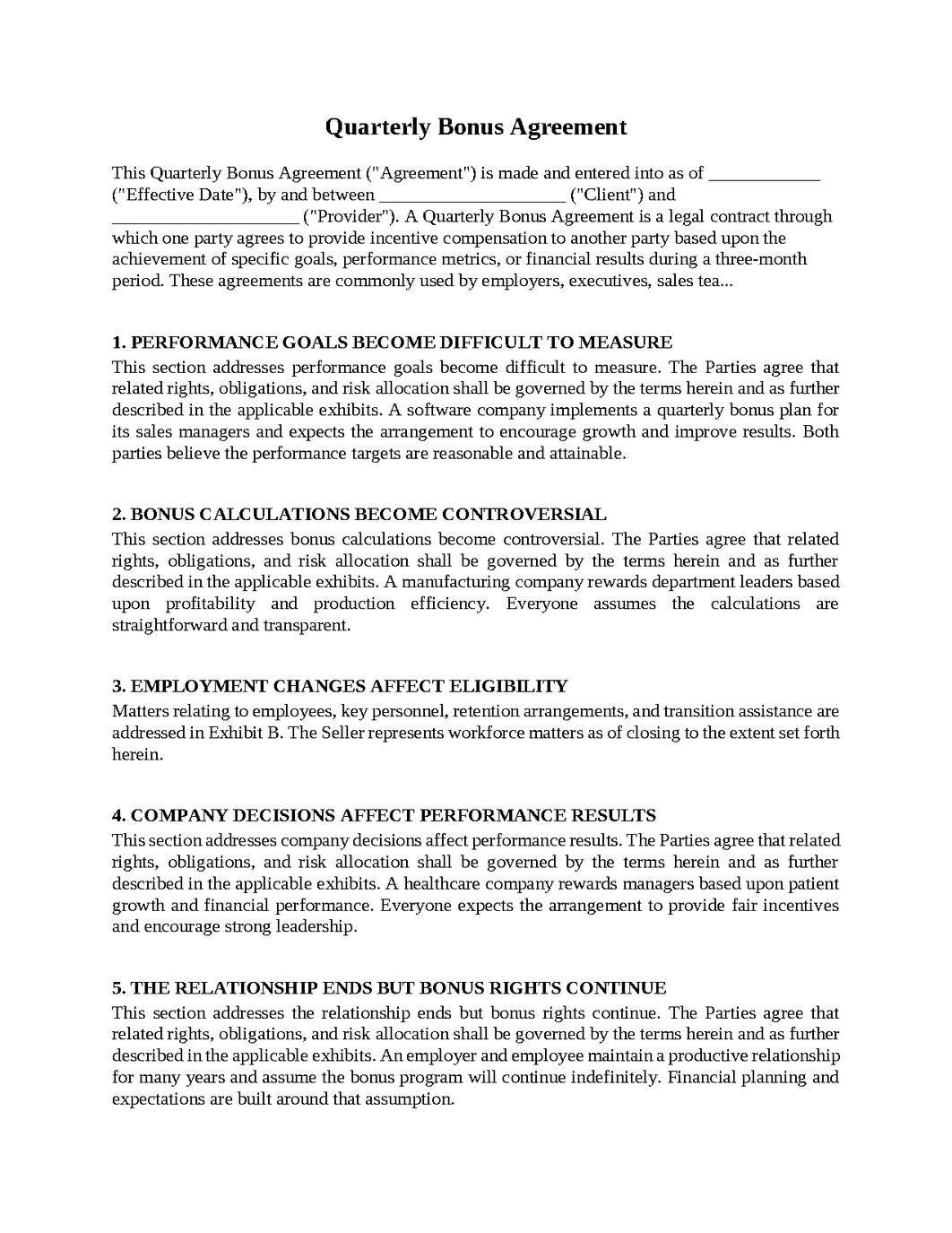
Quarterly Bonus Agreement
A Quarterly Bonus Agreement is a legal contract through which one party agrees to provide incentive compensation to another party based upon the achievement of specific goals, performance metrics, or financial results during a three-month period. These agreements are commonly used by employers, executives, sales teams, consultants, financial institutions, and growing businesses seeking to reward performance and align incentives with short-term objectives. A Quarterly Bonus Agreement typically addresses performance standards, bonus calculations, payment schedules, eligibility requirements, forfeiture provisions, and procedures governing disputes and termination. Because bonus payments depend upon future results and changing business conditions, disputes can arise when expectations regarding compensation and performance are not documented clearly. A carefully drafted Quarterly Bonus Agreement helps establish certainty and protect the interests of both employers and recipients.
Performance Goals Become Difficult to Measure
A software company implements a quarterly bonus plan for its sales managers and expects the arrangement to encourage growth and improve results. Both parties believe the performance targets are reasonable and attainable.
Initially, sales activity remains strong and progress toward the goals appears consistent. Over time, however, changes in market conditions and company priorities affect revenues and create uncertainty regarding performance measurements.
The managers believe results should be evaluated fairly because external factors influenced customer demand and sales opportunities. The company believes objective standards are important and argues that bonuses should be based upon the agreed metrics. As the quarter ends, tensions emerge regarding whether goals were achieved.
To help avoid this problem, a Quarterly Bonus Agreement should clearly establish performance standards and define the methods used to evaluate results.
Bonus Calculations Become Controversial
A manufacturing company rewards department leaders based upon profitability and production efficiency. Everyone assumes the calculations are straightforward and transparent.
As financial performance improves, questions arise regarding expense allocations, accounting adjustments, and whether extraordinary events should affect bonus formulas. Different interpretations create uncertainty regarding compensation.
The employees believe bonuses should reflect the value they helped create because operational improvements contributed to the company's success. The employer believes adjustments are necessary to ensure accurate calculations and argues that unusual events should be considered. As financial results increase, disagreements emerge regarding bonus calculations.
To help prevent these issues, a Quarterly Bonus Agreement should clearly establish bonus formulas and define how financial adjustments and extraordinary items will be treated.
Employment Changes Affect Eligibility
A regional bank offers quarterly bonuses to relationship managers and expects the program to encourage retention and productivity. Both parties assume employment will continue throughout the bonus period.
Unexpected circumstances eventually lead to resignations and personnel changes before bonus payments are distributed. Questions arise regarding whether employees who leave remain entitled to compensation.
The employees believe the goals were achieved and expect payment because their efforts contributed to the results. The employer believes active employment on the payment date is required and argues that retention was one of the purposes of the bonus program. As departures occur, tensions develop regarding eligibility.
To help avoid these problems, a Quarterly Bonus Agreement should clearly establish eligibility requirements and define the effect of resignations and terminations on bonus rights.
Company Decisions Affect Performance Results
A healthcare company rewards managers based upon patient growth and financial performance. Everyone expects the arrangement to provide fair incentives and encourage strong leadership.
During the quarter, strategic decisions and unexpected operational changes affect the business. Questions arise regarding whether employees should bear the consequences of decisions outside their control.
The managers believe compensation should reflect their efforts because external decisions influenced the results. The company believes objective measurements are important and argues that changing standards after the fact creates uncertainty. As results fluctuate, disagreements emerge regarding fairness.
To help prevent these issues, a Quarterly Bonus Agreement should clearly establish whether extraordinary circumstances and management decisions affect performance calculations.
The Relationship Ends but Bonus Rights Continue
An employer and employee maintain a productive relationship for many years and assume the bonus program will continue indefinitely. Financial planning and expectations are built around that assumption.
Eventually, changing priorities bring the employment relationship to an end. Questions arise regarding unpaid bonuses, deferred amounts, and obligations associated with completed quarters.
The employee believes earned bonuses should be protected because performance goals were achieved before the separation. The employer believes certain conditions and restrictions remain applicable and expects contractual requirements to be honored. As the relationship concludes, disagreements emerge regarding the rights and responsibilities that survive termination.
To help avoid this problem, a Quarterly Bonus Agreement should clearly establish post-termination rights and identify the obligations that continue after employment ends.
Quarterly Bonus Agreements are valuable tools that reward performance and align incentives with short-term business objectives. However, issues involving performance metrics, bonus calculations, employment status, external factors, and post-termination obligations can become significant sources of conflict when expectations are not documented clearly. A carefully drafted Quarterly Bonus Agreement provides a structured framework for allocating responsibilities and protecting the interests of both employers and recipients. When prepared thoughtfully, it can reduce uncertainty, strengthen working relationships, encourage accountability, and provide the foundation necessary for successful incentive compensation programs.

Get started with Upsign today!
Easily send, sign and track your documents