

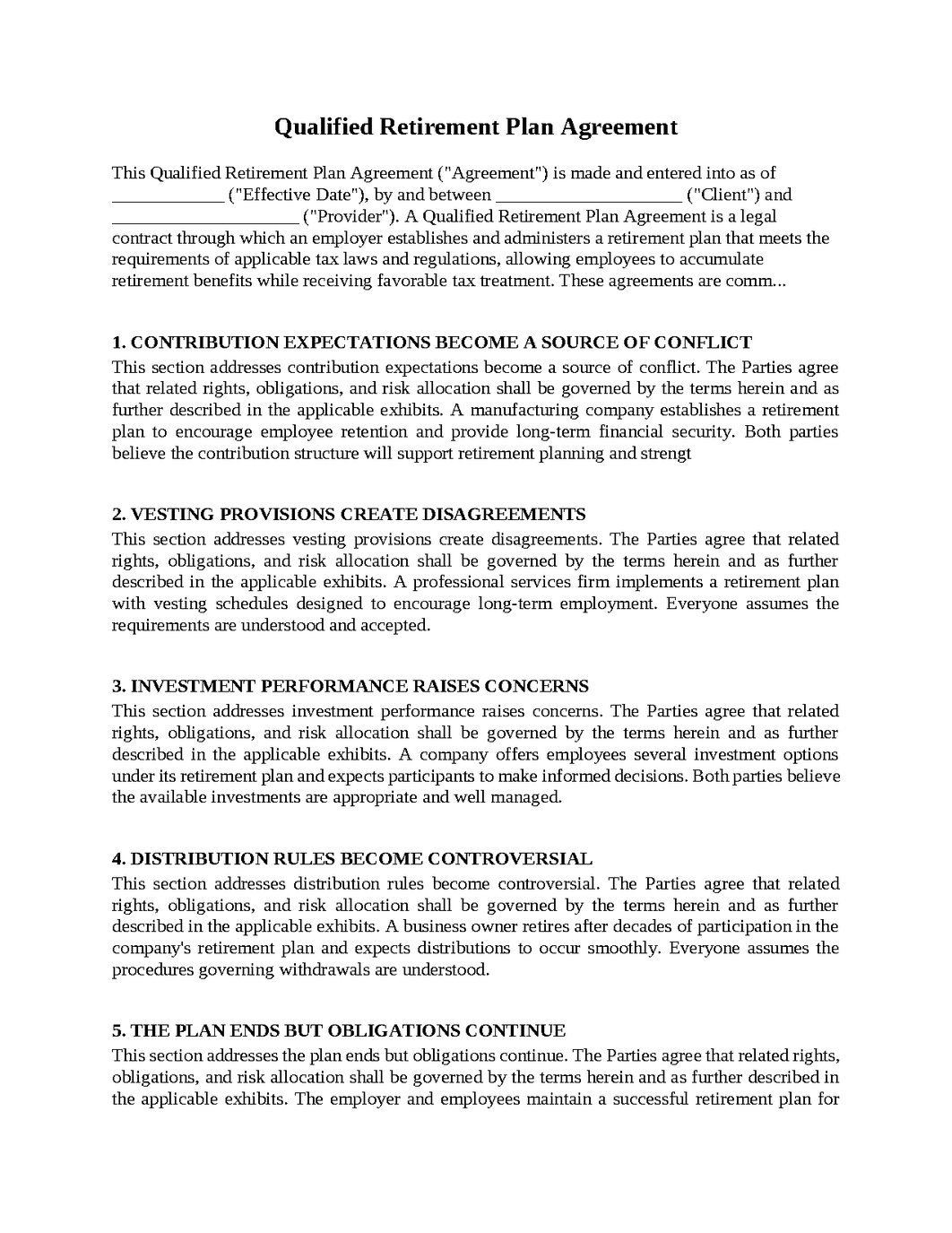
Qualified Retirement Plan Agreement
A Qualified Retirement Plan Agreement is a legal contract through which an employer establishes and administers a retirement plan that meets the requirements of applicable tax laws and regulations, allowing employees to accumulate retirement benefits while receiving favorable tax treatment. These agreements are commonly used by corporations, professional practices, nonprofit organizations, and closely held businesses seeking to provide retirement benefits and attract long-term employees. A Qualified Retirement Plan Agreement typically addresses contribution requirements, vesting schedules, investment options, distribution rules, fiduciary responsibilities, and procedures governing disputes and termination. Because retirement benefits involve long-term financial expectations and strict regulatory requirements, disputes can arise when responsibilities and rights are not documented clearly. A carefully drafted Qualified Retirement Plan Agreement helps establish certainty and protect the interests of both employers and participants.
Contribution Expectations Become a Source of Conflict
A manufacturing company establishes a retirement plan to encourage employee retention and provide long-term financial security. Both parties believe the contribution structure will support retirement planning and strengthen employee loyalty.
Initially, contributions are made consistently and employees rely upon the plan when making financial decisions. Over time, however, economic pressures affect the company's profitability and questions arise regarding contribution levels and funding obligations.
The employees believe retirement contributions are an important component of compensation because long-term financial plans were built around the benefits. The employer believes changing business conditions require flexibility and argues that maintaining operations must remain a priority. As financial pressures increase, tensions emerge regarding contribution obligations.
To help avoid this problem, a Qualified Retirement Plan Agreement should clearly establish contribution requirements and define the circumstances under which changes may occur.
Vesting Provisions Create Disagreements
A professional services firm implements a retirement plan with vesting schedules designed to encourage long-term employment. Everyone assumes the requirements are understood and accepted.
Unexpected resignations and staffing changes eventually create questions regarding whether employees are entitled to employer contributions that have not fully vested. Different expectations create uncertainty regarding ownership rights.
The employees believe years of service should provide meaningful retirement benefits because significant contributions were made to the organization. The employer believes vesting schedules are essential to promoting retention and argues that the agreed rules should govern eligibility. As separations occur, disagreements emerge regarding vesting rights.
To help prevent these issues, a Qualified Retirement Plan Agreement should clearly establish vesting schedules and define the consequences applicable to termination of employment.
Investment Performance Raises Concerns
A company offers employees several investment options under its retirement plan and expects participants to make informed decisions. Both parties believe the available investments are appropriate and well managed.
As markets fluctuate, some employees experience significant losses and questions arise regarding whether the investment options were suitable. Concerns increase regarding fiduciary responsibilities and oversight.
The participants believe plan administrators should act prudently because retirement savings represent an important source of future financial security. The employer believes investment risks are inherent and argues that employees are responsible for their own allocation decisions. As losses accumulate, tensions develop regarding fiduciary duties.
To help avoid these problems, a Qualified Retirement Plan Agreement should clearly establish fiduciary responsibilities and define the standards applicable to investment management.
Distribution Rules Become Controversial
A business owner retires after decades of participation in the company's retirement plan and expects distributions to occur smoothly. Everyone assumes the procedures governing withdrawals are understood.
As retirement approaches, questions arise regarding required distributions, tax consequences, and beneficiary designations. Different interpretations create uncertainty regarding payment rights.
The participant believes retirement benefits should be distributed promptly because the funds represent years of deferred compensation. The plan administrator believes regulatory requirements and documentation procedures must be followed carefully to maintain compliance. As distributions begin, disagreements emerge regarding payment procedures.
To help prevent these issues, a Qualified Retirement Plan Agreement should clearly establish distribution rules and define the procedures governing withdrawals and beneficiary rights.
The Plan Ends but Obligations Continue
The employer and employees maintain a successful retirement plan for many years and assume it will continue indefinitely. Long-term financial planning is built around that expectation.
Eventually, changing circumstances lead the employer to terminate or modify the plan. Questions arise regarding accrued benefits, outstanding obligations, and responsibilities that survive the plan's termination.
The participants believe earned benefits should remain protected because retirement savings represent years of work and financial sacrifice. The employer believes future obligations should be limited to those required by law and expects plan documents to govern the process. As the plan changes, disagreements emerge regarding the rights and responsibilities that continue after termination.
To help avoid this problem, a Qualified Retirement Plan Agreement should clearly establish termination procedures and identify the rights and responsibilities that survive the conclusion of the plan.
Qualified Retirement Plan Agreements are valuable tools that provide employees with long-term financial security while offering employers an effective means of attracting and retaining talent. However, issues involving contributions, vesting schedules, investment oversight, distribution rights, and post-termination obligations can become significant sources of conflict when expectations are not documented clearly. A carefully drafted Qualified Retirement Plan Agreement provides a structured framework for allocating responsibilities and protecting the interests of employers and participants. When prepared thoughtfully, it can reduce uncertainty, strengthen employee relationships, encourage long-term planning, and provide the foundation necessary for successful retirement programs.

Get started with Upsign today!
Easily send, sign and track your documents