

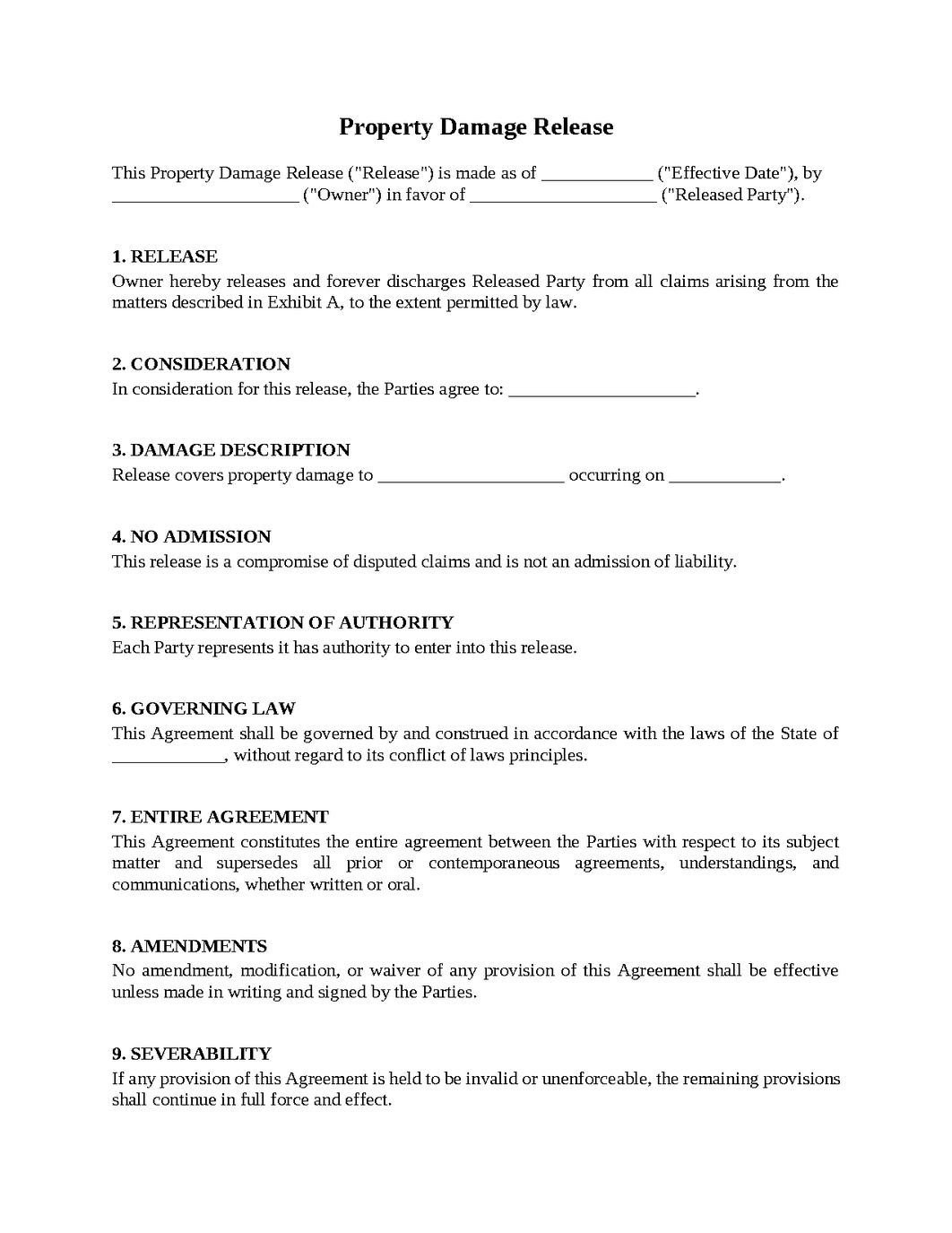
Property Damage Release
A Property Damage Release is a legal agreement through which one party agrees to release another party from liability relating to damage to real property, personal property, vehicles, equipment, inventory, or other tangible assets. These agreements are commonly used following automobile accidents, construction disputes, insurance claims, contractor disputes, commercial losses, landlord-tenant matters, and other situations involving damaged property. In exchange for compensation or other consideration, the property owner agrees to resolve claims arising from the damage and relinquish the right to pursue additional recovery relating to the covered incident. Because property damage is often difficult to evaluate completely at the time of settlement, disputes can arise when the parties have different expectations regarding repairs, future costs, or the scope of the release. A carefully drafted Property Damage Release helps provide finality while protecting the interests of all parties involved.
Hidden Damage Is Discovered After the Settlement
Two drivers are involved in a minor vehicle collision.
Following the accident, both parties inspect the visible damage and obtain repair estimates. The insurance company offers compensation based on the information available, and the vehicle owner signs a Property Damage Release in exchange for payment.
Initially, the settlement appears reasonable because the damage seems limited to cosmetic repairs. Once repairs begin, however, technicians discover structural damage and mechanical issues that were not visible during the initial inspection.
The vehicle owner believes the settlement amount no longer reflects the true cost of repairs. The insurance company maintains that the release was intended to resolve all property damage claims arising from the accident.
The disagreement develops because significant damage was discovered only after the claim had already been settled.
To help avoid this problem, a Property Damage Release should clearly address unknown damage and explain whether future discoveries affect the finality of the settlement.
Repair Costs Exceed Initial Estimates
A commercial building suffers damage following an equipment malfunction.
The property owner obtains several repair estimates and negotiates a settlement with the party believed to be responsible for the loss. After reaching an agreement, the parties execute a Property Damage Release and the settlement funds are paid.
Construction begins shortly thereafter, but contractors encounter unforeseen conditions that substantially increase repair costs. Materials, labor, and additional remediation work cause expenses to exceed the original estimates by a significant margin.
The property owner argues that the settlement was based on incomplete information and no longer covers the actual cost of restoring the property. The paying party believes the release was intended to provide certainty regardless of later developments.
The disagreement transforms a completed settlement into a new dispute regarding the adequacy of the original compensation.
To help prevent these issues, a Property Damage Release should clearly explain how repair estimates were evaluated and address the possibility of unforeseen repair costs.
Business Interruption Losses Become a Source of Conflict
A manufacturing company experiences property damage when a supplier's equipment allegedly causes a fire.
The parties focus initially on repairing the physical damage to the building, machinery, and inventory. After negotiations, a settlement is reached and a Property Damage Release is executed.
As operations resume, the manufacturer begins calculating the financial impact of lost production, delayed orders, and customer disruptions. The company concludes that the business interruption losses far exceed the cost of repairing the damaged property.
The manufacturer argues that the settlement addressed only physical property damage. The supplier believes the release resolved all claims arising from the incident.
The disagreement centers on whether economic losses related to the property damage were included within the scope of the release.
To help avoid these problems, a Property Damage Release should clearly identify the claims being settled and specify whether consequential losses, lost profits, or business interruption damages are included.
Multiple Owners Claim an Interest in the Damaged Property
A piece of equipment is damaged while being used on a large construction project.
The equipment is subject to financing arrangements, insurance interests, and contractual rights involving multiple parties. One party negotiates a settlement and signs a Property Damage Release on behalf of the apparent owner.
After the settlement is completed, other interested parties claim they were not consulted and that their rights were affected by the agreement. They argue that the person signing the release lacked authority to resolve all claims relating to the property.
The settling party believes the release was valid and that compensation was paid appropriately. The other interested parties believe their ownership or financial interests were ignored.
The dispute becomes complicated because multiple individuals and organizations claim rights in the same property.
To help prevent these issues, a Property Damage Release should clearly identify the damaged property, confirm ownership interests, and establish that the releasing party possesses authority to resolve the claim.
Repairs Are Performed Improperly
A property owner settles a damage claim with a contractor following an incident that affected residential property.
The settlement includes funds intended to cover repairs, and the owner signs a Property Damage Release. Both parties expect the matter to conclude once the repairs are completed.
Several months later, defects begin appearing in the repaired areas. The property owner believes the original damage was never corrected properly and that additional work is necessary.
The contractor argues that the release resolved all claims arising from the incident and that the matter has already been settled. The owner believes poor repair work created new issues that should not be covered by the release.
The disagreement focuses on whether the release applies to future problems related to the repair process.
To help avoid these problems, a Property Damage Release should clearly define the claims being released and address how repair warranties, corrective work, and future defects will be handled.
Property Damage Releases are commonly used to resolve claims involving damaged vehicles, buildings, equipment, inventory, and other valuable assets. However, issues involving hidden damage, escalating repair costs, business interruption losses, ownership disputes, and repair-related defects can become significant sources of conflict when expectations are not documented clearly. A carefully drafted Property Damage Release provides a structured framework for resolving claims and allocating risk between the parties. When prepared thoughtfully, it can reduce uncertainty, preserve negotiated settlements, and provide the finality necessary for all parties to move forward with confidence.

Get started with Upsign today!
Easily send, sign and track your documents