

Personal Injury Release
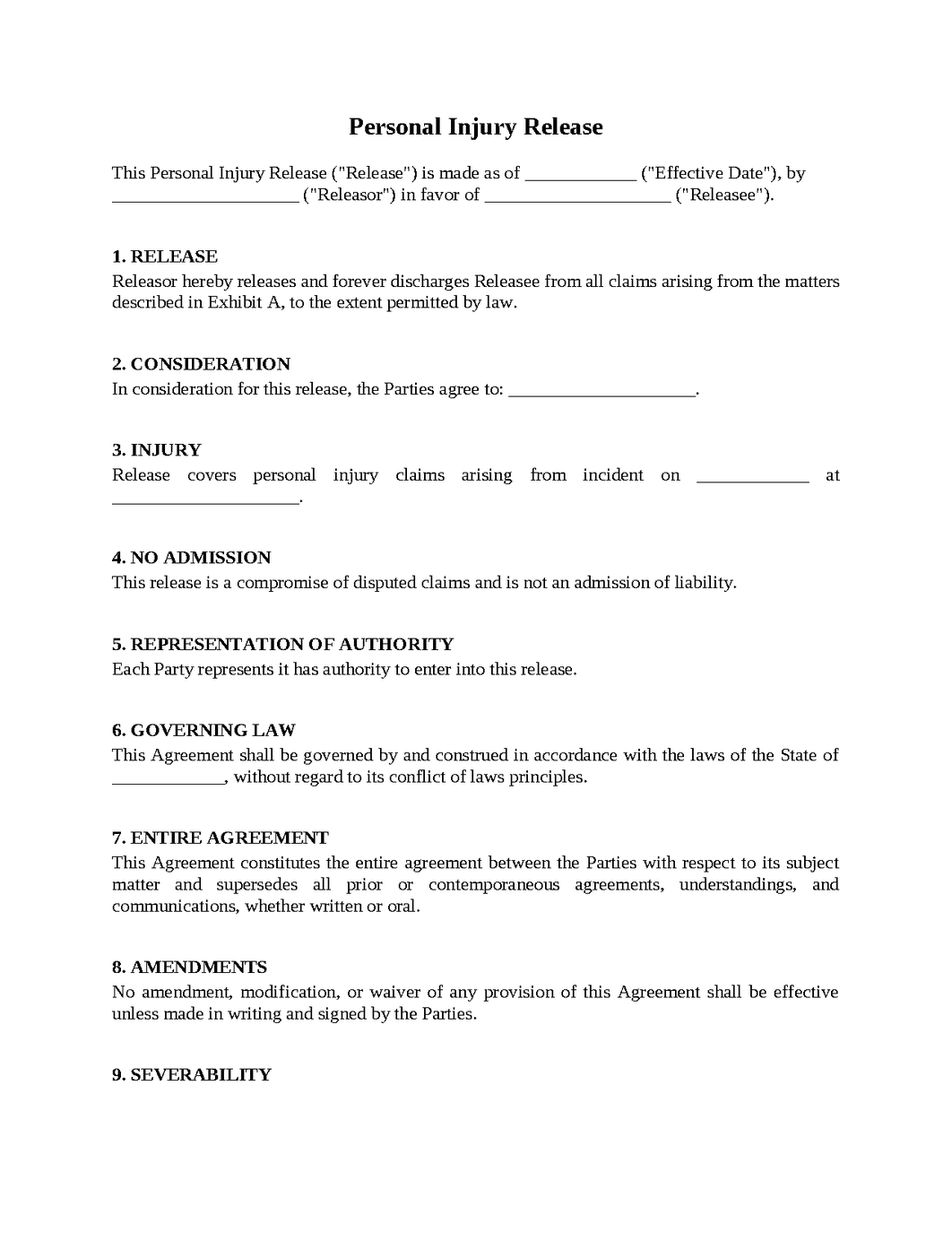
A Personal Injury Release is a legal agreement through which an injured person agrees to release another party from liability in exchange for compensation or other consideration arising from an injury claim. These agreements are commonly used following automobile accidents, slip-and-fall incidents, workplace disputes, recreational injuries, premises liability claims, and other situations involving alleged bodily injury. The purpose of a Personal Injury Release is to bring finality to a claim by preventing future lawsuits relating to the injuries and events covered by the agreement. Because injuries can evolve over time and the long-term effects are not always immediately known, disputes frequently arise when the parties disagree about the adequacy of the settlement or the scope of the release. A carefully drafted Personal Injury Release helps protect all parties while providing certainty regarding the resolution of injury-related claims.
The Injured Person Learns the Injury Is More Serious Than Expected
A driver is involved in a motor vehicle accident and experiences what initially appears to be a minor injury.
Following the accident, medical providers diagnose soft-tissue injuries and recommend a relatively short recovery period. The injured person misses only a small amount of work and believes the situation will resolve quickly.
After negotiating with the other driver's insurance company, the injured person agrees to a settlement and signs a Personal Injury Release. Both parties believe the claim has been resolved fairly based on the information available at the time.
Several months later, the injured person begins experiencing worsening symptoms and discovers that additional medical treatment, rehabilitation, and possibly surgery may be necessary. The financial and physical consequences are far greater than originally anticipated.
The injured person argues that the settlement did not account for the true extent of the injuries. The insurance company maintains that the release was intended to resolve all claims arising from the accident.
To help avoid this problem, a Personal Injury Release should clearly address known and unknown injuries and ensure that the injured party understands the consequences of resolving future claims before signing the agreement.
Medical Expenses Continue Long After Settlement
A customer suffers an injury after slipping and falling at a commercial property.
The property owner's insurer investigates the claim and eventually offers a settlement intended to compensate the injured person for medical expenses, lost wages, and inconvenience. After negotiations, the parties agree on a payment amount and execute a Personal Injury Release.
Initially, the settlement appears sufficient because medical providers expect the injury to heal within a reasonable period. The injured person accepts the payment and moves forward.
As time passes, however, additional complications emerge. New treatments become necessary, specialist consultations are recommended, and medical costs continue increasing well beyond the amount originally anticipated.
The injured person believes the settlement should be adjusted to reflect the unexpected expenses. The property owner and insurer believe the release permanently resolved the matter.
The disagreement centers on whether future medical developments should affect a settlement that was intended to provide finality.
To help prevent these issues, a Personal Injury Release should clearly explain the effect of the settlement on future medical claims and encourage careful evaluation of anticipated treatment needs before execution.
Family Members Assert Additional Claims
An individual suffers injuries in an accident caused by another party's alleged negligence.
After months of negotiations, the injured person reaches a settlement and signs a Personal Injury Release. The parties believe all claims arising from the incident have been resolved successfully.
Later, family members seek compensation for losses they believe resulted from the injury, including loss of companionship, caregiving burdens, and other indirect consequences of the accident.
The defendant argues that the settlement was intended to bring complete closure to the dispute. The family members maintain that their individual claims were never addressed during negotiations and therefore remain valid.
The disagreement becomes more complicated because the claims involve multiple individuals affected by the same incident.
Questions arise regarding whether the release extends beyond the injured person and applies to related claims asserted by others.
To help avoid these problems, a Personal Injury Release should clearly identify the parties affected by the release and address whether derivative or related claims are included within its scope.
The Cause of the Injury Is Later Disputed
A participant is injured during a recreational activity and alleges that the event organizer failed to provide a safe environment.
The organizer disputes liability but agrees to settle the matter to avoid prolonged litigation. The injured participant accepts compensation and signs a Personal Injury Release.
For a period of time, both sides consider the matter resolved. Later, new information emerges suggesting that a third party may have contributed to the accident or that the original understanding of the events was incomplete.
The injured participant believes the newly discovered information changes the nature of the claim. The organizer maintains that the release applies regardless of subsequent discoveries regarding fault or causation.
The disagreement shifts from the injury itself to the effect of the release on claims based upon newly discovered facts.
To help prevent these issues, a Personal Injury Release should clearly address the treatment of unknown facts and explain whether future discoveries will affect the finality of the settlement.
Settlement Funds Are Paid but Other Obligations Remain
An injury claim is resolved through a negotiated settlement that includes both monetary and non-monetary obligations.
The defendant agrees to make a payment, provide certain records, and complete other actions requested during settlement discussions. In exchange, the injured party signs a Personal Injury Release.
Initially, both parties intend to perform all aspects of the agreement. Over time, however, disputes arise regarding whether all promised obligations were completed properly.
The injured party believes the release should not remain effective if important settlement commitments are left unfinished. The defendant argues that the release became binding upon execution and remains enforceable regardless of later disagreements.
The dispute transforms from an injury claim into a conflict regarding settlement performance and contractual obligations.
To help avoid these problems, a Personal Injury Release should clearly describe the consideration supporting the release, identify any conditions that must be satisfied, and explain the consequences of failing to perform settlement obligations.
Personal Injury Releases are among the most commonly used settlement documents in injury-related disputes because they allow parties to resolve claims without extended litigation. However, issues involving unknown injuries, future medical expenses, related family claims, newly discovered facts, and settlement performance can become significant sources of conflict when expectations are not documented clearly. A carefully drafted Personal Injury Release provides a structured framework for resolving injury claims and allocating risk between the parties. When prepared thoughtfully, it can help reduce uncertainty, preserve negotiated settlements, and provide the finality necessary for both sides to move forward.

Get started with Upsign today!
Easily send, sign and track your documents