

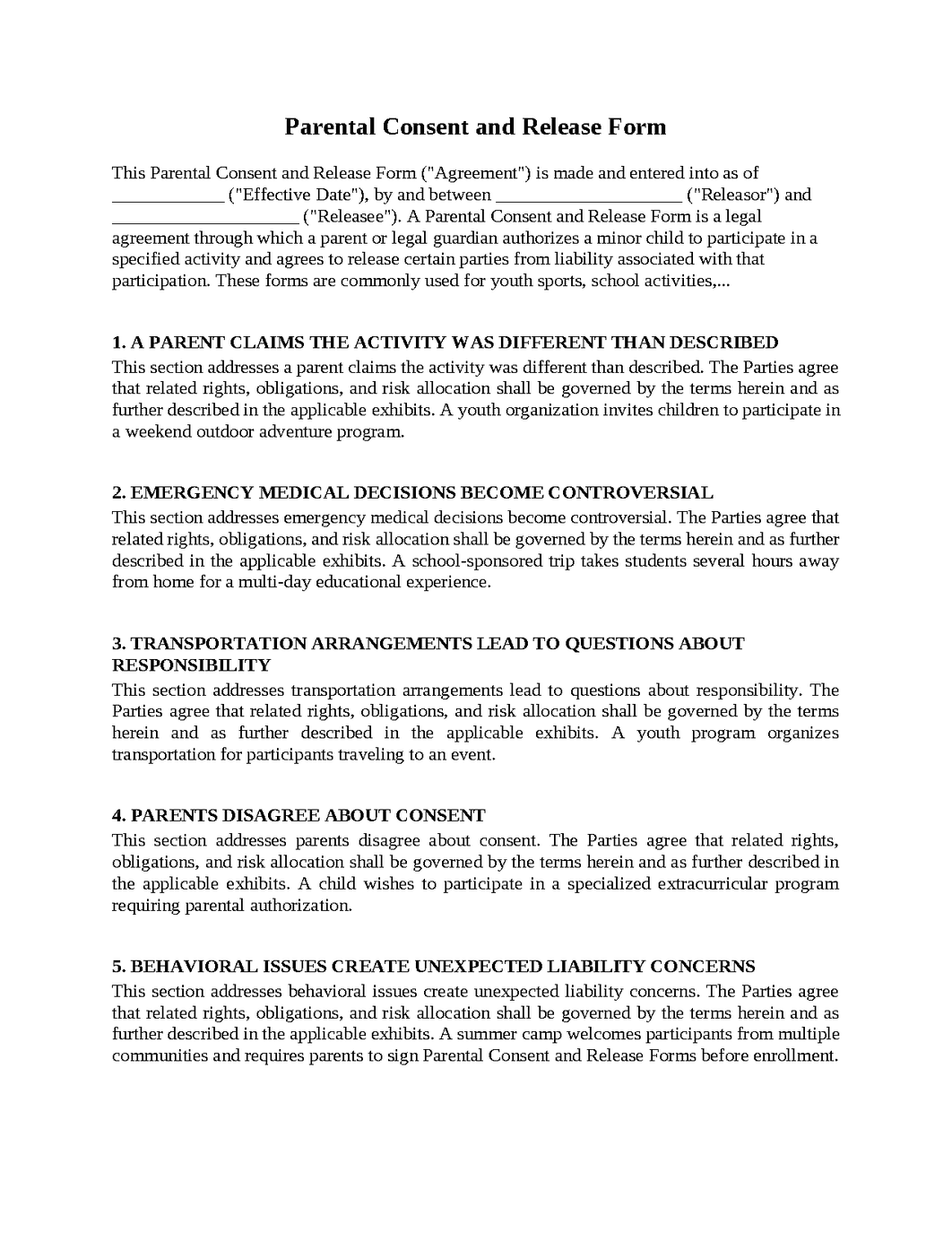
Parental Consent and Release Form
A Parental Consent and Release Form is a legal agreement through which a parent or legal guardian authorizes a minor child to participate in a specified activity and agrees to release certain parties from liability associated with that participation. These forms are commonly used for youth sports, school activities, camps, field trips, educational programs, recreational events, competitions, volunteer activities, travel programs, and community organizations. In addition to granting permission for participation, these forms often address medical treatment authorization, transportation arrangements, emergency contacts, behavioral expectations, and assumption of risk. Because parents are making decisions on behalf of minors and activities often involve safety considerations, disputes can arise when expectations regarding supervision, authority, and responsibility are not documented clearly. A carefully drafted Parental Consent and Release Form helps protect children, families, and organizations while facilitating participation in valuable activities.
A Parent Claims the Activity Was Different Than Described
A youth organization invites children to participate in a weekend outdoor adventure program.
Parents receive informational materials describing the event and are asked to sign Parental Consent and Release Forms before participation. Most families review the information and approve their children's involvement without hesitation.
During the program, participants engage in activities that some parents later view as more physically demanding or risky than expected. One child suffers an injury, and the parent becomes concerned that the true nature of the activity was not communicated adequately before consent was provided.
The organization believes the activities were consistent with the program's objectives and that parents were informed of the associated risks. The parent believes meaningful consent requires a more complete understanding of what participants would actually be doing.
The disagreement focuses on whether the parent had sufficient information to make an informed decision.
To help avoid this problem, a Parental Consent and Release Form should clearly describe the activities involved and identify any significant risks associated with participation.
Emergency Medical Decisions Become Controversial
A school-sponsored trip takes students several hours away from home for a multi-day educational experience.
Parents sign Parental Consent and Release Forms authorizing participation and providing emergency contact information. Everyone hopes the trip will proceed without incident.
During the trip, a student experiences a medical emergency requiring immediate treatment. School officials attempt to contact the parents but are unable to reach them before important medical decisions must be made.
The school relies on the medical authorization provisions contained in the release form and permits treatment to proceed. Afterward, the parents question certain decisions that were made during the emergency.
The school believes it acted responsibly and in the student's best interests. The parents believe greater efforts should have been made to obtain direct approval before treatment occurred.
The disagreement develops because urgent circumstances required action before communication could be completed.
To help prevent these issues, a Parental Consent and Release Form should clearly address emergency medical treatment authority and explain the circumstances under which caregivers may act on behalf of the child.
Transportation Arrangements Lead to Questions About Responsibility
A youth program organizes transportation for participants traveling to an event.
Parents sign Parental Consent and Release Forms authorizing participation and acknowledging that transportation will be provided by employees, volunteers, or contracted providers. Initially, the arrangements appear straightforward.
During transportation, an accident or other incident occurs that results in injury or property damage. Parents begin questioning who was responsible for supervising participants and ensuring safe travel.
The organization believes transportation was provided according to established procedures and that the associated risks were disclosed in advance. The parents believe transportation-related risks were never explained adequately.
The disagreement focuses on whether transportation activities were covered by the original consent and release.
To help avoid these problems, a Parental Consent and Release Form should clearly address transportation arrangements and explain how risks associated with travel will be handled.
Parents Disagree About Consent
A child wishes to participate in a specialized extracurricular program requiring parental authorization.
One parent enthusiastically supports participation and signs the Parental Consent and Release Form. The other parent later objects and argues that important decisions regarding the child should have required joint approval.
The organization believed it had received proper authorization and allowed the child to participate. The parents become involved in a dispute regarding decision-making authority and responsibility.
The organization finds itself caught between competing claims regarding who possessed authority to grant consent on behalf of the child.
The situation becomes especially difficult because the organization was not aware of any disagreement when participation was approved.
To help prevent these issues, a Parental Consent and Release Form should clearly identify the person providing authorization and establish any requirements relating to guardianship or parental authority.
Behavioral Issues Create Unexpected Liability Concerns
A summer camp welcomes participants from multiple communities and requires parents to sign Parental Consent and Release Forms before enrollment.
The forms address participation, safety expectations, and parental authorization. During the program, one participant engages in conduct that causes injury to another child or damages property belonging to the organization.
Questions arise regarding supervision, disciplinary procedures, and financial responsibility for the resulting losses. The organization believes parents remain responsible for certain consequences arising from a child's conduct.
The parents believe the organization assumed responsibility for supervision once the child was accepted into the program.
The disagreement centers on where parental responsibility ends and organizational responsibility begins.
To help avoid these problems, a Parental Consent and Release Form should clearly address behavioral expectations, supervision responsibilities, and potential liability arising from a participant's conduct.
Parental Consent and Release Forms are important tools for allowing minors to participate in educational, recreational, athletic, and community activities while ensuring that parents understand the associated risks and responsibilities. However, issues involving activity descriptions, emergency medical treatment, transportation, parental authority, and participant conduct can become significant sources of conflict when expectations are not documented clearly. A carefully drafted Parental Consent and Release Form provides a structured framework for obtaining informed consent and allocating responsibility before participation begins. When prepared thoughtfully, it can reduce misunderstandings, support participant safety, and provide greater certainty for parents, guardians, and organizations alike.

Get started with Upsign today!
Easily send, sign and track your documents