

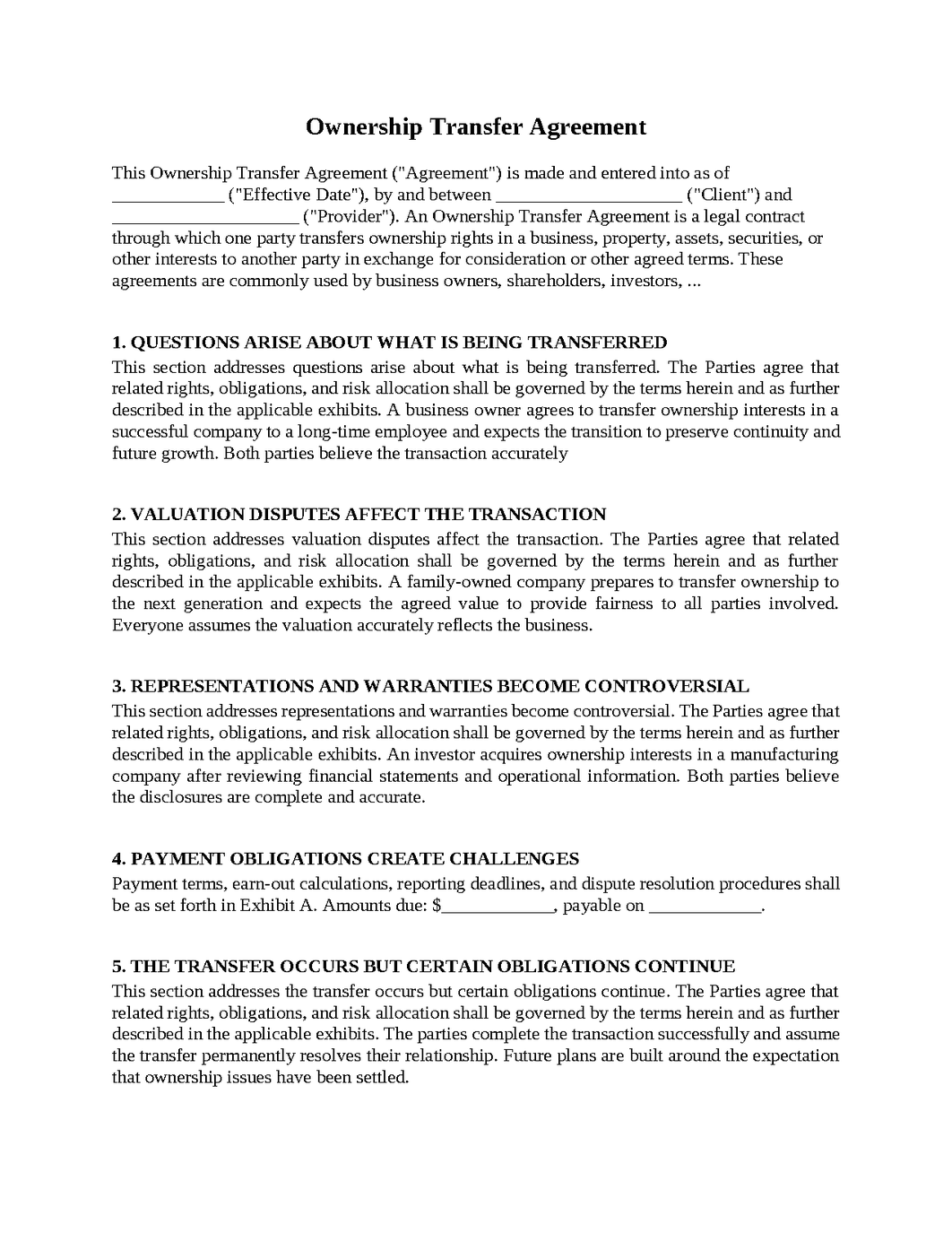
Ownership Transfer Agreement
An Ownership Transfer Agreement is a legal contract through which one party transfers ownership rights in a business, property, assets, securities, or other interests to another party in exchange for consideration or other agreed terms. These agreements are commonly used by business owners, shareholders, investors, family businesses, real estate investors, and companies involved in mergers, acquisitions, and succession planning. An Ownership Transfer Agreement typically addresses the assets being transferred, purchase price, representations and warranties, payment arrangements, closing conditions, and procedures governing disputes and termination. Because ownership rights often involve significant financial value and long-term consequences, disputes can arise when expectations regarding responsibilities and obligations are not documented clearly. A carefully drafted Ownership Transfer Agreement helps establish certainty and protect the interests of both transferors and transferees.
Questions Arise About What Is Being Transferred
A business owner agrees to transfer ownership interests in a successful company to a long-time employee and expects the transition to preserve continuity and future growth. Both parties believe the transaction accurately reflects their understanding.
As the closing process progresses, questions emerge regarding intellectual property, customer relationships, and assets that were not specifically discussed during negotiations. Different interpretations create uncertainty regarding what rights are included in the transfer.
The seller believes only the assets expressly identified in the transaction should be transferred because certain items remain personal or unrelated to the sale. The buyer believes the transaction should include everything necessary to continue operating the business successfully. As expectations diverge, tensions emerge regarding the scope of the transfer.
To help avoid this problem, an Ownership Transfer Agreement should clearly establish the assets and rights being transferred and define any exclusions that apply.
Valuation Disputes Affect the Transaction
A family-owned company prepares to transfer ownership to the next generation and expects the agreed value to provide fairness to all parties involved. Everyone assumes the valuation accurately reflects the business.
As market conditions change and financial results fluctuate, concerns arise regarding whether the purchase price remains appropriate. Different opinions emerge regarding the true value of the ownership interests.
The seller believes years of effort and goodwill justify the agreed price because the business represents a valuable legacy. The buyer believes recent performance and future risks should influence valuation and argues that adjustments may be necessary. As financial considerations become more significant, disagreements emerge regarding the purchase price.
To help prevent these issues, an Ownership Transfer Agreement should clearly establish valuation methods and define how changes in circumstances affect pricing.
Representations and Warranties Become Controversial
An investor acquires ownership interests in a manufacturing company after reviewing financial statements and operational information. Both parties believe the disclosures are complete and accurate.
Following the transfer, previously unknown liabilities and operational problems become apparent. Questions arise regarding whether important information should have been disclosed before closing.
The buyer believes accurate disclosures were essential because investment decisions depended upon understanding the condition of the business. The seller believes the information was provided in good faith and argues that certain developments were unforeseen. As financial consequences increase, tensions develop regarding responsibility for undisclosed issues.
To help avoid these problems, an Ownership Transfer Agreement should clearly establish representations and warranties and define the remedies available if disclosures prove inaccurate.
Payment Obligations Create Challenges
A business owner agrees to sell ownership interests through installment payments and expects future payments to provide financial security. Everyone assumes the arrangement will proceed according to schedule.
Unexpected economic conditions eventually affect the buyer's ability to satisfy the agreed payment obligations. Questions arise regarding defaults, collateral, and the consequences of missed payments.
The seller believes the payment terms should be enforced because the transaction was structured to provide predictable compensation. The buyer believes temporary financial difficulties justify flexibility and argues that the business remains capable of generating future value. As payment concerns increase, disagreements emerge regarding remedies and repayment obligations.
To help prevent these issues, an Ownership Transfer Agreement should clearly establish payment provisions and define the consequences applicable to defaults and late payments.
The Transfer Occurs but Certain Obligations Continue
The parties complete the transaction successfully and assume the transfer permanently resolves their relationship. Future plans are built around the expectation that ownership issues have been settled.
Eventually, questions arise regarding indemnification obligations, non-compete provisions, and liabilities relating to events that occurred before the transfer. Different interpretations create uncertainty regarding continuing responsibilities.
The former owner believes the transfer should provide a clean break because ownership rights have already changed hands. The new owner believes certain obligations should survive because they protect the value of the assets acquired. As new claims and obligations emerge, disagreements arise regarding the rights and responsibilities that continue after closing.
To help avoid this problem, an Ownership Transfer Agreement should clearly establish post-closing obligations and identify the rights and responsibilities that survive the transfer.
Ownership Transfer Agreements are valuable tools that facilitate the orderly transfer of businesses, assets, and ownership interests while protecting the expectations of both parties. However, issues involving the scope of transferred assets, valuation disputes, representations and warranties, payment obligations, and post-closing responsibilities can become significant sources of conflict when expectations are not documented clearly. A carefully drafted Ownership Transfer Agreement provides a structured framework for allocating responsibilities and protecting the interests of transferors and transferees. When prepared thoughtfully, it can reduce uncertainty, strengthen business relationships, support succession planning, and provide the foundation necessary for successful ownership transitions.

Get started with Upsign today!
Easily send, sign and track your documents