

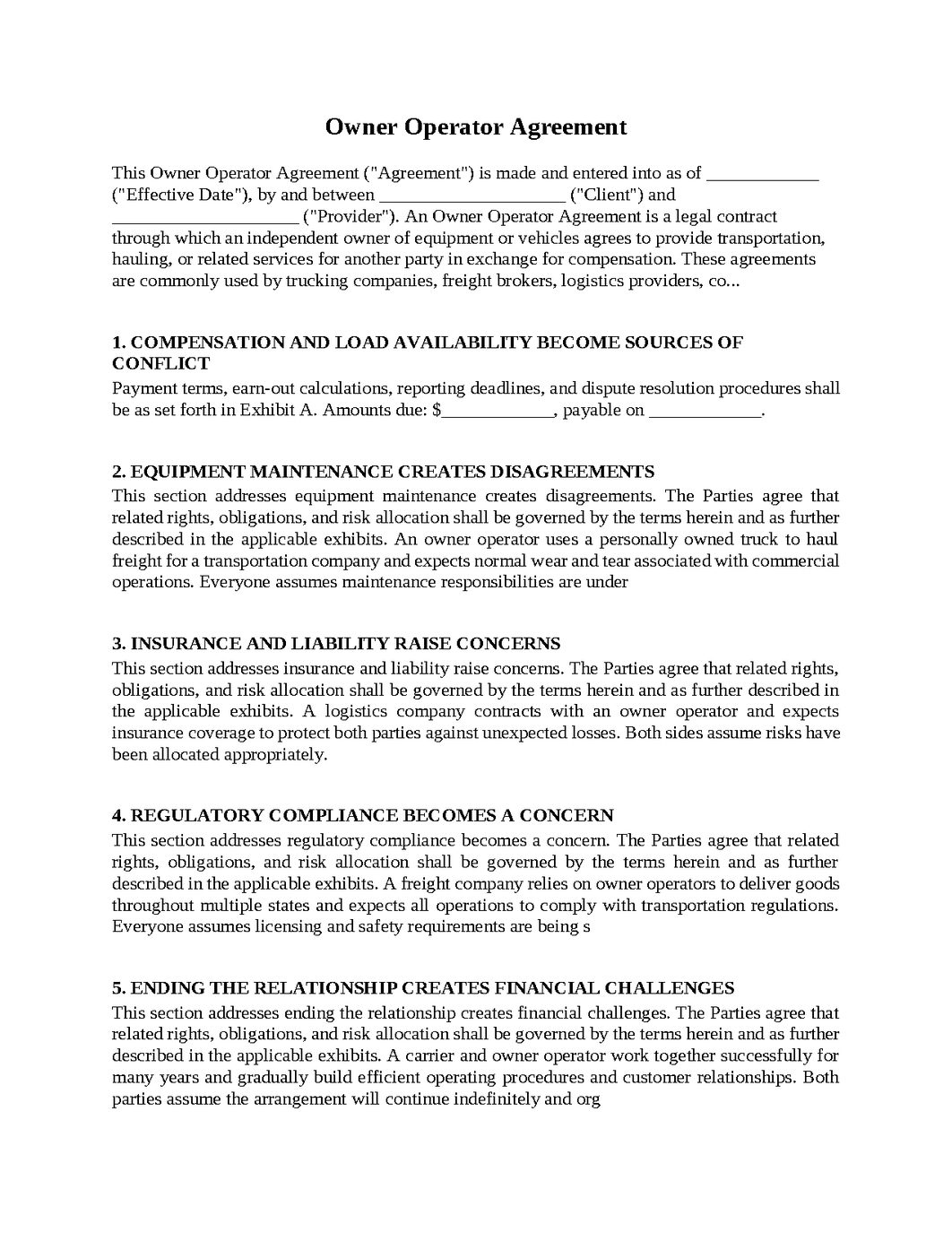
Owner Operator Agreement
An Owner Operator Agreement is a legal contract through which an independent owner of equipment or vehicles agrees to provide transportation, hauling, or related services for another party in exchange for compensation. These agreements are commonly used by trucking companies, freight brokers, logistics providers, construction firms, and independent drivers seeking to establish long-term business relationships without creating an employment arrangement. An Owner Operator Agreement typically addresses compensation terms, maintenance responsibilities, insurance requirements, regulatory compliance, equipment usage, and procedures governing disputes and termination. Because owner operators invest substantial resources into their equipment and depend upon reliable work opportunities, disputes can arise when expectations regarding responsibilities and financial obligations are not documented clearly. A carefully drafted Owner Operator Agreement helps establish certainty and protect the interests of both carriers and independent operators.
Compensation and Load Availability Become Sources of Conflict
A trucking company enters into an arrangement with an independent owner operator and expects reliable transportation services to support growing customer demand. Both parties believe the relationship will provide steady opportunities and mutual financial benefits.
Initially, freight volumes remain strong and compensation is predictable. Over time, however, changing market conditions reduce available loads and create uncertainty regarding earnings.
The owner operator believes consistent opportunities are important because vehicle payments, fuel expenses, and insurance obligations continue regardless of freight volumes. The carrier believes market conditions and customer demand affect available work and argues that no minimum amount of business was guaranteed. As revenues decline, tensions emerge regarding expectations and compensation.
To help avoid this problem, an Owner Operator Agreement should clearly establish compensation provisions and define any expectations relating to load availability and payment terms.
Equipment Maintenance Creates Disagreements
An owner operator uses a personally owned truck to haul freight for a transportation company and expects normal wear and tear associated with commercial operations. Everyone assumes maintenance responsibilities are understood.
As mileage increases, unexpected repairs and downtime become more common. Questions arise regarding whether certain expenses should be shared because the equipment is being used to support the carrier's business.
The owner operator believes substantial repair costs should be considered because maintaining reliable equipment benefits both parties. The carrier believes ownership of the vehicle makes maintenance the responsibility of the operator and argues that compensation already accounts for those costs. As expenses increase, disagreements emerge regarding equipment responsibilities.
To help prevent these issues, an Owner Operator Agreement should clearly establish maintenance obligations and define responsibility for repairs and operating expenses.
Insurance and Liability Raise Concerns
A logistics company contracts with an owner operator and expects insurance coverage to protect both parties against unexpected losses. Both sides assume risks have been allocated appropriately.
Following an accident involving cargo damage and personal injuries, questions arise regarding insurance coverage and liability. Different interpretations create uncertainty regarding financial responsibility.
The carrier believes adequate insurance is essential because transportation risks affect customer relationships and regulatory obligations. The owner operator believes existing coverage should address ordinary risks and argues that unforeseen events should not create excessive personal liability. As losses increase, tensions develop regarding insurance requirements.
To help avoid these problems, an Owner Operator Agreement should clearly establish insurance obligations and define responsibility for claims and losses.
Regulatory Compliance Becomes a Concern
A freight company relies on owner operators to deliver goods throughout multiple states and expects all operations to comply with transportation regulations. Everyone assumes licensing and safety requirements are being satisfied properly.
As inspections and audits become more frequent, questions arise regarding hours-of-service requirements, vehicle inspections, and recordkeeping responsibilities. Regulatory concerns begin affecting operations.
The carrier believes owner operators should maintain compliance because they control their own vehicles and daily activities. The owner operator believes guidance and oversight from the carrier influence operations and argues that compliance responsibilities should be shared. As penalties and delays increase, disagreements emerge regarding accountability.
To help prevent these issues, an Owner Operator Agreement should clearly establish compliance responsibilities and define the obligations relating to applicable laws and regulations.
Ending the Relationship Creates Financial Challenges
A carrier and owner operator work together successfully for many years and gradually build efficient operating procedures and customer relationships. Both parties assume the arrangement will continue indefinitely and organize future plans around that expectation.
Eventually, changing priorities lead one side to end the relationship. Questions arise regarding outstanding payments, leased equipment, customer obligations, and responsibilities involving unfinished deliveries.
The owner operator believes compensation should be paid promptly because the business depends upon maintaining cash flow and meeting ongoing expenses. The carrier believes contractual obligations and documentation requirements should be satisfied before final payments are released. As the relationship concludes, disagreements emerge regarding the obligations that survive termination.
To help avoid this problem, an Owner Operator Agreement should clearly establish termination procedures and identify the rights and responsibilities that continue after the relationship ends.
Owner Operator Agreements are valuable tools that allow carriers and independent transportation professionals to work together while preserving flexibility and operational independence. However, issues involving compensation, equipment maintenance, insurance obligations, regulatory compliance, and post-termination responsibilities can become significant sources of conflict when expectations are not documented clearly. A carefully drafted Owner Operator Agreement provides a structured framework for allocating responsibilities and protecting the interests of both carriers and owner operators. When prepared thoughtfully, it can reduce uncertainty, strengthen business relationships, improve operational efficiency, and provide the foundation necessary for successful transportation partnerships.

Get started with Upsign today!
Easily send, sign and track your documents