

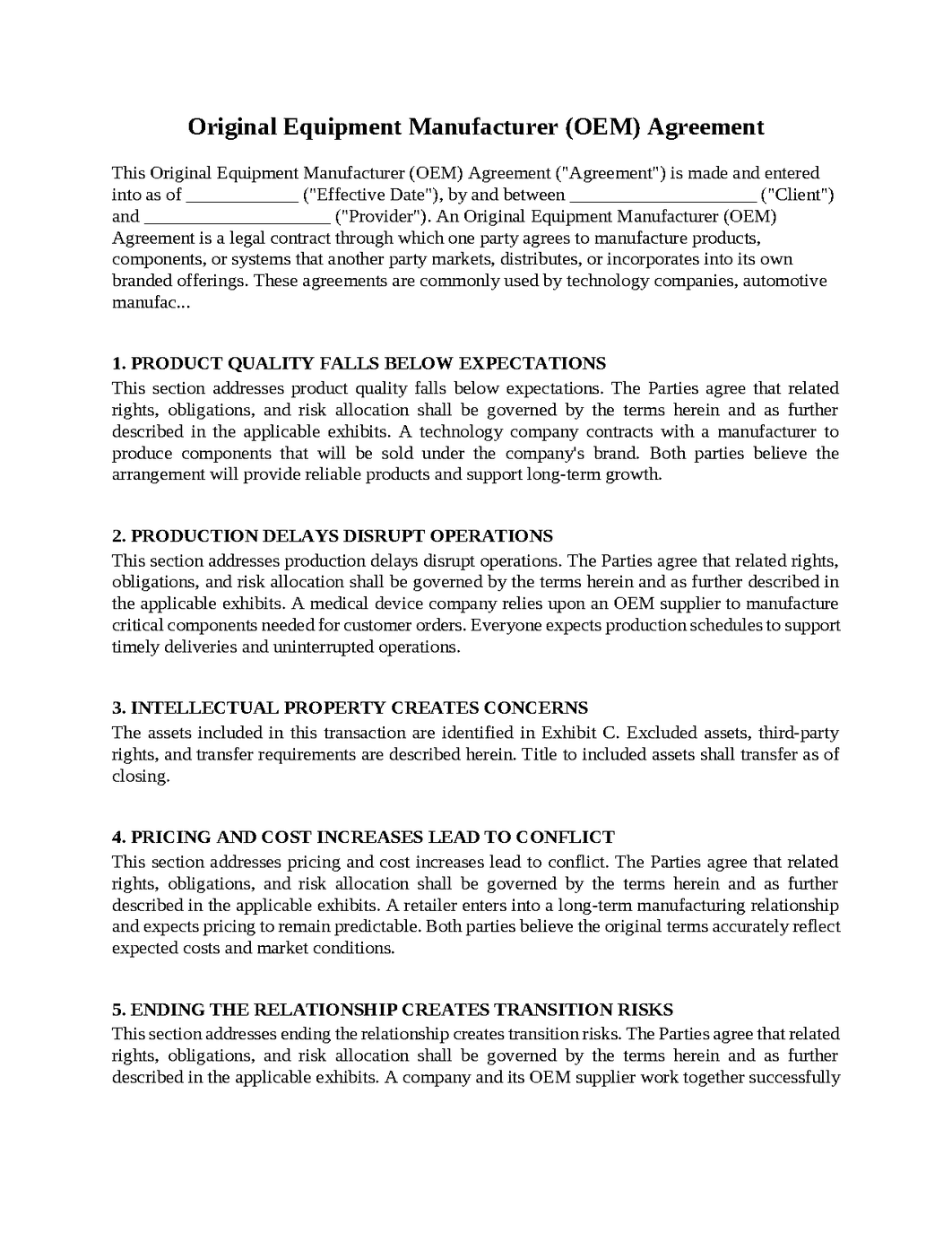
Original Equipment Manufacturer (OEM) Agreement
An Original Equipment Manufacturer (OEM) Agreement is a legal contract through which one party agrees to manufacture products, components, or systems that another party markets, distributes, or incorporates into its own branded offerings. These agreements are commonly used by technology companies, automotive manufacturers, medical device businesses, electronics companies, industrial suppliers, and consumer product brands seeking to leverage specialized manufacturing capabilities. An Original Equipment Manufacturer Agreement typically addresses product specifications, quality standards, intellectual property rights, pricing arrangements, supply obligations, and procedures governing disputes and termination. Because OEM relationships often involve proprietary designs and long-term dependencies, disputes can arise when expectations regarding responsibilities and performance are not documented clearly. A carefully drafted Original Equipment Manufacturer Agreement helps establish certainty and protect the interests of both manufacturers and customers.
Product Quality Falls Below Expectations
A technology company contracts with a manufacturer to produce components that will be sold under the company's brand. Both parties believe the arrangement will provide reliable products and support long-term growth.
Initially, manufacturing quality remains consistent and customer demand continues increasing. Over time, however, defects begin appearing and warranty claims become more frequent.
The brand owner believes the manufacturer should maintain strict quality controls because customer trust and reputation depend upon reliable products. The manufacturer believes certain issues resulted from changing specifications and argues that reasonable production standards were followed. As complaints increase, tensions emerge regarding responsibility for quality problems.
To help avoid this problem, an Original Equipment Manufacturer Agreement should clearly establish quality standards and define the procedures governing inspections and defect claims.
Production Delays Disrupt Operations
A medical device company relies upon an OEM supplier to manufacture critical components needed for customer orders. Everyone expects production schedules to support timely deliveries and uninterrupted operations.
Unexpected shortages and equipment problems begin delaying shipments. Questions arise regarding whether the delays could have been prevented.
The customer believes dependable production is essential because missed deliveries affect customer relationships and regulatory obligations. The manufacturer believes supply chain disruptions and labor shortages created circumstances beyond its control and argues that reasonable efforts were made to minimize delays. As backlogs increase, disagreements emerge regarding accountability.
To help prevent these issues, an Original Equipment Manufacturer Agreement should clearly establish production schedules and define the obligations applicable to delays and shortages.
Intellectual Property Creates Concerns
A consumer products company provides proprietary designs and specifications to an OEM partner and expects the information to remain confidential. Both parties assume intellectual property rights are understood and protected.
As the relationship develops, concerns arise that similar products are appearing in the marketplace. Questions emerge regarding whether proprietary designs are being used improperly.
The customer believes its designs and concepts represent valuable assets developed through years of investment and innovation. The manufacturer believes general manufacturing expertise and industry knowledge cannot be restricted completely and argues that no confidential information has been misused. As competition increases, tensions develop regarding intellectual property rights.
To help avoid these problems, an Original Equipment Manufacturer Agreement should clearly establish ownership rights and define the obligations applicable to confidential information and product designs.
Pricing and Cost Increases Lead to Conflict
A retailer enters into a long-term manufacturing relationship and expects pricing to remain predictable. Both parties believe the original terms accurately reflect expected costs and market conditions.
As material costs and labor expenses increase, the manufacturer seeks adjustments to pricing. Questions arise regarding whether higher costs justify modifications to the agreement.
The customer believes stable pricing is important because profitability and long-term planning depend upon predictable expenses. The manufacturer believes rising costs make adjustments necessary and argues that continuing operations without changes would be unreasonable. As economic conditions evolve, disagreements emerge regarding pricing obligations.
To help prevent these issues, an Original Equipment Manufacturer Agreement should clearly establish pricing provisions and define the circumstances under which adjustments may occur.
Ending the Relationship Creates Transition Risks
A company and its OEM supplier work together successfully for many years and gradually integrate production schedules, inventory systems, and forecasting processes. Both parties assume the relationship will continue indefinitely and organize operations around that expectation.
Eventually, changing priorities lead the company to seek another supplier. Questions arise regarding tooling, inventory, proprietary information, and unfinished orders.
The customer believes a smooth transition is necessary to preserve operations and avoid disruptions to customers. The manufacturer believes compensation obligations and contractual rights should be respected before providing additional assistance. As the relationship concludes, disagreements emerge regarding the obligations that survive termination.
To help avoid this problem, an Original Equipment Manufacturer Agreement should clearly establish termination procedures and identify the rights and responsibilities that continue after the relationship ends.
Original Equipment Manufacturer Agreements are valuable tools that allow businesses to leverage specialized manufacturing capabilities while maintaining control over branding and customer relationships. However, issues involving product quality, production delays, intellectual property, pricing changes, and post-termination obligations can become significant sources of conflict when expectations are not documented clearly. A carefully drafted Original Equipment Manufacturer Agreement provides a structured framework for allocating responsibilities and protecting the interests of both manufacturers and customers. When prepared thoughtfully, it can reduce uncertainty, strengthen supply chain relationships, encourage innovation, and provide the foundation necessary for successful long-term manufacturing partnerships.

Get started with Upsign today!
Easily send, sign and track your documents