

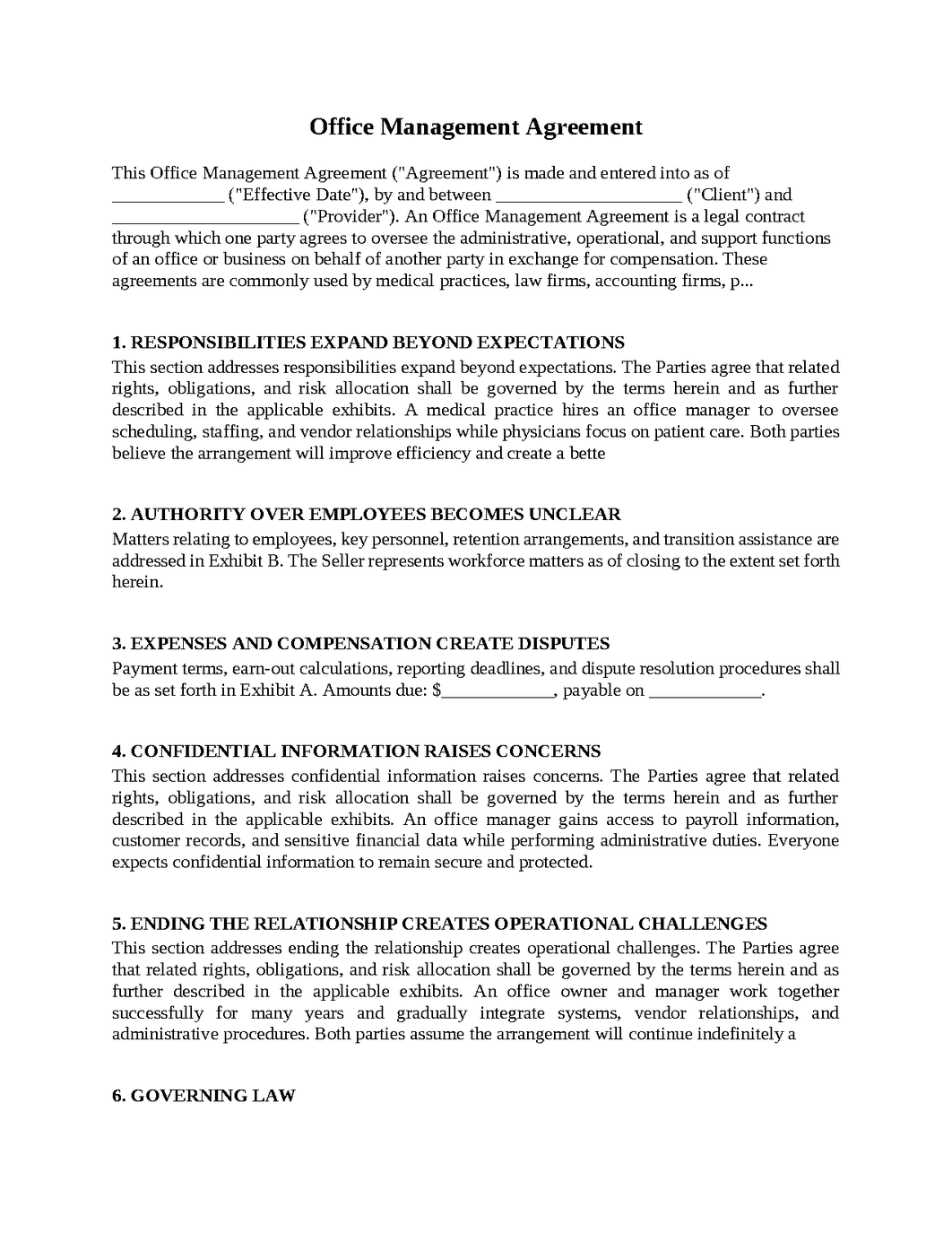
Office Management Agreement
An Office Management Agreement is a legal contract through which one party agrees to oversee the administrative, operational, and support functions of an office or business on behalf of another party in exchange for compensation. These agreements are commonly used by medical practices, law firms, accounting firms, property management companies, family offices, and growing businesses seeking professional assistance with day-to-day operations. An Office Management Agreement typically addresses the scope of services, management authority, staffing responsibilities, compensation arrangements, confidentiality obligations, and procedures governing disputes and termination. Because office operations involve numerous employees, vendors, and processes, disputes can arise when expectations regarding responsibilities and authority are not documented clearly. A carefully drafted Office Management Agreement helps establish certainty and protect the interests of both office owners and managers.
Responsibilities Expand Beyond Expectations
A medical practice hires an office manager to oversee scheduling, staffing, and vendor relationships while physicians focus on patient care. Both parties believe the arrangement will improve efficiency and create a better experience for patients and employees.
Initially, operations run smoothly and administrative tasks are handled effectively. Over time, however, additional responsibilities involving marketing, financial reporting, and technology upgrades begin falling under the manager's supervision.
The practice believes these tasks naturally belong within the office manager's role because efficient operations support the overall success of the business. The manager believes the growing workload requires additional resources and compensation and argues that the original expectations have changed substantially. As demands increase, tensions emerge regarding the scope of responsibilities.
To help avoid this problem, an Office Management Agreement should clearly establish the services to be provided and define how additional responsibilities will be addressed.
Authority Over Employees Becomes Unclear
A law firm hires an office management company to oversee support staff and maintain efficient operations. Everyone assumes the division of authority between attorneys and management personnel is well understood.
As staffing issues arise, questions emerge regarding hiring decisions, disciplinary matters, and scheduling authority. Different opinions develop concerning who possesses the power to make important personnel decisions.
The firm believes ultimate control should remain with ownership because employees directly affect client relationships and professional responsibilities. The management company believes operational efficiency requires clear authority and argues that excessive oversight limits its effectiveness. As conflicts become more frequent, disagreements emerge regarding decision-making authority.
To help prevent these issues, an Office Management Agreement should clearly establish management authority and define which decisions require owner approval.
Expenses and Compensation Create Disputes
A growing accounting practice hires an office manager to coordinate operations and expects costs to remain predictable. Both parties believe compensation reflects the responsibilities involved.
As the business expands, additional software, vendors, and staffing requirements increase operating expenses. Questions arise regarding reimbursements and whether compensation should be adjusted.
The office manager believes increased responsibilities justify additional compensation because growth has significantly increased the complexity of operations. The owners believe costs should remain controlled and argue that expansion alone should not automatically increase fees. As expenses continue rising, tensions develop regarding financial arrangements.
To help avoid these problems, an Office Management Agreement should clearly establish compensation provisions and define how expenses and reimbursements will be handled.
Confidential Information Raises Concerns
An office manager gains access to payroll information, customer records, and sensitive financial data while performing administrative duties. Everyone expects confidential information to remain secure and protected.
As operations expand and additional personnel become involved, concerns arise regarding access to sensitive records and the potential for unauthorized disclosures.
The business owners believe protecting confidential information is essential because customer trust and operational stability depend upon privacy and discretion. The office manager believes reasonable safeguards are already in place and argues that no system can eliminate every risk. As concerns increase, disagreements emerge regarding confidentiality obligations.
To help prevent these issues, an Office Management Agreement should clearly establish confidentiality requirements and define how sensitive information will be safeguarded.
Ending the Relationship Creates Operational Challenges
An office owner and manager work together successfully for many years and gradually integrate systems, vendor relationships, and administrative procedures. Both parties assume the arrangement will continue indefinitely and organize operations around that expectation.
Eventually, changing priorities lead the owner to bring management responsibilities in-house. Questions arise regarding employee records, vendor contracts, outstanding expenses, and responsibilities involving ongoing projects.
The owner believes a smooth transition is necessary to preserve continuity and avoid disruptions. The office manager believes compensation obligations should be satisfied before providing additional assistance and expects contractual rights to be respected. As the relationship concludes, disagreements emerge regarding the rights and responsibilities that survive termination.
To help avoid this problem, an Office Management Agreement should clearly establish termination procedures and identify the obligations that continue after the relationship ends.
Office Management Agreements are valuable tools that allow businesses and professional practices to maintain efficient operations while relying on experienced administrative support. However, issues involving expanding responsibilities, employee authority, compensation disputes, confidentiality concerns, and post-termination obligations can become significant sources of conflict when expectations are not documented clearly. A carefully drafted Office Management Agreement provides a structured framework for allocating responsibilities and protecting the interests of both office owners and managers. When prepared thoughtfully, it can reduce uncertainty, strengthen working relationships, improve efficiency, and provide the foundation necessary for successful office operations.

Get started with Upsign today!
Easily send, sign and track your documents