

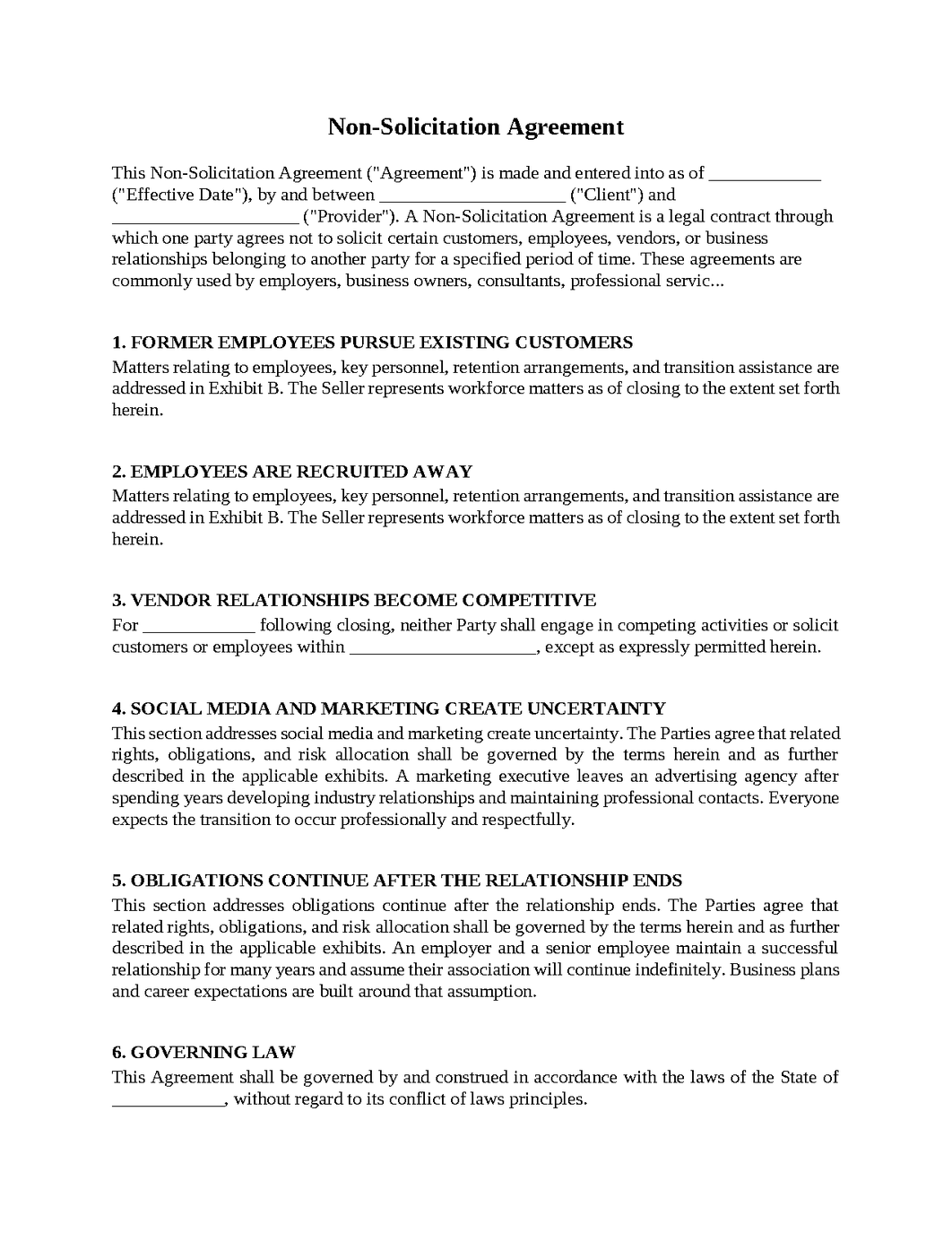
Non-Solicitation Agreement
A Non-Solicitation Agreement is a legal contract through which one party agrees not to solicit certain customers, employees, vendors, or business relationships belonging to another party for a specified period of time. These agreements are commonly used by employers, business owners, consultants, professional service firms, and purchasers of businesses seeking to protect valuable relationships and goodwill. A Non-Solicitation Agreement typically addresses restricted activities, covered relationships, duration, confidentiality obligations, remedies for breaches, and procedures governing disputes and termination. Because these agreements affect future business opportunities and personal relationships, disputes can arise when expectations regarding restrictions and rights are not documented clearly. A carefully drafted Non-Solicitation Agreement helps establish certainty and protect the interests of all parties involved.
Former Employees Pursue Existing Customers
A consulting company hires a senior manager and entrusts the individual with important customer relationships and business development responsibilities. Both parties believe the relationship will continue for many years and expect mutual loyalty.
Eventually, the manager leaves to start an independent business. Shortly afterward, several long-standing clients transfer their business to the new venture, raising concerns about whether improper solicitation occurred.
The former employer believes years of investment and relationship building deserve protection because customer goodwill is one of the company's most valuable assets. The former employee believes customers have the right to choose their service providers and argues that the clients initiated the contact voluntarily. As revenues decline, tensions emerge regarding the scope of the restrictions.
To help avoid this problem, a Non-Solicitation Agreement should clearly establish the customers covered by the restrictions and define what constitutes prohibited solicitation.
Employees Are Recruited Away
A manufacturing company employs several highly skilled individuals and expects its leadership team to preserve stability within the workforce. Everyone assumes the organization will continue growing together.
After a senior executive departs, multiple employees begin accepting positions with the executive's new company. Questions arise regarding whether the departures resulted from prohibited recruiting efforts.
The original employer believes workforce stability is essential because significant resources were invested in training and retaining employees. The departing executive believes professionals should be free to pursue better opportunities and argues that employees made independent decisions. As turnover increases, disagreements emerge regarding employee solicitation.
To help prevent these issues, a Non-Solicitation Agreement should clearly establish restrictions relating to recruiting employees and define the activities that are prohibited.
Vendor Relationships Become Competitive
A distribution company shares supplier information and purchasing strategies with a key employee and expects important business relationships to remain protected. Both parties assume the relationship will continue indefinitely.
After leaving the company, the employee begins working with several vendors that previously served the employer. Questions arise regarding whether those relationships were improperly diverted.
The former employer believes vendor relationships represent valuable assets developed over many years and deserve protection. The former employee believes suppliers are independent businesses and argues that ordinary competition should not be restricted. As purchasing costs increase and relationships shift, tensions develop regarding the scope of the agreement.
To help avoid these problems, a Non-Solicitation Agreement should clearly establish which business relationships are protected and define the restrictions applicable to those relationships.
Social Media and Marketing Create Uncertainty
A marketing executive leaves an advertising agency after spending years developing industry relationships and maintaining professional contacts. Everyone expects the transition to occur professionally and respectfully.
Following the departure, the executive announces a new business venture through social media and professional networking platforms. Existing customers and former colleagues begin reaching out voluntarily.
The agency believes the public announcements indirectly encouraged clients and employees to move their business because the timing closely followed the departure. The executive believes general marketing efforts are permissible and argues that no direct solicitation occurred. As business opportunities shift, disagreements emerge regarding what activities constitute solicitation.
To help prevent these issues, a Non-Solicitation Agreement should clearly establish the distinction between prohibited solicitation and permissible communications.
Obligations Continue After the Relationship Ends
An employer and a senior employee maintain a successful relationship for many years and assume their association will continue indefinitely. Business plans and career expectations are built around that assumption.
Eventually, changing circumstances bring the relationship to an end. Questions arise regarding how long restrictions remain effective and which obligations survive separation.
The employer believes continuing protections are necessary because customer goodwill and workforce stability remain important after the employee's departure. The former employee believes restrictions should be limited to reasonable periods and expects the freedom to pursue future opportunities. As time passes, disagreements emerge regarding the duration and scope of post-employment obligations.
To help avoid this problem, a Non-Solicitation Agreement should clearly establish post-termination obligations and identify the rights and responsibilities that continue after the relationship ends.
Non-Solicitation Agreements are valuable tools that help businesses preserve customer relationships, employee stability, and valuable goodwill. However, issues involving customer solicitation, employee recruiting, vendor relationships, marketing activities, and post-termination obligations can become significant sources of conflict when expectations are not documented clearly. A carefully drafted Non-Solicitation Agreement provides a structured framework for allocating responsibilities and protecting the interests of all parties. When prepared thoughtfully, it can reduce uncertainty, strengthen business relationships, encourage fair competition, and provide the foundation necessary for long-term organizational stability.

Get started with Upsign today!
Easily send, sign and track your documents