

Net Listing Agreement
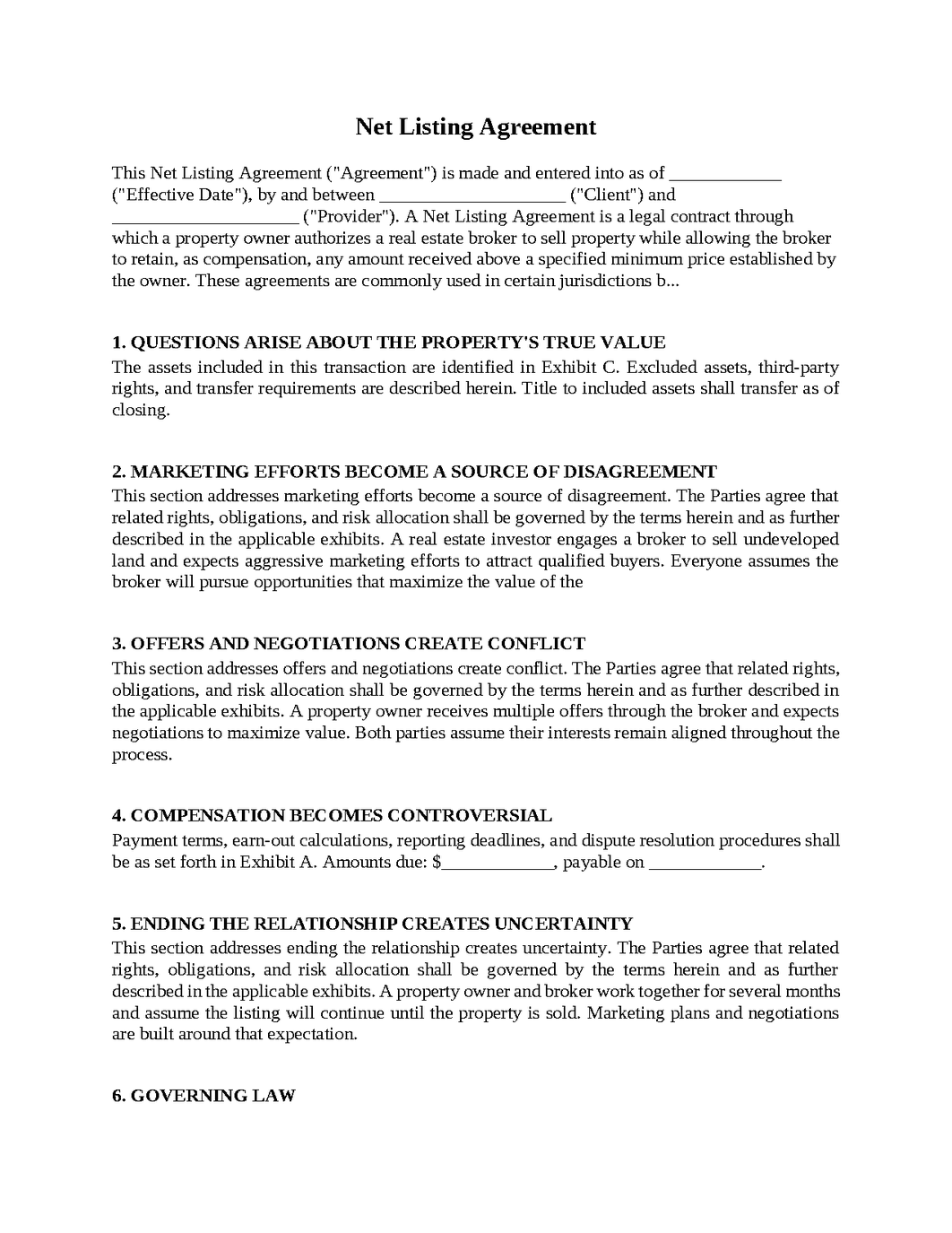
A Net Listing Agreement is a legal contract through which a property owner authorizes a real estate broker to sell property while allowing the broker to retain, as compensation, any amount received above a specified minimum price established by the owner. These agreements are commonly used in certain jurisdictions by property owners, investors, and brokers seeking flexibility in pricing and compensation arrangements. A Net Listing Agreement typically addresses the minimum acceptable sale price, broker responsibilities, marketing obligations, disclosure requirements, compensation arrangements, and procedures governing disputes and termination. Because the broker's compensation depends directly upon the difference between the sale price and the owner's minimum price, disputes can arise when expectations regarding pricing and fiduciary duties are not documented clearly. A carefully drafted Net Listing Agreement helps establish certainty and protect the interests of both property owners and brokers.
Questions Arise About the Property's True Value
A property owner hires a broker to sell a commercial building and establishes a minimum price that would satisfy financial goals. Both parties believe the arrangement will encourage the broker to maximize the value of the transaction.
As marketing efforts progress, several interested buyers express a willingness to pay significantly more than the minimum amount. Concerns arise regarding whether the owner fully understood the market value of the property before entering into the agreement.
The owner believes complete transparency is essential because maximizing the value of the property was a primary objective of the transaction. The broker believes the arrangement incentivizes strong performance and argues that both parties willingly agreed to the pricing structure. As higher offers become available, tensions emerge regarding fairness and compensation.
To help avoid this problem, a Net Listing Agreement should clearly establish pricing expectations and define the broker's fiduciary obligations relating to disclosure and fair dealing.
Marketing Efforts Become a Source of Disagreement
A real estate investor engages a broker to sell undeveloped land and expects aggressive marketing efforts to attract qualified buyers. Everyone assumes the broker will pursue opportunities that maximize the value of the property.
Over time, the owner becomes concerned that marketing activities are limited and that potential buyers are not being reached effectively. Questions arise regarding whether the broker is acting in the owner's best interests.
The owner believes broad exposure is necessary because greater competition may increase the final sale price. The broker believes the existing marketing strategy is sufficient and argues that excessive expenses may not improve results. As the property remains unsold, disagreements emerge regarding performance expectations.
To help prevent these issues, a Net ListingAgreement should clearly establish marketing responsibilities and define the standards applicable to promotional activities.
Offers and Negotiations Create Conflict
A property owner receives multiple offers through the broker and expects negotiations to maximize value. Both parties assume their interests remain aligned throughout the process.
As negotiations continue, concerns arise regarding whether all offers have been presented promptly and whether recommendations are influenced by the broker's compensation structure.
The owner believes every opportunity should be disclosed because informed decision-making depends upon complete information. The broker believes recommendations are based upon experience and argues that achieving a successful closing benefits everyone involved. As offers become more competitive, tensions develop regarding the handling of negotiations.
To help avoid these problems, a Net Listing Agreement should clearly establish disclosure obligations and define the procedures governing negotiations and communications with prospective buyers.
Compensation Becomes Controversial
A property owner and broker enter into an arrangement expecting the sale price to exceed the minimum amount by a reasonable margin. Everyone assumes the compensation structure is fair and transparent.
After the transaction closes, the owner learns that the property sold for substantially more than anticipated. Questions arise regarding whether the broker's compensation is excessive in relation to the services provided.
The owner believes compensation should remain reasonable because fiduciary responsibilities require fairness and transparency. The broker believes the agreement rewarded exceptional efforts and argues that the compensation reflects the value created through successful negotiations. As emotions increase, disagreements emerge regarding the amount retained by the broker.
To help prevent these issues, a Net Listing Agreement should clearly establish compensation provisions and define the obligations associated with the broker's fiduciary duties.
Ending the Relationship Creates Uncertainty
A property owner and broker work together for several months and assume the listing will continue until the property is sold. Marketing plans and negotiations are built around that expectation.
Eventually, changing priorities lead the owner to pursue a different strategy. Questions arise regarding pending offers, marketing expenses, and compensation relating to prospective buyers introduced during the relationship.
The owner believes flexibility is necessary because circumstances affecting the property and market conditions continue to evolve. The broker believes efforts already undertaken deserve protection and expects contractual rights to be respected. As the relationship concludes, disagreements emerge regarding the obligations that survive termination.
To help avoid this problem, a Net Listing Agreement should clearly establish termination procedures and identify the rights and responsibilities that continue after the relationship ends.
Net Listing Agreements are valuable tools that can align incentives and encourage brokers to maximize property values. However, issues involving property valuation, marketing efforts, negotiations, compensation, and post-termination obligations can become significant sources of conflict when expectations are not documented clearly. A carefully drafted Net Listing Agreement provides a structured framework for allocating responsibilities and protecting the interests of both property owners and brokers. When prepared thoughtfully, it can reduce uncertainty, encourage transparency, strengthen professional relationships, and provide the foundation necessary for successful real estate transactions.

Get started with Upsign today!
Easily send, sign and track your documents