

Music Licensing Agreement
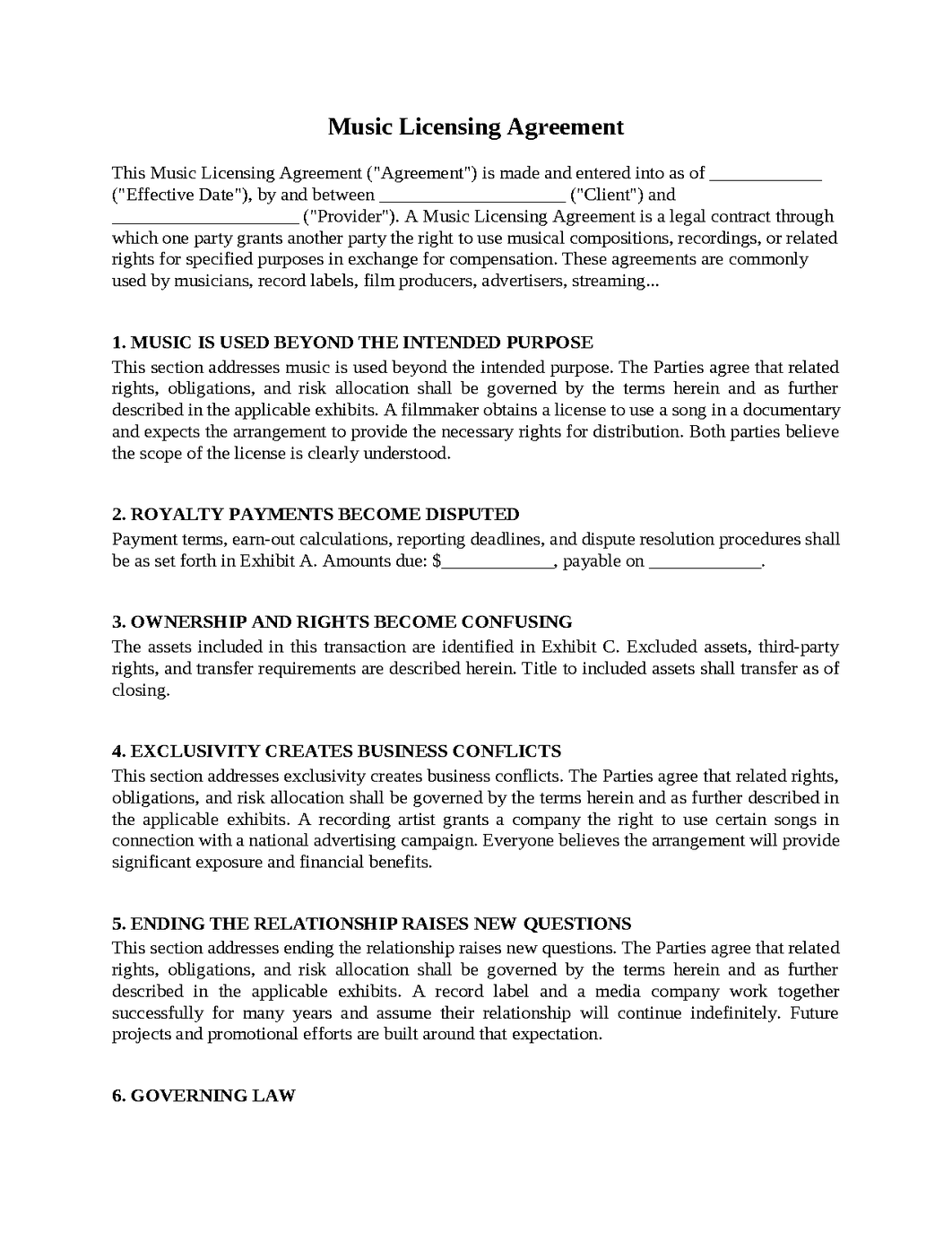
A Music Licensing Agreement is a legal contract through which one party grants another party the right to use musical compositions, recordings, or related rights for specified purposes in exchange for compensation. These agreements are commonly used by musicians, record labels, film producers, advertisers, streaming services, video game developers, and content creators seeking lawful access to copyrighted music. A Music Licensing Agreement typically addresses the scope of use, licensing fees, royalty arrangements, exclusivity provisions, ownership rights, and procedures governing disputes and termination. Because music rights are valuable and different forms of usage may require separate permissions, disputes can arise when expectations regarding rights and compensation are not documented clearly. A carefully drafted Music Licensing Agreement helps establish certainty and protect the interests of both licensors and licensees.
Music Is Used Beyond the Intended Purpose
A filmmaker obtains a license to use a song in a documentary and expects the arrangement to provide the necessary rights for distribution. Both parties believe the scope of the license is clearly understood.
After the documentary gains popularity, the producer begins using portions of the music in promotional campaigns and online advertisements. Questions arise regarding whether those additional uses are covered by the original agreement.
The musician believes the additional uses exceed the rights granted because promotional activities provide separate commercial value. The producer believes the advertising materials support the same project and argues that the uses are consistent with the original purpose of the license. As the audience grows, tensions emerge regarding the scope of the rights granted.
To help avoid this problem, a Music Licensing Agreement should clearly establish permitted uses and define any limitations applicable to the licensed music.
Royalty Payments Become Disputed
A songwriter licenses compositions to a streaming platform and expects compensation to reflect the popularity of the music. Everyone assumes reporting procedures and payment calculations will remain transparent.
As listening volumes increase, questions arise regarding the methods used to calculate royalties and whether all uses have been reported accurately. Different interpretations create uncertainty regarding compensation.
The songwriter believes royalties should reflect the full commercial value generated by the music because the compositions drive audience engagement. The streaming company believes industry formulas and licensing practices support its calculations and argues that payments are being made properly. As revenues increase, disagreements emerge regarding the amount owed.
To help prevent these issues, a Music Licensing Agreement should clearly establish royalty calculations and define reporting requirements.
Ownership and Rights Become Confusing
A music producer licenses recordings to a video game company and expects ownership of the recordings to remain unchanged. Both parties assume the relationship will create opportunities without affecting existing rights.
As the game becomes successful, questions arise regarding derivative works, remixes, and future uses of the recordings. Different expectations create uncertainty regarding ownership.
The producer believes the license only grants limited rights and expects all ownership interests to remain intact. The game company believes modifications and adaptations are necessary to support the user experience and argues that broad usage rights were contemplated. As commercial opportunities expand, tensions develop regarding ownership and creative rights.
To help avoid these problems, a Music Licensing Agreement should clearly establish ownership rights and define the extent to which modifications and derivative works are permitted.
Exclusivity Creates Business Conflicts
A recording artist grants a company the right to use certain songs in connection with a national advertising campaign. Everyone believes the arrangement will provide significant exposure and financial benefits.
Later, another company seeks to license the same music for a competing campaign. Questions arise regarding whether exclusivity provisions prevent additional licensing opportunities.
The artist believes maintaining flexibility is important because future opportunities may increase the value of the music. The advertiser believes exclusivity is essential because the campaign relies on a unique association with the songs. As competing opportunities arise, disagreements emerge regarding exclusivity rights.
To help prevent these issues, a Music Licensing Agreement should clearly establish exclusivity provisions and define any restrictions on future licensing activities.
Ending the Relationship Raises New Questions
A record label and a media company work together successfully for many years and assume their relationship will continue indefinitely. Future projects and promotional efforts are built around that expectation.
Eventually, changing priorities lead one party to terminate the arrangement. Questions arise regarding previously released materials, continuing royalties, and rights associated with existing productions.
The label believes ownership rights should remain protected and expects continued compensation where appropriate. The media company believes existing productions should continue to be distributed because significant investments were made in reliance on the license. As the relationship concludes, disagreements emerge regarding the obligations that survive termination.
To help avoid this problem, a Music Licensing Agreement should clearly establish termination procedures and identify the rights and responsibilities that continue after the relationship ends.
Music Licensing Agreements are valuable tools that allow artists and businesses to collaborate while preserving ownership rights and creating commercial opportunities. However, issues involving unauthorized uses, royalty disputes, ownership concerns, exclusivity provisions, and post-termination rights can become significant sources of conflict when expectations are not documented clearly. A carefully drafted Music Licensing Agreement provides a structured framework for allocating responsibilities and protecting the interests of both licensors and licensees. When prepared thoughtfully, it can reduce uncertainty, strengthen business relationships, encourage creativity, and provide the foundation necessary for successful music licensing arrangements.

Get started with Upsign today!
Easily send, sign and track your documents