

Model Release
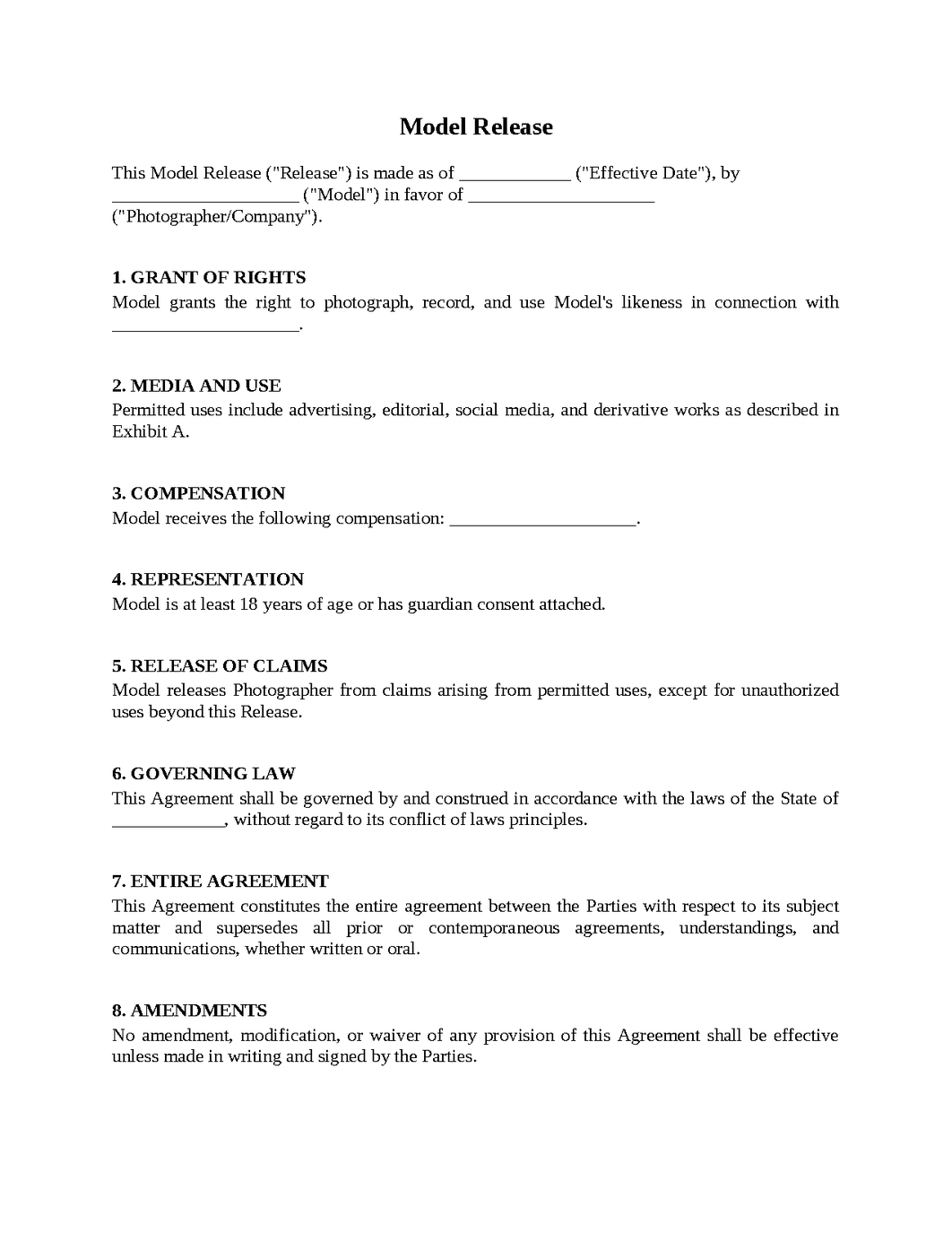
A Model Release is a legal agreement through which an individual grants permission for their name, image, likeness, voice, appearance, or other identifying characteristics to be photographed, recorded, filmed, published, distributed, or otherwise used by another party. Model Releases are commonly used in advertising campaigns, marketing materials, social media content, websites, television productions, films, photography projects, corporate communications, educational materials, and commercial publications. The purpose of a Model Release is to establish clear rights regarding the use of a person's likeness and to reduce the risk of future disputes concerning publicity, privacy, or compensation. Because images and recordings can be distributed widely and remain accessible for years, disagreements can arise when the parties have different expectations regarding how the content will be used. A carefully drafted Model Release helps protect both the individual and the organization using the content.
The Model Objects to a New Use of the Images
A photographer hires a model to participate in a professional photo shoot for a local advertising campaign.
At the time of the shoot, the model understands that the images will be used primarily in regional marketing materials and promotional content. The project proceeds successfully, and both parties are satisfied with the results.
Several years later, the company expands its operations and begins using the photographs in national advertising campaigns, online promotions, and social media content. The model becomes surprised by the broader exposure and questions whether such extensive use was ever contemplated.
The company believes the Model Release granted broad rights to use the images in future marketing efforts. The model believes the original understanding was far more limited and did not include widespread commercial distribution.
The disagreement develops because the parties have different interpretations of how broadly the content could be used after the photo shoot ended.
To help avoid this problem, a Model Release should clearly describe the permitted uses of the content, identify any geographic or media limitations, and explain whether future uses are authorized.
The Model Expects Additional Compensation
A clothing company conducts a photo shoot featuring several models for a seasonal marketing campaign.
Each participant receives compensation at the time of the shoot and signs a Model Release authorizing the use of the images. The company launches the campaign and experiences significant success.
Over time, certain photographs become central to the company's branding efforts and continue appearing in promotional materials for years. One model begins to believe that the ongoing use of the images justifies additional compensation beyond the original payment.
The company maintains that the compensation paid at the time of the shoot covered all authorized uses identified in the release. The model believes the value of the images far exceeded what either party anticipated.
The disagreement centers on whether future success creates any additional payment obligations.
To help prevent these issues, a Model Release should clearly address compensation and specify whether the individual is entitled to any future payments resulting from continued use of the content.
Content Appears Alongside Unanticipated Material
A nonprofit organization produces a series of videos and photographs highlighting community programs and outreach efforts.
Volunteers and participants sign Model Releases allowing the organization to use their likenesses in promotional materials. Initially, the content appears exactly as expected and supports the organization's mission.
Years later, the organization partners with outside sponsors and incorporates older images into new campaigns. Some individuals become uncomfortable because their likeness now appears alongside messaging, products, or initiatives they never anticipated.
The organization believes the Model Release authorizes the use of the content in connection with its activities. The individuals believe the new context creates associations they never intended to support.
The disagreement arises not from the images themselves but from how they are being presented.
To help avoid these problems, a Model Release should clearly describe the intended uses of the content and address whether future modifications, partnerships, or promotional contexts are permitted.
A Parent Questions the Use of a Child's Image
A youth organization hosts an event that includes photography and video recording for promotional purposes.
Parents are asked to sign Model Releases on behalf of participating children. Most parents complete the paperwork quickly because the event appears routine and community-oriented.
Months later, a parent discovers that images of a child have been featured prominently in online marketing materials and social media campaigns. The parent becomes concerned about privacy, visibility, and the long-term availability of the content.
The organization believes it obtained proper authorization through the signed release. The parent believes the extent of the usage was never fully explained.
The disagreement becomes particularly sensitive because it involves a minor and the parent's responsibility to protect the child's interests.
To help avoid these problems, a Model Release should clearly address participation by minors, explain how images may be used, and ensure that parents or guardians understand the scope of the authorization being granted.
Ownership and Editing Rights Become Disputed
A production company creates marketing materials featuring professional models and actors.
The participants sign Model Releases and the company invests significant resources into producing the final content. During the editing process, images are modified, cropped, combined with graphics, and incorporated into larger campaigns.
One participant later objects to the edited presentation and believes the modifications create an inaccurate impression. The production company believes it has the right to edit and adapt the content as necessary for creative and marketing purposes.
Both parties agree that the original images were authorized, but they disagree regarding how much control the participant retains once the content is created.
The dispute becomes focused on creative control rather than the initial use of the images.
To help prevent these issues, a Model Release should clearly define editing rights, ownership rights, and the extent to which photographs, videos, and recordings may be modified after creation.
Model Releases are essential tools for managing the use of photographs, videos, and other content featuring identifiable individuals. However, issues involving future uses, compensation expectations, promotional contexts, parental consent, and editing rights can become significant sources of conflict when expectations are not documented clearly. A carefully drafted Model Release provides a structured framework for allocating rights and establishing clear permissions before content is created and distributed. When prepared thoughtfully, it can reduce misunderstandings, protect privacy interests, support marketing and creative efforts, and provide certainty for everyone involved.

Get started with Upsign today!
Easily send, sign and track your documents