

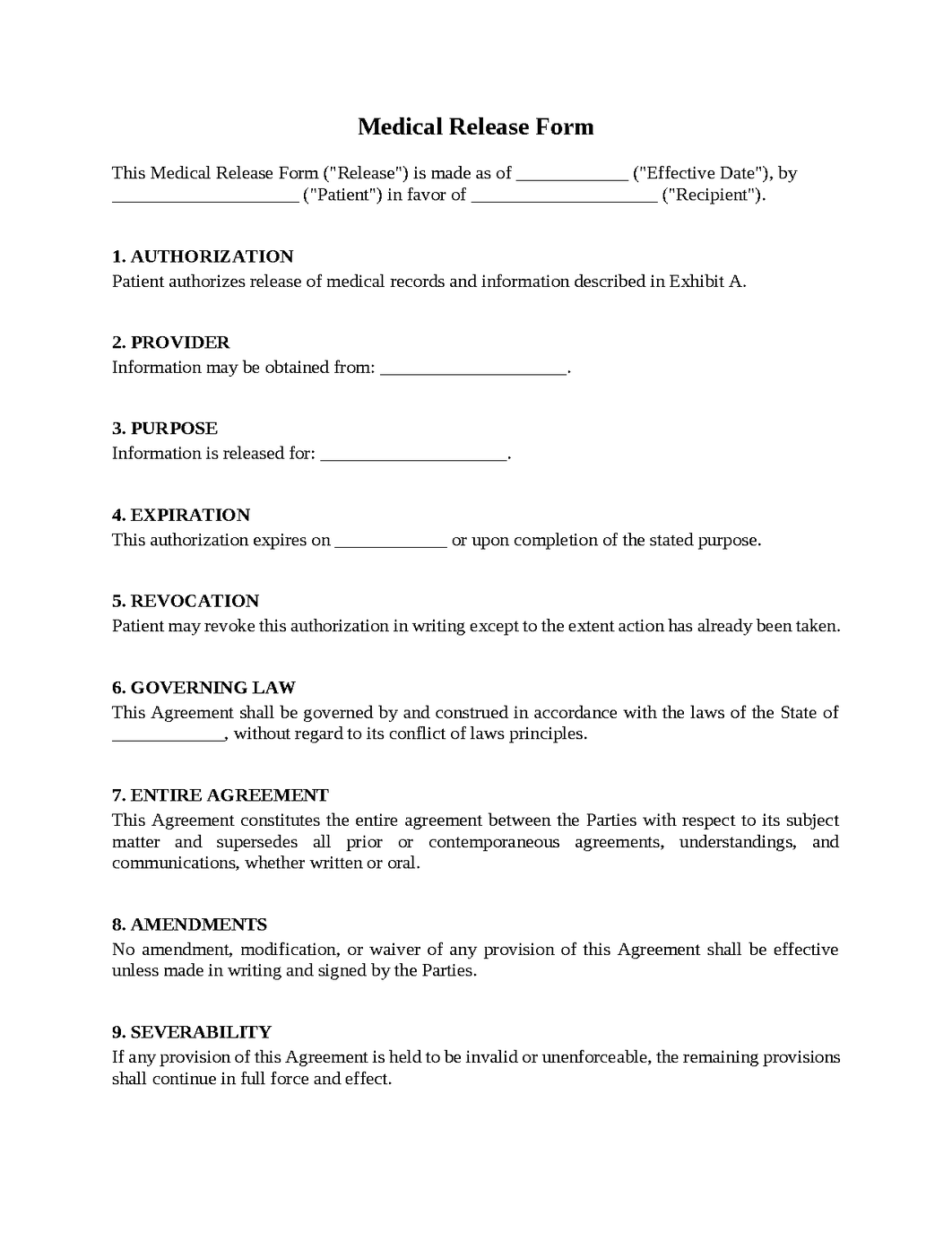
Medical Release Form
A Medical Release Form is a legal document that authorizes healthcare providers to disclose medical information, provide treatment, or communicate with designated individuals regarding a patient's healthcare needs. These forms are commonly used by parents, guardians, caregivers, schools, sports organizations, employers, travel groups, healthcare facilities, and individuals who want others to assist with medical decisions or access healthcare information. Depending on the circumstances, a Medical Release Form may authorize emergency treatment, allow access to medical records, or permit healthcare providers to communicate with designated representatives. Because medical decisions often involve sensitive information, urgent situations, and legal privacy requirements, disputes can arise when the scope of authority or consent is not documented clearly. A carefully drafted Medical Release Form helps protect patients, caregivers, and healthcare providers while facilitating timely and appropriate medical care.
Emergency Treatment Is Needed When a Parent Cannot Be Reached
A child travels with grandparents on an extended vacation during summer break.
Before departure, the parents provide contact information and basic health details but do not spend much time considering potential medical emergencies. Everyone assumes the trip will proceed without incident.
Several days into the trip, the child experiences a serious injury that requires immediate medical attention. Hospital staff attempt to contact the parents but are unable to reach them quickly because they are traveling internationally.
The grandparents want treatment to begin immediately and believe they have the parents' full support. Medical providers, however, need confirmation regarding who has authority to consent to treatment before proceeding with certain decisions.
The delay creates stress for everyone involved because urgent medical needs must be balanced against legal requirements governing consent.
To help avoid this problem, a Medical Release Form should clearly identify authorized caregivers, provide emergency contact information, and establish authority for medical treatment when parents or guardians are unavailable.
Healthcare Providers Disagree About Information Sharing
An elderly individual receives ongoing treatment from multiple healthcare providers.
To simplify communication, the patient signs a Medical Release Form allowing certain family members to receive information regarding appointments, medications, and treatment plans. Initially, the arrangement helps everyone coordinate care effectively.
As medical conditions become more complex, questions arise regarding what information may be shared and with whom. Some healthcare providers interpret the authorization broadly, while others believe the release permits only limited disclosures.
Family members become frustrated when certain providers refuse to discuss treatment details despite the existence of the release form. The providers remain concerned about privacy obligations and potential regulatory requirements.
The disagreement creates confusion at a time when clear communication is especially important.
To help prevent these issues, a Medical Release Form should clearly identify authorized recipients, define the information that may be disclosed, and describe any limitations on information sharing.
The Scope of Medical Authority Is Unclear
A parent authorizes a school-sponsored travel program to obtain medical treatment for a student if necessary during an out-of-state trip.
The Medical Release Form is completed quickly before departure and receives little additional attention. Everyone assumes the document will be sufficient if a medical issue arises.
During the trip, the student develops a condition requiring treatment decisions beyond routine care. Program leaders believe they have authority to approve the recommended treatment based on the release.
The parents later question whether the authorization extended to the particular medical decisions that were made. They believe certain choices should have required direct parental approval whenever possible.
The disagreement centers on the extent of authority that was actually granted under the release.
To help avoid these problems, a Medical Release Form should clearly define the decisions that authorized individuals may make and identify any limitations on medical decision-making authority.
The Release Form Is Outdated
A family completes a Medical Release Form before sending a child to participate in a year-long extracurricular program.
At the time the form is signed, all medical information is accurate and complete. Over the following months, however, important changes occur involving medications, allergies, healthcare providers, and insurance coverage.
When a medical issue later arises, caregivers and healthcare providers rely on the information contained in the release form. Only then do they discover that portions of the information are no longer current.
The caregivers believe they acted appropriately based on the information available. The family becomes concerned because outdated information may have affected treatment decisions.
The situation becomes more complicated because no one realized the form needed to be updated.
To help prevent these issues, a Medical Release Form should be reviewed periodically and updated whenever significant changes occur involving medical conditions, medications, insurance information, or healthcare providers.
Family Members Disagree About Medical Decisions
An adult patient signs a Medical Release Form authorizing multiple family members to assist with healthcare matters.
The arrangement works well while the patient remains capable of participating actively in treatment decisions. Over time, however, the patient's condition worsens and family members become more involved in healthcare discussions.
Different relatives develop conflicting opinions regarding treatment options, care plans, and medical recommendations. Each family member believes they are acting in the patient's best interests.
Healthcare providers become uncertain regarding whose instructions should be followed and how much authority the release actually provides. The disagreement begins affecting important medical decisions.
What started as a convenience for coordinating care becomes a source of family conflict during a difficult time.
To help avoid these problems, a Medical Release Form should clearly identify authorized individuals, define the scope of their authority, and coordinate with any other healthcare decision-making documents that may govern treatment decisions.
Medical Release Forms are important tools for facilitating healthcare communication and ensuring that treatment can proceed when assistance or authorization is needed. However, issues involving emergency treatment, information sharing, medical authority, outdated information, and family disagreements can become significant sources of conflict when expectations are not documented clearly. A carefully drafted Medical Release Form provides a structured framework for protecting patients while supporting healthcare providers and caregivers in making informed decisions. When prepared thoughtfully, it can reduce delays, improve communication, support effective medical care, and provide greater certainty during both routine and emergency situations.

Get started with Upsign today!
Easily send, sign and track your documents