

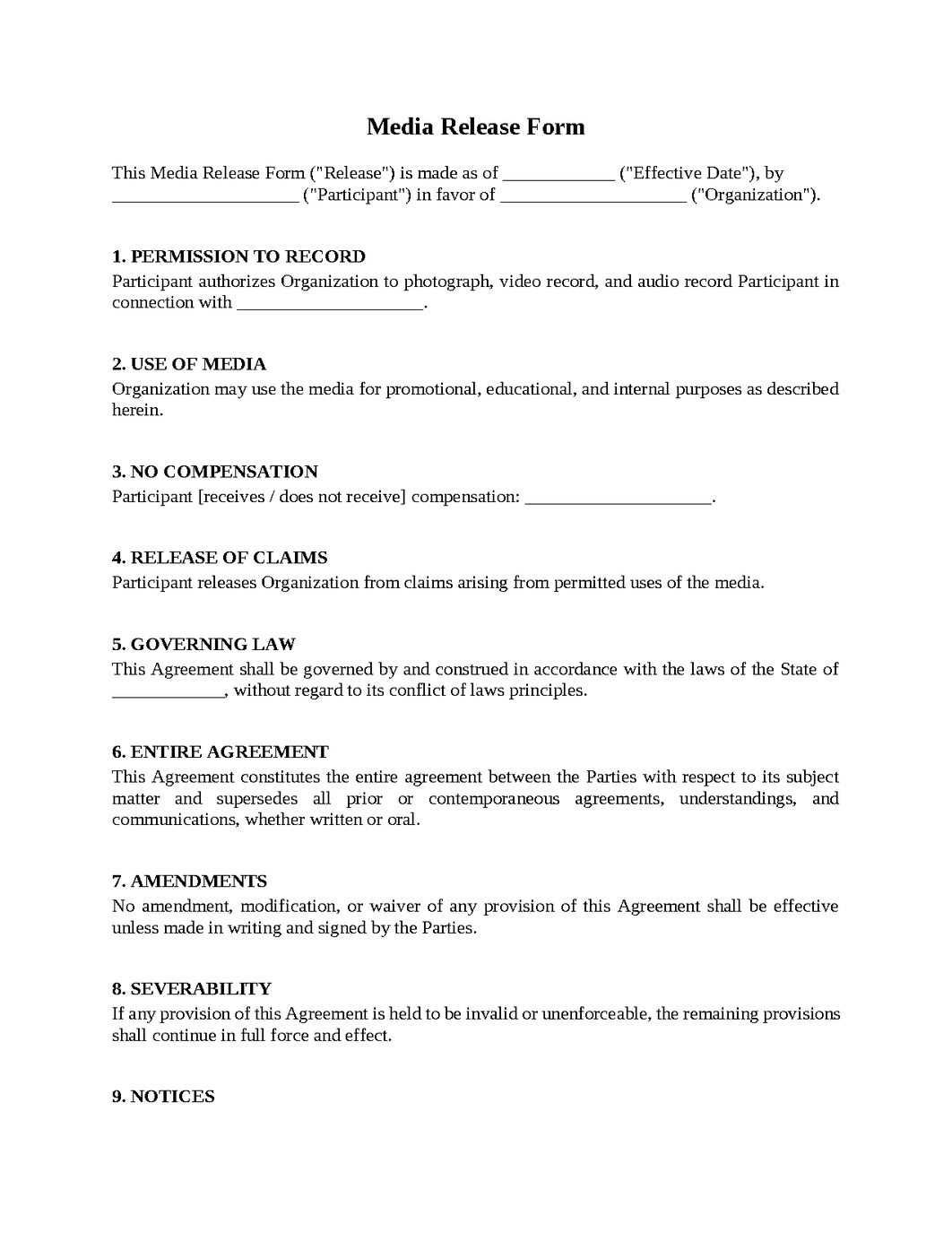
Media Release Form
A Media Release Form is a legal agreement through which an individual grants permission for their image, likeness, voice, name, statements, photographs, videos, recordings, or other identifying characteristics to be used in media content created, published, distributed, or promoted by another party. Media Release Forms are commonly used by businesses, schools, churches, nonprofits, sports organizations, government agencies, marketing firms, event organizers, content creators, and media companies. Unlike a Photo Release Form or Video Release Form, a Media Release Form often covers multiple forms of media simultaneously, including print publications, websites, social media platforms, advertisements, television broadcasts, podcasts, and promotional campaigns. Because media content can reach large audiences and remain accessible indefinitely, disputes can arise when expectations regarding use, distribution, and compensation are not documented clearly. A carefully drafted Media Release Form helps establish clear rights while protecting both the participant and the organization using the content.
Content Is Distributed Far More Widely Than Expected
A nonprofit organization hosts a community event and captures photographs, videos, interviews, and testimonials from attendees.
Participants are informed that media content may be used to support the organization's mission and many individuals willingly participate. The organization later creates newsletters, social media posts, and website content featuring selected materials.
Several years later, the organization launches a major national awareness campaign and reuses portions of the original content across multiple platforms. One participant becomes surprised to discover that an interview and photographs recorded years earlier are now appearing in advertising, fundraising materials, and public presentations.
The organization believes the Media Release Form authorized broad use of the content. The participant believes the original understanding was limited to local communications and routine event promotion.
The disagreement develops because the parties never fully discussed the potential scope of future media distribution.
To help avoid this problem, a Media Release Form should clearly identify authorized media channels and explain whether future promotional, advertising, fundraising, or nationwide uses are permitted.
A Participant Objects to Being Associated With New Messaging
A company records customer testimonials as part of a marketing initiative.
The participants share positive experiences and sign Media Release Forms authorizing use of the resulting content. The campaign is initially launched exactly as described, and no concerns are raised.
Over time, however, the company changes its branding strategy and incorporates the existing content into campaigns that emphasize different products, services, or messaging. One participant becomes uncomfortable with the new presentation and believes the content now implies support for positions that were never discussed.
The company believes the content remains accurate and that the release authorizes continued use. The participant believes the new context creates associations that were never intended.
The dispute focuses less on the content itself and more on the evolving message surrounding it.
To help prevent these issues, a Media Release Form should clearly address future uses of the content and explain whether the material may be used in connection with new campaigns, products, or initiatives.
Employees Disagree About Corporate Media Use
A business regularly creates internal and external media content featuring employees.
Workers participate in interviews, training videos, recruiting campaigns, and promotional materials designed to highlight company culture. Many employees sign Media Release Forms as part of routine business operations.
After leaving the company, one former employee discovers that videos and photographs continue to appear on recruiting websites and marketing materials. The individual no longer wishes to be publicly associated with the organization.
The company believes the media was created pursuant to valid authorization and remains valuable to its branding efforts. The former employee believes continued use is unfair given the end of the employment relationship.
The disagreement creates tension because both parties have legitimate interests in how the content is used.
To help avoid these problems, a Media Release Form should clearly address the duration of usage rights and explain whether authorization continues after employment or participation ends.
Recordings of Minors Become a Source of Concern
A youth organization records activities, performances, competitions, and educational programs throughout the year.
Parents are asked to sign Media Release Forms allowing the organization to use photographs, videos, and recordings for promotional purposes. Most parents agree because they support the organization's mission and activities.
Months later, a parent discovers that a child appears prominently in a public-facing media campaign that receives significant online attention. The parent becomes concerned about privacy, online exposure, and the permanence of digital content.
The organization believes it obtained appropriate permission through the signed release. The parent believes the level of exposure exceeded what was originally anticipated.
The disagreement becomes particularly sensitive because it involves a minor and long-term privacy considerations.
To help prevent these issues, a Media Release Form should clearly explain how media involving minors may be used and ensure that parents or guardians fully understand the scope of the authorization being granted.
Third Parties Reuse the Media Content
A company creates a successful marketing campaign featuring customer interviews, photographs, and video footage.
The participants sign Media Release Forms and understand that the company will use the content for business purposes. As the campaign gains attention, the company begins sharing content with affiliates, sponsors, advertising agencies, and strategic partners.
One participant later learns that organizations unrelated to the original project are using portions of the content in their own materials. The participant becomes concerned that the content is circulating far beyond the original audience.
The company believes the sharing is consistent with ordinary marketing practices and authorized by the release. The participant believes permission was granted only for use by the original organization.
The disagreement centers on who ultimately has the right to access and use the media.
To help avoid these problems, a Media Release Form should clearly identify authorized users and explain whether affiliates, contractors, partners, successors, sponsors, and other third parties may use the content.
Media Release Forms are essential tools for managing the creation and use of photographs, videos, recordings, interviews, and other media involving identifiable individuals. However, issues involving widespread distribution, changing messaging, former employees, recordings of minors, and third-party usage rights can become significant sources of conflict when expectations are not documented clearly. A carefully drafted Media Release Form provides a structured framework for establishing permissions and allocating rights before content is created and distributed. When prepared thoughtfully, it can reduce misunderstandings, protect privacy interests, support communication and marketing efforts, and provide certainty for all parties involved.

Get started with Upsign today!
Easily send, sign and track your documents