

Lien Release
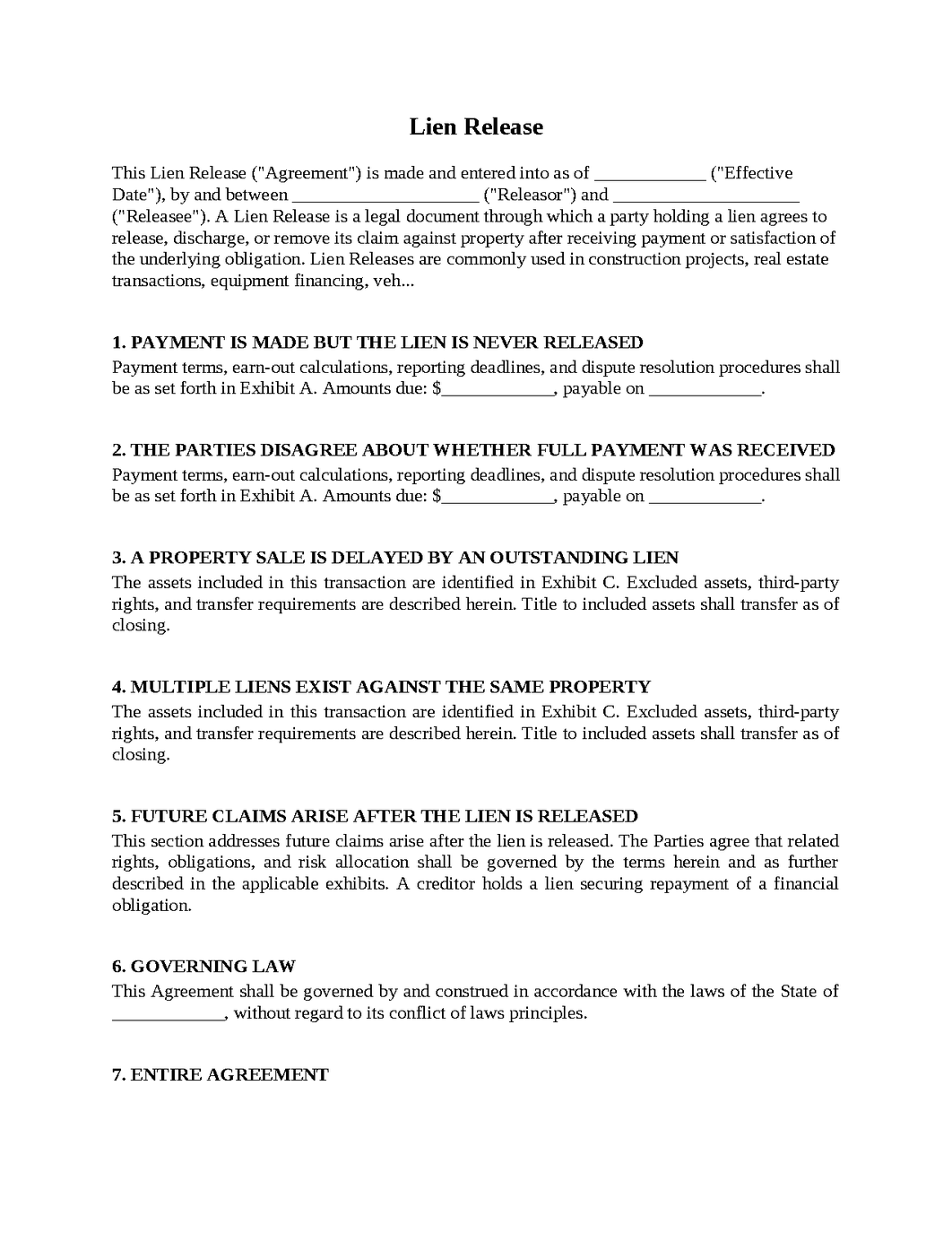
A Lien Release is a legal document through which a party holding a lien agrees to release, discharge, or remove its claim against property after receiving payment or satisfaction of the underlying obligation. Lien Releases are commonly used in construction projects, real estate transactions, equipment financing, vehicle loans, mechanic's lien matters, commercial lending, and debt settlements. The purpose of a Lien Release is to provide clear evidence that the lienholder no longer claims an interest in the property and that the owner's title or ownership rights are no longer encumbered by the lien. Because liens affect ownership rights, financing opportunities, and property transfers, disputes can arise when expectations regarding payment, release timing, or the scope of the release are not documented clearly. A carefully drafted Lien Release helps provide certainty and prevent future disputes regarding the status of the lien.
Payment Is Made but the Lien Is Never Released
A property owner hires a contractor to complete a substantial renovation project.
After the work is completed, a payment dispute arises and the contractor records a lien against the property. The lien creates complications because the owner is attempting to refinance the property and lenders require clear title before proceeding.
Eventually, the parties negotiate a resolution and the owner pays the agreed amount. The owner assumes the lien will be removed promptly and moves forward with financing plans.
Weeks later, the lien remains on record. The contractor believes administrative delays or paperwork issues explain the situation. The owner becomes increasingly frustrated because the unresolved lien continues interfering with financial transactions.
What should have been a straightforward resolution becomes a dispute regarding whether the lien was properly released.
To help avoid this problem, a Lien Release should clearly identify the lien being discharged and establish procedures for recording and delivering the release promptly after payment.
The Parties Disagree About Whether Full Payment Was Received
A subcontractor performs work on a commercial construction project.
Following project completion, a lien is recorded to secure payment for services provided. Several months later, the property owner and subcontractor negotiate a payment arrangement intended to resolve the dispute.
The property owner believes the payment satisfies the entire obligation and expects a Lien Release in return. The subcontractor believes certain change orders, additional services, or interest charges remain unpaid.
Both parties point to different records and communications to support their positions. The property owner argues that the lien should be removed immediately. The subcontractor believes releasing the lien prematurely could eliminate important collection rights.
The disagreement focuses on whether the debt has actually been satisfied.
To help prevent these issues, a Lien Release should clearly identify the payment being received and specify whether the release is contingent upon full satisfaction of all amounts owed.
A Property Sale Is Delayed by an Outstanding Lien
A homeowner decides to sell a property after years of ownership.
During the title review process, a lien from a prior dispute appears in the public records. The homeowner believes the matter was resolved long ago and is surprised to discover that the lien remains attached to the property.
The prospective buyer becomes concerned because clear title is required before closing can occur. The homeowner contacts the lienholder and requests a release.
The lienholder believes additional documentation or verification is necessary before issuing the release. The homeowner argues that the underlying obligation was satisfied years earlier.
The transaction becomes delayed while the parties attempt to resolve the status of the lien.
To help avoid these problems, a Lien Release should be executed and recorded promptly once the underlying obligation has been satisfied.
Multiple Liens Exist Against the Same Property
A construction project involves numerous contractors, subcontractors, suppliers, and lenders.
Over time, several liens are recorded against the property by different parties. As disputes are resolved, certain lienholders agree to release their claims while others continue asserting rights.
A property owner receives a Lien Release from one party and assumes that all lien-related issues have been resolved. Later, the owner discovers that other liens remain in place and continue affecting title to the property.
Confusion develops regarding which claims were released and which obligations remain outstanding. Each lienholder maintains different rights and priorities.
The owner realizes that removing one lien does not necessarily eliminate all encumbrances affecting the property.
To help prevent these issues, a Lien Release should clearly identify the specific lien being discharged and distinguish it from other liens or claims that may remain in effect.
Future Claims Arise After the Lien Is Released
A creditor holds a lien securing repayment of a financial obligation.
After receiving payment, the creditor executes a Lien Release and removes the claim against the property. Both parties believe the matter has been concluded successfully.
Months later, a dispute arises regarding fees, interest, penalties, or other obligations that allegedly survived the payment and release process. The creditor believes certain rights remain enforceable despite releasing the lien.
The property owner argues that the release was intended to resolve the entire matter and eliminate any future claims associated with the debt.
The disagreement focuses on whether the release affected only the lien itself or also eliminated related contractual obligations.
To help avoid these problems, a Lien Release should clearly describe the effect of the release and identify any rights, obligations, or claims that survive after the lien is discharged.
Lien Releases are essential documents for clearing title, resolving payment disputes, and confirming that property is no longer subject to a lienholder's claim. However, issues involving payment verification, delayed releases, property sales, multiple liens, and surviving obligations can become significant sources of conflict when expectations are not documented clearly. A carefully drafted Lien Release provides a structured framework for documenting the discharge of lien rights and protecting all parties involved. When prepared thoughtfully, it can reduce uncertainty, facilitate transactions, preserve property rights, and provide the finality necessary for everyone to move forward with confidence.

Get started with Upsign today!
Easily send, sign and track your documents