

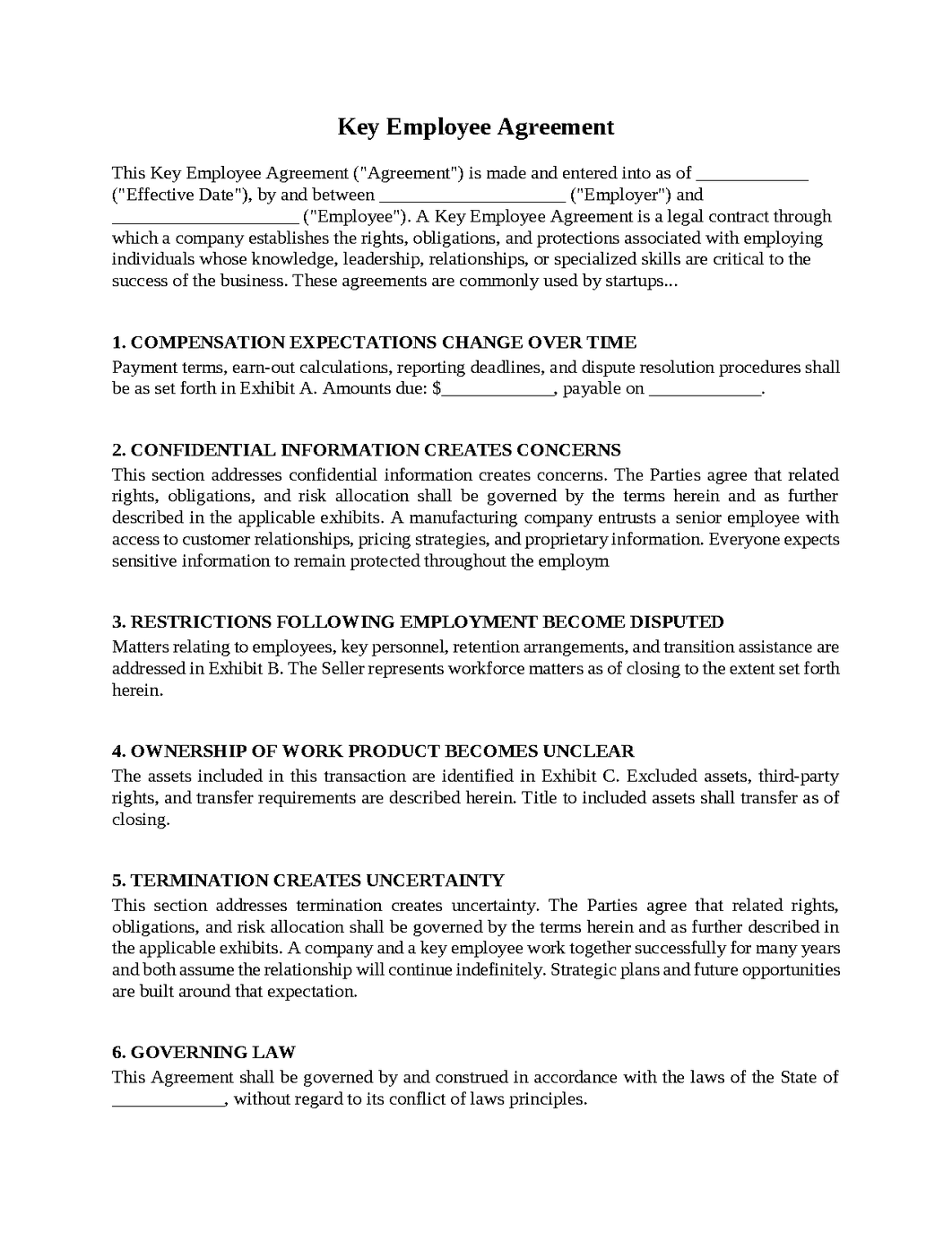
Key Employee Agreement
A Key Employee Agreement is a legal contract through which a company establishes the rights, obligations, and protections associated with employing individuals whose knowledge, leadership, relationships, or specialized skills are critical to the success of the business. These agreements are commonly used by startups, professional service firms, manufacturers, healthcare organizations, financial institutions, and technology companies seeking to retain valuable talent and protect business interests. A Key Employee Agreement typically addresses compensation, confidentiality obligations, restrictive covenants, intellectual property rights, termination provisions, and procedures governing disputes. Because key employees often possess sensitive information and play important leadership roles, disputes can arise when expectations regarding responsibilities and future rights are not documented clearly. A carefully drafted Key Employee Agreement helps establish certainty and protect the interests of both employers and employees.
Compensation Expectations Change Over Time
A rapidly growing company hires a senior executive and expects the individual's leadership to contribute significantly to future success. Both parties believe the compensation package fairly reflects the responsibilities associated with the position.
As the business expands, the executive assumes additional responsibilities and helps generate substantial growth. Questions eventually arise regarding bonuses, equity incentives, and whether compensation remains competitive with market opportunities.
The employee believes increased contributions justify enhanced compensation because the success of the company depends heavily on leadership and expertise. Management believes compensation arrangements were established thoughtfully and argues that rewards should remain consistent with long-term financial objectives. As expectations evolve, tensions emerge regarding fairness and future incentives.
To help avoid this problem, a Key Employee Agreement should clearly establish compensation arrangements and define the procedures governing bonuses, incentives, and changes to benefits.
Confidential Information Creates Concerns
A manufacturing company entrusts a senior employee with access to customer relationships, pricing strategies, and proprietary information. Everyone expects sensitive information to remain protected throughout the employment relationship.
Over time, competitors begin introducing similar products and management becomes concerned about the security of confidential information. Questions arise regarding whether important business information has been adequately safeguarded.
The company believes protecting confidential information is essential because competitive advantages depend upon secrecy and trust. The employee believes reasonable precautions have been taken and argues that general knowledge and experience cannot be restricted completely. As concerns increase, disagreements emerge regarding confidentiality obligations.
To help prevent these issues, a Key Employee Agreement should clearly establish confidentiality requirements and define how proprietary information must be protected.
Restrictions Following Employment Become Disputed
A software company employs a highly skilled executive and expects the relationship to continue for many years. Both parties assume their interests are aligned and focus on long-term growth.
Eventually, the employee receives an attractive opportunity from another organization. Questions arise regarding noncompetition provisions, customer relationships, and restrictions on future employment.
The company believes reasonable restrictions are necessary because years of investment and customer goodwill deserve protection. The employee believes career opportunities should not be limited unnecessarily and argues that restrictive provisions should be interpreted narrowly. As the separation approaches, tensions develop regarding post-employment obligations.
To help avoid these problems, a Key Employee Agreement should clearly establish restrictive covenants and define the limitations applicable after employment ends.
Ownership of Work Product Becomes Unclear
A technology company relies on a key employee to develop innovative products and improve business processes. Everyone expects the resulting work to benefit the organization and support future growth.
As valuable ideas and inventions emerge, questions arise regarding ownership rights and whether certain developments belong to the employee or the company.
The employer believes work performed in connection with the employee's duties should belong to the business because compensation and resources made the innovations possible. The employee believes certain concepts originated independently and argues that not every idea should automatically transfer to the company. As the value of the innovations increases, disagreements emerge regarding ownership.
To help prevent these issues, a Key Employee Agreement should clearly establish intellectual property rights and define which creations belong to the employer.
Termination Creates Uncertainty
A company and a key employee work together successfully for many years and both assume the relationship will continue indefinitely. Strategic plans and future opportunities are built around that expectation.
Eventually, changing priorities and personal circumstances lead to the end of the employment relationship. Questions arise regarding severance benefits, access to information, customer relationships, and ongoing obligations.
The employee believes years of service justify a fair transition and continued access to promised benefits. The employer believes protecting operations and preserving business continuity are equally important and expects contractual obligations to remain enforceable. As the relationship concludes, disagreements emerge regarding the rights and responsibilities that survive termination.
To help avoid this problem, a Key Employee Agreement should clearly establish termination procedures and identify the obligations that continue after employment ends.
Key Employee Agreements are valuable tools that allow businesses to retain critical talent while protecting valuable information and relationships. However, issues involving compensation, confidentiality, restrictive covenants, intellectual property ownership, and post-employment obligations can become significant sources of conflict when expectations are not documented clearly. A carefully drafted Key Employee Agreement provides a structured framework for allocating responsibilities and protecting the interests of both employers and employees. When prepared thoughtfully, it can reduce uncertainty, strengthen working relationships, encourage loyalty, and provide the foundation necessary for long-term organizational success.

Get started with Upsign today!
Easily send, sign and track your documents