

Investor Rights Agreement
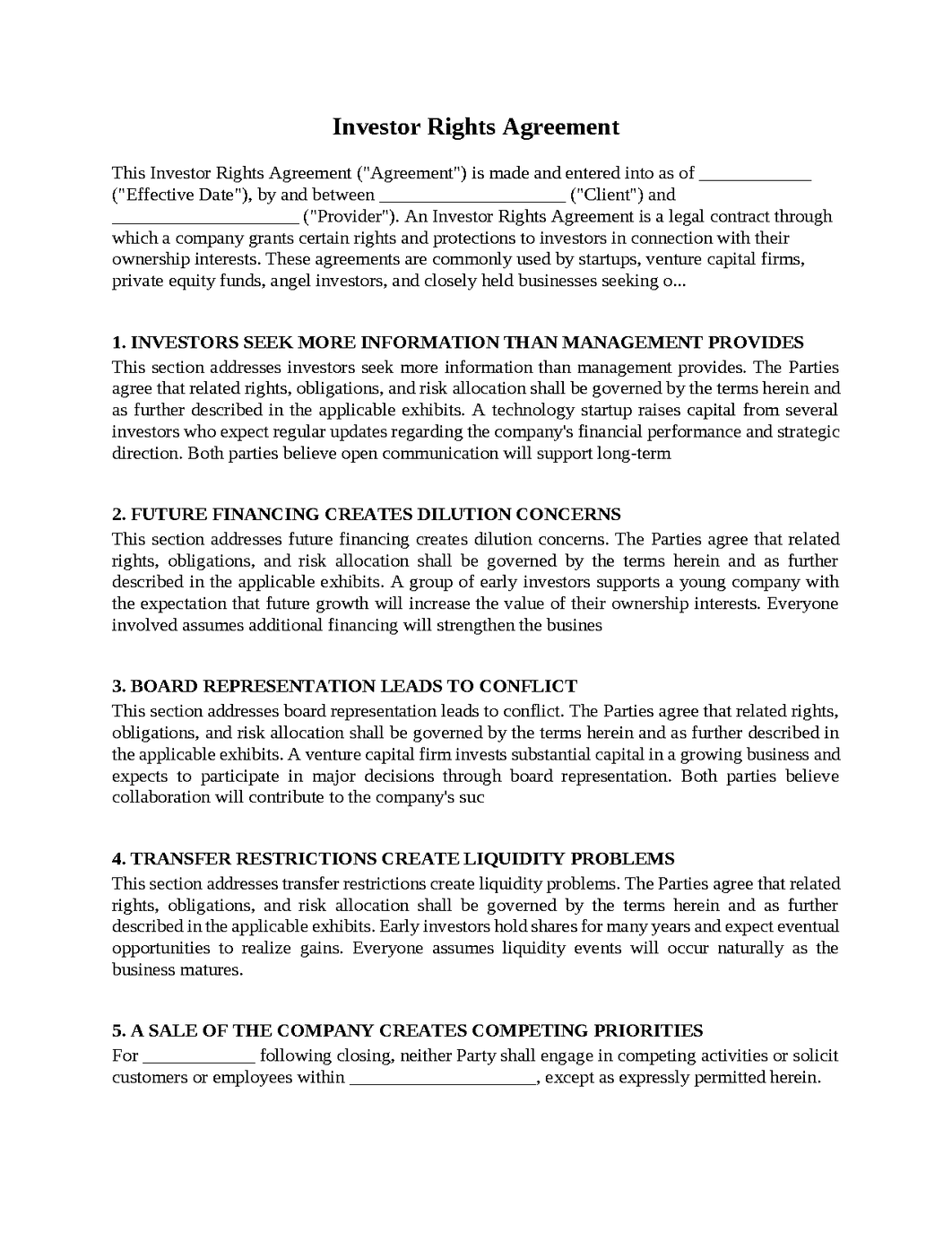
An Investor Rights Agreement is a legal contract through which a company grants certain rights and protections to investors in connection with their ownership interests. These agreements are commonly used by startups, venture capital firms, private equity funds, angel investors, and closely held businesses seeking outside capital. An Investor Rights Agreement typically addresses information rights, registration rights, participation rights, board representation, transfer restrictions, and procedures governing disputes and termination. Because investors and founders often have different priorities regarding growth, control, and liquidity, disputes can arise when expectations regarding rights and responsibilities are not documented clearly. A carefully drafted Investor Rights Agreement helps establish certainty and protect the interests of both investors and the company.
Investors Seek More Information Than Management Provides
A technology startup raises capital from several investors who expect regular updates regarding the company's financial performance and strategic direction. Both parties believe open communication will support long-term growth and trust.
Initially, management provides reports and communicates frequently with investors. As the business grows and operational demands increase, updates become less frequent and financial information is delayed.
The investors believe timely information is essential because they committed capital based upon the expectation of transparency and accountability. Management believes excessive reporting requirements divert attention from running the business and argues that long-term success should remain the primary focus. As communication deteriorates, tensions emerge regarding access to information.
To help avoid this problem, an Investor Rights Agreement should clearly establish information rights and define the timing and scope of required reporting.
Future Financing Creates Dilution Concerns
A group of early investors supports a young company with the expectation that future growth will increase the value of their ownership interests. Everyone involved assumes additional financing will strengthen the business.
Several years later, management seeks new investors to support expansion. Existing investors become concerned that their ownership percentages will decline significantly.
The original investors believe they should have the opportunity to maintain their ownership because they accepted risks during the company's earliest stages. Management believes new capital is necessary to continue growing and argues that attracting additional investors benefits everyone involved. As financing discussions progress, disagreements emerge regarding dilution and participation rights.
To help prevent these issues, an Investor Rights Agreement should clearly establish participation rights and define how future financing rounds will affect existing investors.
Board Representation Leads to Conflict
A venture capital firm invests substantial capital in a growing business and expects to participate in major decisions through board representation. Both parties believe collaboration will contribute to the company's success.
As the company expands, disagreements arise regarding strategy, acquisitions, and operational priorities. Management and investors begin viewing important decisions differently.
The investors believe board representation is necessary because their financial commitment entitles them to oversight and involvement. Management believes operational flexibility is essential and argues that excessive investor influence may hinder innovation. As strategic disagreements intensify, tensions emerge regarding governance.
To help avoid these problems, an Investor Rights Agreement should clearly establish governance rights and define the authority associated with board participation.
Transfer Restrictions Create Liquidity Problems
Early investors hold shares for many years and expect eventual opportunities to realize gains. Everyone assumes liquidity events will occur naturally as the business matures.
Unexpected personal circumstances eventually lead certain investors to seek a sale of their interests. Questions arise regarding transfer restrictions and the rights of other shareholders.
The investors believe they should have reasonable flexibility to sell their interests because ownership represents a valuable asset. Management and other shareholders believe restrictions are necessary to preserve stability and maintain control over ownership. As financial pressures increase, disagreements emerge regarding transfer rights.
To help prevent these issues, an Investor Rights Agreement should clearly establish transfer restrictions and define the procedures governing sales and assignments of ownership interests.
A Sale of the Company Creates Competing Priorities
A company and its investors work together successfully for many years and assume their interests are aligned. Future plans are built around the expectation of continued growth and eventual success.
Eventually, an acquisition opportunity arises that benefits some shareholders more than others. Questions emerge regarding voting rights, liquidation preferences, and obligations associated with approving the transaction.
Certain investors believe accepting the offer is appropriate because it provides liquidity and attractive returns. Other shareholders believe additional growth opportunities justify remaining independent and argue that selling too early sacrifices future value. As negotiations progress, disagreements emerge regarding the proper course of action.
To help avoid this problem, an Investor Rights Agreement should clearly establish voting rights and identify the procedures governing major corporate transactions.
Investor Rights Agreements are valuable tools that help balance the interests of investors and management while supporting long-term growth. However, issues involving information rights, future financing, governance, transfer restrictions, and liquidity events can become significant sources of conflict when expectations are not documented clearly. A carefully drafted Investor Rights Agreement provides a structured framework for allocating responsibilities and protecting the interests of both investors and the company. When prepared thoughtfully, it can reduce uncertainty, strengthen investor confidence, encourage collaboration, and provide the foundation necessary for successful capital formation and corporate growth.

Get started with Upsign today!
Easily send, sign and track your documents